

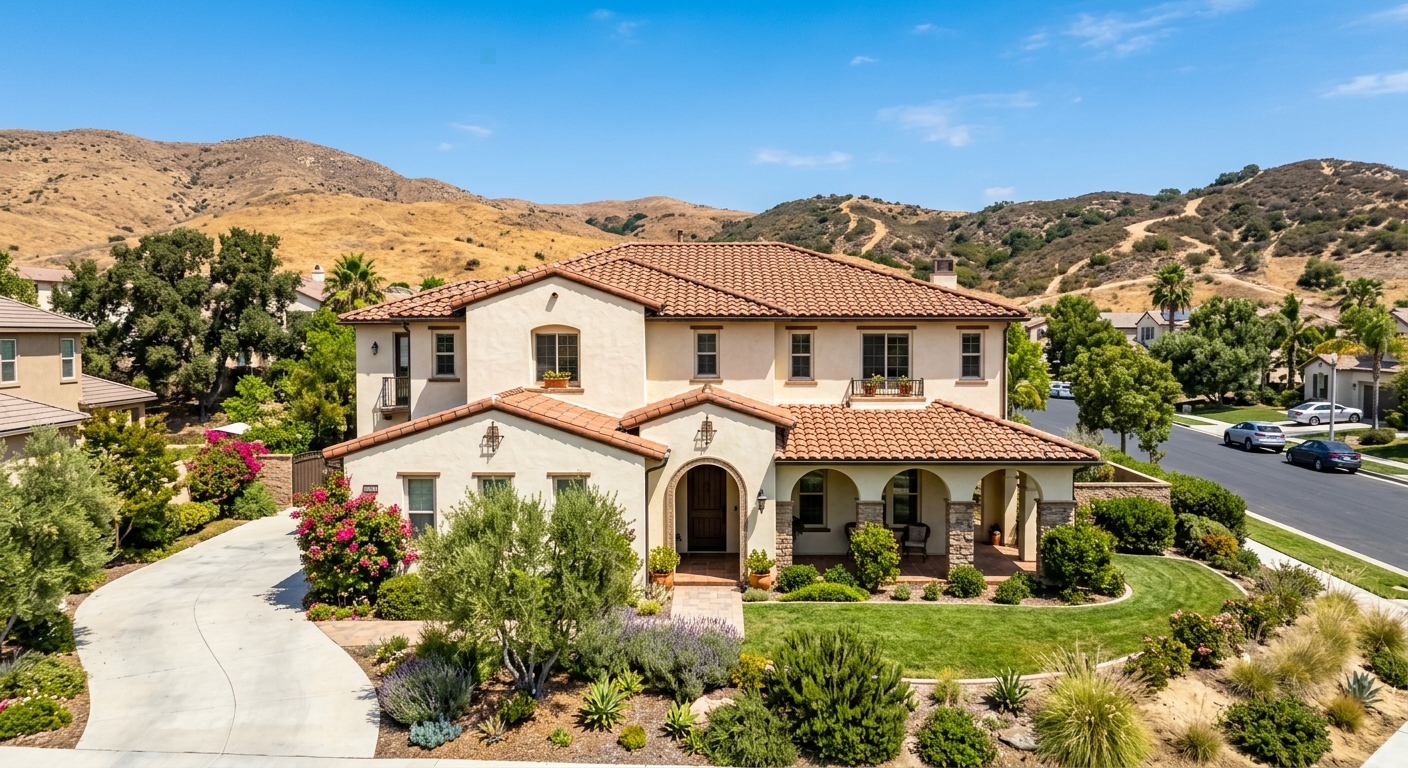
Understanding Santa Clarita’s Climate and Its Impact on Roofs
Santa Clarita experiences a Mediterranean climate characterized by hot, dry summers and relatively mild winters. While the area generally receives less rainfall than many other parts of the country, its prolonged summer heat can gradually damage roofing materials.
SoCal sun and heat affect how long your Santa Clarita roof holds up. Repeated exposure to high temperatures and UV radiation can cause certain roofing materials to fade, become brittle, crack, or lose flexibility. Over time, these changes may allow moisture to penetrate the roof and damage the underlying structure.
Daily temperature fluctuations also contribute to roof deterioration. Roofing materials expand as temperatures rise and contract as they cool. This repeated movement can gradually weaken seals, loosen flashing, and stress connections around vents and other roof penetrations.
Although Santa Clarita is known for its dry weather, winter storms still matter. Rain can reveal weaknesses that developed during the summer, particularly around aging shingles, valleys, skylights, chimneys, and roof edges.
Wind can also lift loose shingles, move debris across the roof, and expose vulnerable sections to moisture. Together, these conditions make regular roof inspections an important part of home maintenance.
How Long Does a Roof Last Based on Roofing Material?
The type of roofing material is one of the biggest factors determining its expected lifespan. Some materials handle intense sunlight better than others, while certain products require more maintenance to perform well over time.
Asphalt Shingle Roofs
Asphalt shingles are popular because they are relatively affordable, widely available, and suitable for many residential properties.
Standard three-tab asphalt shingles commonly last around 15 to 20 years. Architectural asphalt shingles may last approximately 20 to 30 years when properly installed and maintained. Actual performance varies according to product quality, ventilation, installation methods, and local exposure.
Santa Clarita’s hot summers can accelerate the aging of asphalt shingles. UV exposure gradually breaks down the materials, while excessive attic heat can contribute to premature deterioration if ventilation is inadequate.
Homeowners should watch for curling edges, missing granules, cracked shingles, and bald patches. These warning signs may indicate that repairs are necessary or that the roof is approaching the end of its service life.
When asking how long does a roof last if it is made of asphalt shingles, consider both its age and its current condition rather than relying on a general lifespan estimate alone.
Concrete and Clay Tile Roofs
Concrete and clay tile roofs are common in Southern California because they offer durability, fire resistance, and a distinctive architectural appearance.
Clay tile roofs can last approximately 50 to 100 years or longer under favorable conditions. Concrete tiles often last around 40 to 75 years, depending on the product and maintenance. These estimates generally refer to the tiles themselves, not every component of the roofing system.
Tile roofs are well suited to sunny climates, but they are not maintenance-free. Individual tiles can crack, shift, or break due to foot traffic, falling branches, or other impacts. The underlayment beneath the tiles can also deteriorate long before the tiles themselves need replacement.
Because the underlayment provides an important layer of moisture protection, periodic professional inspections are essential. A roof may look sound from the street while hidden components require attention.
Metal Roofs
Metal roofing is another option for homeowners looking for a long-lasting roofing system. Depending on the metal, coating, installation, and maintenance, a metal roof may last approximately 40 to 70 years or more.
Metal can perform well in hot, sunny environments, particularly when the product has a suitable reflective finish. Reflective surfaces may reduce solar heat absorption, although the actual benefit depends on the color, coating, roof assembly, and attic insulation.
Potential problems include damaged protective coatings, corrosion in vulnerable areas, loose fasteners, and failing sealants. Regular inspections can help identify these issues before they cause leaks or more extensive damage.
Wood Shingles and Shakes
Wood shingles and shakes can provide a natural appearance, but their lifespan depends heavily on the wood species, treatment, ventilation, and exposure to moisture.
In many residential applications, they may last around 20 to 40 years, although some roofs perform outside that range. Santa Clarita’s dry climate can reduce some moisture-related problems, but intense sunlight may dry out wood and contribute to splitting or deterioration.
Homeowners should also consider local fire safety requirements and insurance considerations before choosing wood roofing. The suitability of this material depends on the property’s location and applicable regulations.
Factors That Determine Your Roof’s Lifespan
Roofing material provides a useful starting point, but several additional factors determine how long a roof actually lasts.
Installation Quality
Even high-quality roofing materials can fail prematurely when installed incorrectly. Improper fastening, poorly sealed penetrations, inadequate flashing, and incorrect underlayment installation can create weaknesses that become apparent during storms or periods of extreme heat.
Hiring a qualified roofing contractor who understands local building conditions can help reduce these risks. Homeowners should also retain installation records, product information, and applicable warranties for future reference.
Attic Ventilation and Insulation
Proper attic ventilation helps manage heat and moisture beneath the roof. Without adequate airflow, attic temperatures can become excessive during summer, potentially contributing to premature aging of some roofing materials and increasing indoor cooling demands.
Insulation and ventilation work together but serve different purposes. Insulation slows heat transfer into the living space, while ventilation helps manage attic conditions when the roof assembly is designed for it.
A professional can assess whether the existing attic system is appropriate for the home’s construction and roofing material.
Roof Slope and Drainage
Roof design affects how efficiently water drains away from the structure. Steeper roofs generally shed rain more readily, while low-slope roofs may require specialized waterproofing systems and careful drainage management.
Blocked gutters, accumulated debris, and poorly maintained drainage areas can cause water to collect in vulnerable locations. Even in a relatively dry climate, occasional storms can expose these weaknesses.
Keeping gutters clear and checking drainage components periodically helps protect the roof and the surrounding structure.
Maintenance and Previous Repairs
Routine maintenance can make a meaningful difference in roof longevity. Small problems, such as loose flashing or a damaged shingle, are usually easier to address before water enters the building.
Previous repairs also matter. A roof with repeated leaks, deteriorating underlayment, or widespread material failure may require more extensive work than its age alone suggests.
If you are evaluating how long does a roof last after years of limited maintenance, a professional inspection can help establish a realistic picture of its remaining service life.
Signs Your Santa Clarita Roof May Need Attention
Recognizing the early signs of roof deterioration can help prevent minor defects from becoming expensive problems.
Look for these common warning signs:
- Cracked, curling, or missing shingles: These can leave sections of the roof vulnerable to wind and water.
- Excessive granules in gutters: Asphalt shingles naturally shed some granules, but heavy accumulation may indicate advanced wear.
- Water stains on ceilings: Brown spots, peeling paint, or damp areas may signal a roof leak or another moisture problem.
- Damaged or displaced tiles: Broken tiles can expose the underlayment to direct sunlight and weather.
- Loose or deteriorating flashing: Damaged flashing around chimneys, vents, and skylights can allow water to enter.
- Sagging roof sections: Visible sagging may indicate structural deterioration and warrants prompt professional evaluation.
- Unexpected increases in cooling costs: A change in energy use can have many causes, but inadequate attic insulation, ventilation problems, or roof-related issues may contribute.
Some signs are visible from the ground, but homeowners should avoid climbing onto a roof to inspect it themselves. A qualified professional has the equipment and experience needed to evaluate the roof more safely.
How to Extend Your Roof’s Lifespan in Santa Clarita
Although homeowners cannot control the weather, they can take practical steps to protect their roofing investment.
Schedule Regular Roof Inspections
Consider arranging a professional inspection periodically, commonly once a year or according to the roofing manufacturer’s recommendations. An inspection is also advisable after a significant storm or when a leak or other visible problem appears.
For older roofs, more frequent monitoring may be appropriate. A professional can identify deteriorating materials, damaged flashing, and other problems before they become severe.
Keep Gutters and Drainage Areas Clear
Leaves, dust, branches, and other debris can collect in gutters and roof valleys. Removing these materials helps water flow away from the property during rainfall.
Check that downspouts discharge water appropriately and that drainage systems are not blocked. Avoid pressure-washing roofing materials unless the manufacturer specifically permits the method, as excessive pressure can cause damage.
Address Repairs Promptly
A small leak may seem manageable, but moisture can damage insulation, roof decking, framing, and interior finishes if left untreated.
Prompt repairs help preserve the roof system and may prevent secondary damage. It is also important to determine the source of a leak rather than treating only the visible interior stain.
Maintain Trees Around the Home
Branches that hang over the roof can scrape roofing materials, drop debris, and cause impact damage. Trimming nearby trees can reduce these risks and help limit the amount of material accumulating in gutters.
Tree maintenance should be performed carefully, especially around power lines or large branches that require professional equipment.
Improve Overall Roof Performance
When repairs or replacement become necessary, consider the complete roofing system rather than focusing only on the visible surface. Appropriate underlayment, flashing, ventilation, insulation, and installation methods all contribute to long-term performance.
Reflective roofing products may also be worth considering when planning a replacement. A contractor can explain which products are suitable for the home’s design, local conditions, and budget.
Should You Repair or Replace Your Roof?
Deciding between repairs and replacement requires an assessment of the roof’s age, condition, and remaining useful life.
Repairs may be appropriate when damage is isolated, the underlying roof structure remains sound, and most of the roofing material is still in good condition. Replacing a few damaged shingles or repairing a flashing problem may provide additional years of service.
Replacement may be the better option when deterioration is widespread, leaks keep returning, roofing materials are failing across multiple areas, or the underlayment and decking have sustained extensive damage.
The cost of repeated repairs should also be considered. If a roof requires frequent work, investing in a replacement may provide greater reliability over the long term.
When comparing estimates, ask contractors to explain the condition of the existing roof, the proposed materials, the scope of work, warranty coverage, and any underlying repairs that may be needed. Obtain multiple detailed estimates when practical, and verify licensing and insurance.
Most importantly, do not base the decision solely on age. A well-maintained roof may continue performing beyond its typical lifespan, while a poorly installed or heavily exposed roof may require replacement much earlier.
Planning Ahead for Roof Replacement in Santa Clarita
Planning ahead allows homeowners to compare materials, evaluate contractors, and budget for replacement without waiting for a major leak.
If your roof is approaching the typical lifespan for its material, arrange an inspection and ask for an estimate of its remaining useful life. This does not produce an exact expiration date, but it can help you prepare financially and prioritize maintenance.
For homeowners researching how long does a roof last in Santa Clarita, it is helpful to think in terms of both expected lifespan and ongoing performance. A roof that receives timely repairs and appropriate maintenance may offer better long-term value than one that is neglected until serious damage occurs.
You should also review your roofing warranty carefully. Some warranties cover specific manufacturing defects, while others have limitations related to installation, maintenance, weather events, or the age of the materials. Warranty coverage should never be assumed to cover every repair or replacement expense.
Conclusion
So, how long does a roof last in Santa Clarita’s climate? Asphalt shingles may last around 15 to 30 years, depending on the product and conditions. Concrete and clay tile roofs can last several decades, while metal roofing can provide similarly long service with appropriate care.
Santa Clarita’s intense sunshine, prolonged summer heat, temperature fluctuations, and occasional winter storms all influence roof performance. Installation quality, attic ventilation, drainage, and maintenance are equally important.
By scheduling regular inspections, repairing minor damage promptly, and choosing materials suited to the local climate, homeowners can help extend their roof’s service life and protect their property. If your roof is aging or showing signs of deterioration, a professional assessment is the best way to determine whether repairs are sufficient or replacement should be planned.
Frequently Asked Questions
1. How long does a roof last in Santa Clarita?
The lifespan depends on the roofing material, installation quality, and maintenance. Asphalt shingles may last approximately 15 to 30 years, concrete or clay tiles can last several decades, and metal roofs may last 40 to 70 years or more.
2. Does Santa Clarita’s hot weather shorten roof life?
It can. Intense sunlight and prolonged heat may accelerate the aging of some roofing materials, particularly when combined with poor ventilation or inadequate installation. Choosing suitable materials and maintaining the roofing system can help reduce premature deterioration.
3. How often should I have my roof inspected?
Many homeowners benefit from an annual professional inspection, although the appropriate schedule depends on the roofing material, age, condition, and manufacturer recommendations. Inspections are also advisable after significant storms or when signs of damage appear.
4. What is the longest-lasting roofing material for Santa Clarita homes?
Clay tile, concrete tile, and certain metal roofing systems can offer long service lives. The best choice depends on the home’s structure, budget, architectural style, installation requirements, and local building regulations.
5. Can I extend the life of an aging roof?
Yes, in many cases. Regular inspections, prompt repairs, clear drainage systems, and appropriate attic ventilation can help preserve a roof. However, maintenance cannot indefinitely prevent the natural aging of roofing materials.
6. How do I know whether my roof needs repair or replacement?
Localized damage may be repairable, while widespread deterioration, recurring leaks, extensive underlayment failure, or structural problems may indicate that replacement is more appropriate. A qualified roofing professional can evaluate the roof and explain the available options.
7. Is a tile roof maintenance-free?
No. Although tile roofs can last for decades, individual tiles may crack or shift, and the underlayment can deteriorate over time. Periodic inspections help identify problems that may not be visible from the ground.