

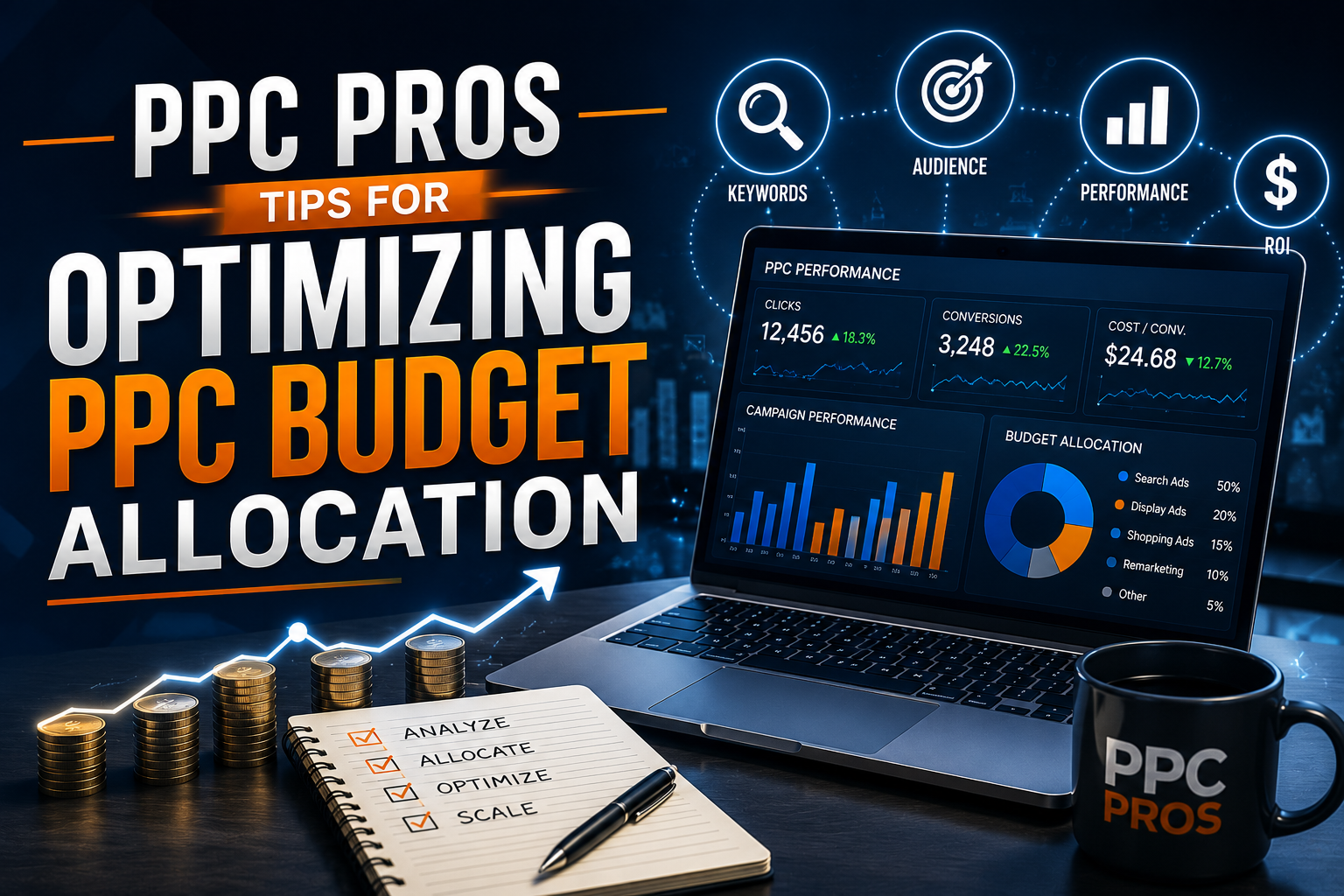
Managing a pay-per-click (PPC) campaign involves more than simply increasing ad spend. Success comes from investing your budget where it generates the greatest return. Businesses that carefully allocate their advertising dollars can maximize conversions, reduce wasted spending, and improve overall campaign performance.
Whether you’re running Google Ads, Microsoft Ads, or other paid advertising campaigns, experienced PPC Pros understand that strategic budget allocation is one of the most important factors in achieving sustainable results.
Here are some proven tips for making every advertising dollar work harder.
Define Clear Campaign Goals
Before allocating your budget, establish measurable objectives.
Common PPC goals include:
- Lead generation
- Online sales
- Phone calls
- Appointment bookings
- Brand awareness
- Website traffic
Having clear goals makes it easier to prioritize spending across campaigns.
Focus on High-Performing Keywords
Not every keyword delivers the same value.
Regularly review keyword performance and invest more heavily in search terms that consistently produce:
- Qualified leads
- Strong conversion rates
- Lower cost per acquisition
- Higher return on ad spend
Reducing investment in underperforming keywords helps improve overall efficiency.
Prioritize High-Converting Campaigns
Campaign data often reveals that a small percentage of campaigns generate the majority of conversions.
Rather than dividing budgets equally, PPC Pros recommend allocating more resources toward campaigns with proven performance while continually optimizing weaker campaigns.
Use Geographic Targeting
Businesses serving specific regions should concentrate spending where customers are most likely to convert.
Geographic optimization allows advertisers to:
- Increase bids in high-performing locations
- Reduce spending in low-performing areas
- Customize messaging for local audiences
- Improve overall campaign relevance
Local targeting often leads to better conversion rates and lower acquisition costs.
Schedule Ads Strategically
Customers don’t always search at the same times.
Analyze campaign data to identify:
- Peak conversion hours
- High-performing weekdays
- Seasonal trends
- Time periods with lower engagement
Adjusting budgets based on performance patterns helps maximize returns.
Monitor Cost Per Conversion
Clicks alone don’t determine campaign success.
Instead, track metrics such as:
- Cost per lead
- Cost per sale
- Cost per appointment
- Return on ad spend (ROAS)
- Conversion rate
These metrics provide a clearer picture of how effectively your budget is being used.
Test Ad Creative Regularly
Small improvements in ad copy can significantly impact performance.
A/B testing helps identify:
- Stronger headlines
- More effective calls to action
- Better descriptions
- Higher-performing offers
Improved click-through and conversion rates often allow businesses to achieve more with the same budget.
Optimize Landing Pages
Even the best advertisements won’t perform well if visitors arrive on ineffective landing pages.
Review pages for:
- Fast loading speeds
- Clear messaging
- Mobile responsiveness
- Simple contact forms
- Strong calls to action
Higher conversion rates improve the overall value of your advertising investment.
Use Smart Audience Targeting
Modern PPC platforms offer advanced audience segmentation.
Businesses can target users based on:
- Demographics
- Interests
- Previous website visits
- Purchase intent
- Customer lists
Better audience targeting reduces wasted clicks and improves lead quality.
Review Campaign Performance Frequently
PPC optimization is an ongoing process.
Successful advertisers regularly evaluate:
- Budget distribution
- Keyword performance
- Conversion trends
- Search term reports
- Competitive activity
Frequent analysis allows businesses to adjust strategies before small issues become expensive problems.
FAQs
Why is PPC budget allocation important?
Proper budget allocation ensures advertising dollars are invested where they generate the greatest number of qualified leads and conversions.
How often should PPC budgets be reviewed?
Most campaigns benefit from weekly or monthly reviews, although larger campaigns may require more frequent monitoring.
Should more budget always go to the highest-performing campaign?
Generally, yes, provided the campaign continues delivering profitable results and has room to scale without diminishing returns.
What metrics should businesses monitor?
Important metrics include cost per conversion, click-through rate, conversion rate, return on ad spend, and overall lead quality.
Why do PPC Pros emphasize continuous optimization?
Digital advertising is constantly changing. Regular optimization helps businesses improve performance, reduce wasted spending, and maximize the return on every advertising dollar.
Final Thoughts
Successful PPC campaigns aren’t built solely on larger budgets. They are built on smarter budget allocation, continuous optimization, and data-driven decision-making. Businesses that regularly analyze campaign performance and shift spending toward the highest-performing opportunities often achieve stronger results while keeping advertising costs under control.
By following the recommendations of experienced PPC Pros, companies can improve efficiency, generate more qualified leads, and maximize the return on every dollar invested in paid advertising. Careful budget management remains one of the most effective ways to build sustainable, long-term PPC success.


