+
Photo: ThisisEngineering
For decades, manufacturers have competed by making factories faster. They invested in robotics, automation, and increasingly sophisticated production systems to improve speed, efficiency, and output.
Today, however, a different bottleneck is beginning to define competitiveness.
The challenge is no longer how quickly factories can build products. It’s how quickly they can transform engineering knowledge into work that people can actually execute.
As products become more complex and experienced workers retire, manufacturers are discovering that knowledge, not machinery, is becoming their most valuable operational asset.
Manufacturing’s Hidden Bottleneck
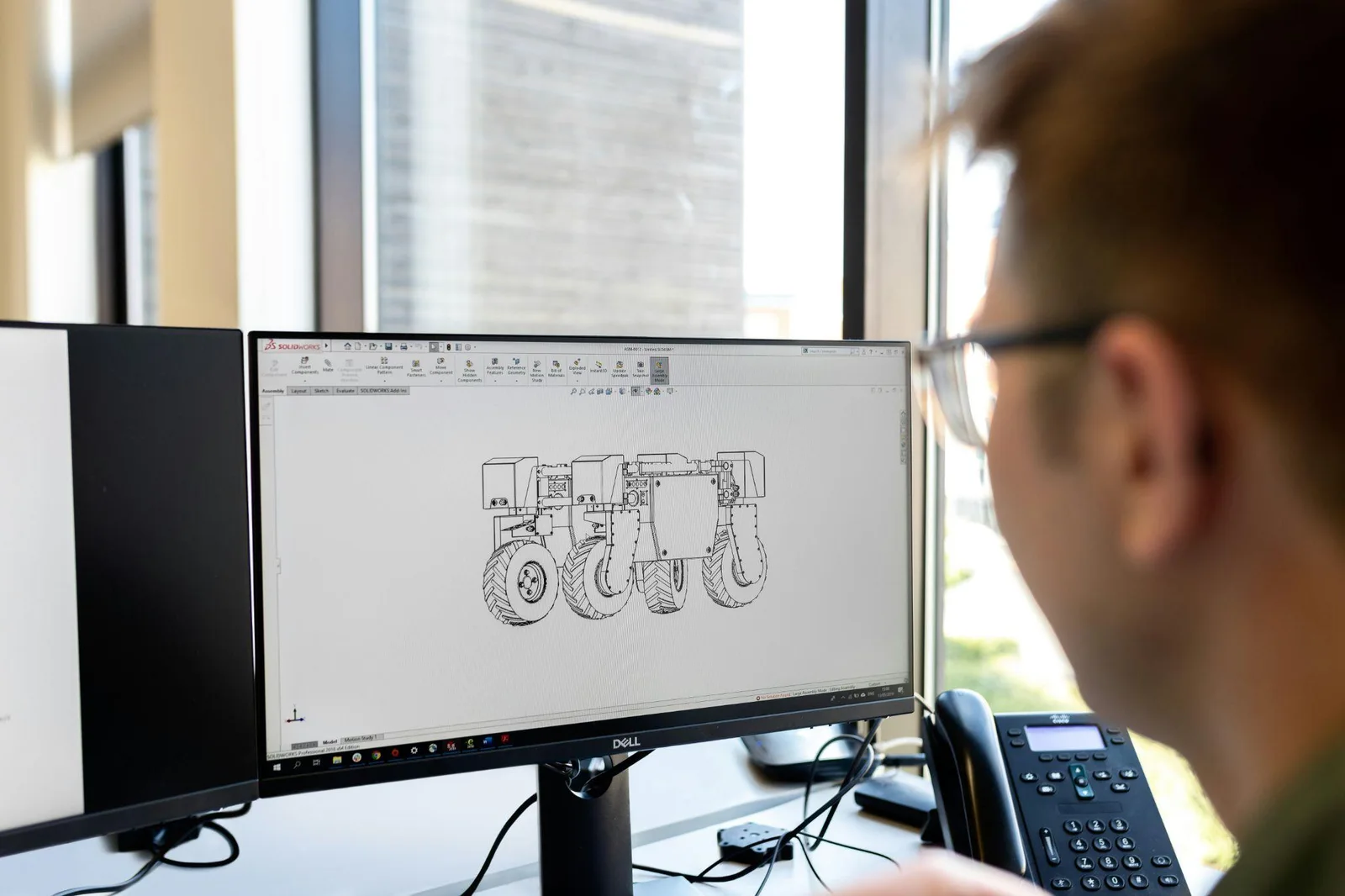
The manufacturing industry has spent years digitizing engineering. Product data lives in sophisticated CAD systems, engineering teams collaborate in real time, and product revisions can be shared across organizations almost instantly.
Yet one critical step has remained surprisingly manual: turning that engineering knowledge into work instructions that guide the people building the product.
Creating a truly effective work instruction requires far more than documenting a process. It must be detailed enough to explain complex tasks, visual enough to eliminate ambiguity, and structured so that a new employee can complete the job correctly without relying on a veteran standing beside them.
That level of documentation takes time, something most engineering teams simply don’t have.
As Garth Coleman, the CEO of Canvas Envision, a manufacturing execution platform that turns technical illustration to 3D visualization, explains, “The distance between a visual aid and a genuinely useful instruction is measured in authoring hours that no one has been able to spare.”
The result is that many manufacturers settle for basic documentation while relying on tribal knowledge, informal coaching, and employee experience to fill the gaps.
The “First Mile” of the Digital Thread
Manufacturers often describe their digital transformation as building a digital thread that connects engineering, production, and operations. But Coleman argues the industry has overlooked the very beginning of that process.
“I describe this challenge as the first mile of the digital thread,” he says.
Before information can flow through connected systems, it first has to become usable.
Engineering teams continuously improve designs, release product updates, and refine manufacturing processes. Every one of those changes eventually needs to be reflected in the work instructions operators rely on every day. When those instructions exist as manually authored PDFs or disconnected documents, every engineering revision creates another round of manual work.
By the time new instructions reach the factory floor, they’re already beginning to fall behind.
The problem is not simply a lack of engineering data. It is that the information moves too slowly.
AI Is Changing the Economics of Knowledge
Much of today’s conversation around artificial intelligence focuses on predictive analytics, automation, or generative AI assistants. Manufacturing is beginning to find value elsewhere.
Rather than replacing engineers, AI is helping eliminate one of the most time-consuming parts of their job: authoring documentation.
Instead of building work instructions from scratch, engineers can now begin with existing engineering assets such as CAD models, PDFs, videos, photographs, or legacy manuals. AI transforms those materials into structured, interactive work instructions that experts can review and refine rather than author line by line.
Canvas Envision’s AI authoring assistant, Evie, was built around this concept exactly. Embedded within the company’s Envision Creator platform, Evie converts engineering information into structured digital work instructions while remaining connected to the original engineering data.
“The expert is not replaced but supercharged,” Coleman says. “The AI advises, drives the mechanical work, and documents, while the expert remains in control of every decision.”
The result is a dramatic shift in how engineering time is spent. Rather than formatting documents or recreating existing information, engineers can focus on validating content and solving higher-value manufacturing problems.
Better Knowledge Creates Better Manufacturing
The biggest impact of AI-assisted authoring isn’t simply faster documentation.
It is what happens once better instructions reach the factory floor.
Detailed, visual guidance helps new employees become productive more quickly while reducing dependence on experienced mentors. Clearer instructions reduce ambiguity, leading to fewer errors, less scrap, improved quality, and safer execution. Because work instructions remain connected to engineering data, updates can be implemented much faster, ensuring workers always have access to current information instead of outdated procedures.
In short, faster knowledge transfer creates faster execution.
Coleman believes the manufacturing industry is approaching an adoption moment similar to one it experienced decades ago when engineers transitioned from 2D drafting to 3D CAD.
Initially, the new technology required more effort than existing methods. Adoption accelerated only after it became both better and faster.
“Once the better way was also the faster way, the mainstream moved,” Coleman concluded to say.
AI-assisted authoring may now be reaching that same inflection point.
For years, manufacturers competed by building faster machines. The next generation of industry leaders may distinguish themselves by something far less visible: how quickly they can turn engineering knowledge into action.