When building or resurfacing a residential swimming pool in Central Texas, one of the most defining aesthetic choices you will make is selecting your interior finish. While coping tiles, decking, and surrounding landscaping frame your outdoor living space, the interior plaster dictates the visual personality of the water itself.
Historically, traditional white plaster was the undisputed standard across backyard pools. Today, however, advances in quartz aggregates, pebble mixes, and inorganic pigments offer homeowners a massive spectrum of rich color options ranging from vibrant electric blues to moody, lagoon-style teals and charcoal blacks.
The choice between traditional white and modern colored plaster extends beyond simple visual preference. Color affects water tone and heat retention. Clear Solutions, one of the top pool plaster companies in Austin, helps you choose the right finish.
Below is an in-depth guide to understanding how plaster color influences water reflection, pool temperature, chemical maintenance, and long-term durability.
1. How Plaster Color Transforms Water Tone
A common misconception among first-time pool owners is that water color comes strictly from the chemical treatment or sky reflection. In reality, light refraction through water acts like a prism, and the background plaster color acts as the foundation that filters and reflects specific light wavelengths.
-
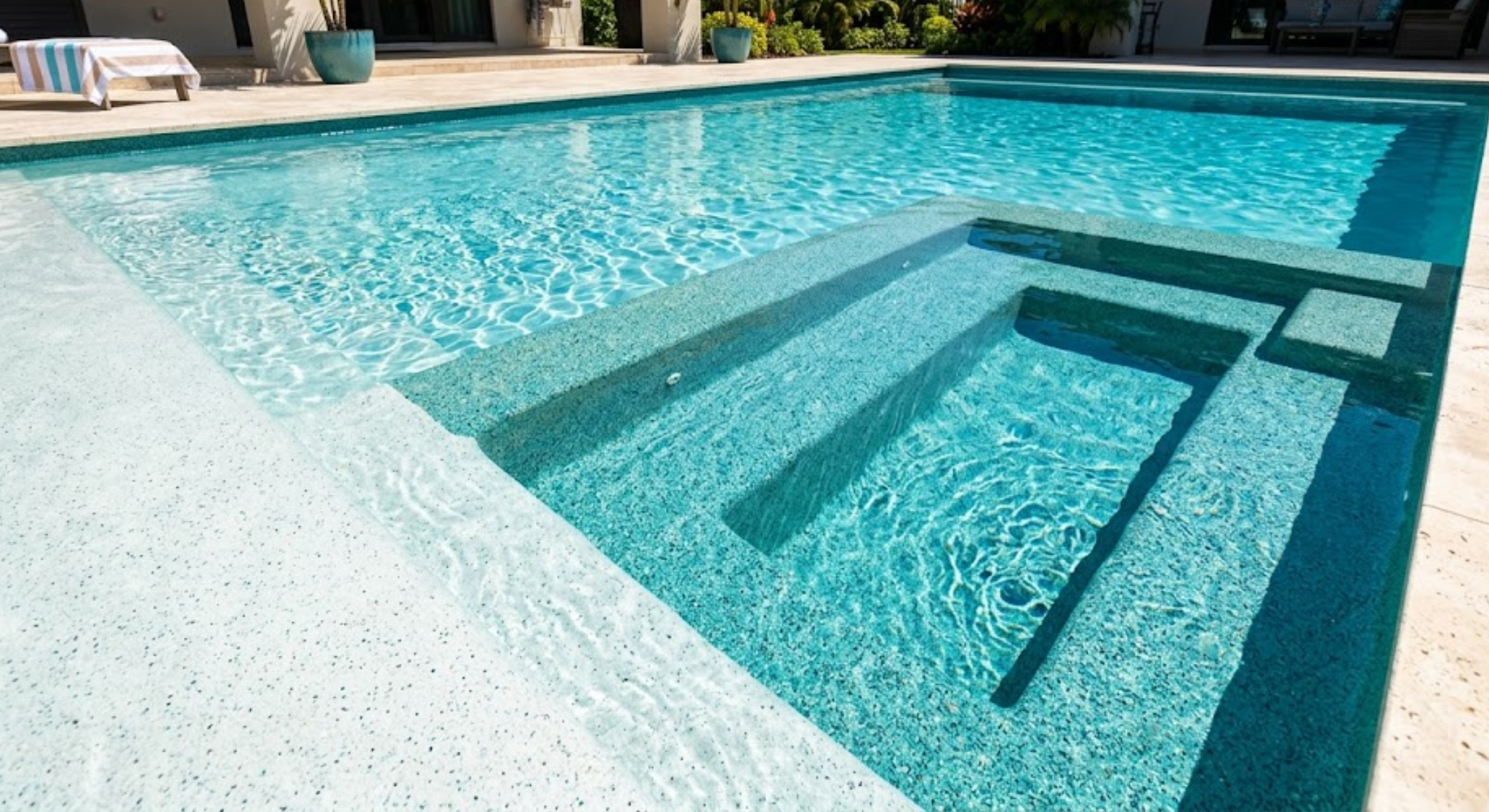
White Plaster: Yields a classic, brilliant sky-blue water tone. The bright white base reflects maximum sunlight, giving the pool an inviting, sparkling clarity. It creates a timeless, clean resort look that fits seamlessly with bright limestone decks and traditional architecture.
-
Blue and Gray Plaster: Moderate gray, french gray, or light blue plaster shifts the water tone into a richer, deeper sky blue or sapphire hue. Gray finishes neutralizes yellow light rays, preventing greenish tints when surrounding landscaping reflects onto the surface.
-
Dark Gray and Black Plaster: Creates a dramatic, mirror-like dark blue or emerald ocean reflection. Dark plaster gives pools a naturalistic, mountain-lake appearance, making it a favorite for infinity edges and rustic Hill Country designs.
-
Tan and Green Plaster: Sand-colored or beige plaster absorbs blue light and reflects warm undertones, producing a tropical, Caribbean-green water hue reminiscent of a natural lagoon.
2. Heat Retention and Energy Efficiency
In Central Texas, pool water temperatures fluctuate dramatically between spring and late summer. Plaster color plays a direct role in how efficiently your pool absorbs and retains solar energy.
[ Sunlight Absorption Dynamics ]
      │
      ├── White Plaster ────► Reflects Sunlight ────► Cooler Water (1-3°F cooler)
      │
      └── Dark Plaster  ────► Absorbs Sunlight  ────► Warmer Water (3-7°F warmer)
Dark pigments act as natural solar collectors. During hot summer months, a pool with dark charcoal or deep blue plaster can absorb significantly more thermal energy from direct sunlight than a white pool, raising water temperatures by 3°F to 7°F.
-
When Dark Plaster Wins: If you want to extend your swimming season into early autumn or late spring without overusing a gas heater or heat pump, dark plaster provides free thermal energy.
-
When White Plaster Wins: During peak July and August heat, shallow Central Texas pools can sometimes feel uncomfortably warm. White or light-colored finishes help keep water temperatures slightly cooler and more refreshing.
3. Comparing Durability, Maintenance, and Chemical Sensitivity
Every plaster surface requires balanced water chemistry to preserve its smooth texture and structural integrity. However, white and colored plasters react differently to chemical imbalances and routine wear over time.
| Performance Factor | Classic White Plaster | Colored & Pigmented Plaster |
| Initial Cost | Most budget-friendly upfront option. | Premium investment due to pigments & aggregates. |
| Mottling / Shading | High uniformity; hides minor color variations. | Natural mottling occurs; displays organic tone shifts. |
| Calcium Spotting Exposure | Hides minor scale buildup and calcium deposits. | White calcium buildup shows clearly against dark backgrounds. |
| UV Resistance | Impervious to UV fading or bleaching. | Requires high-quality inorganic pigments to resist fading. |
| Lifespan Expectancy | 7 to 10 years before typical resurfacing. | 10 to 15+ years (especially when blended with quartz/pebble). |
The Mottling Factor in Colored Finishes
It is important to note that colored plaster naturally exhibits a phenomenon known as mottling subtle variations in color intensity across the pool surface. Because plaster is hand-troweled and cured underwater, minor shifts in shade create a dynamic, organic appearance rather than a flat, solid paint finish. Most pool owners appreciate this natural depth, but those seeking perfectly uniform color may prefer white or aggregate-based finishes.
4. Maintenance Best Practices for Long-Term Beauty
Whether you select pristine white plaster or a deep sapphire aggregate finish, preserving the color and texture depends heavily on water chemistry management:
-
Maintain Balanced LSI (Langelier Saturation Index): Keep your pH (7.4–7.6), total alkalinity (80–120 ppm), and calcium hardness (200–400 ppm) balanced to prevent etching (acidic water) or scaling (alkaline water).
-
Brushing Schedule: Brush pool walls weekly to clear settling plaster dust, algae spores, and mineral debris before scale can bind to the surface.
-
Use Quality Water Supplies: When filling or topping off your pool in areas with hard municipal water, test for mineral content to avoid metal staining on light or dark plaster.
Conclusion
Choosing between white and colored pool plaster comes down to balancing your personal aesthetic vision, thermal preferences, and budget. Traditional white plaster remains an unbeatable, budget-conscious choice for a crisp, sparkling blue pool. Conversely, colored finishes enhanced with quartz or pebble aggregates offer rich water tones, natural solar heat absorption, and high visual impact.
By consulting with experienced local professionals, you can explore physical finish samples, review water-tone portfolios, and select a durable interior surface that elevates your outdoor living experience for years to come.
Frequently Asked Questions (FAQ)
Q: Does colored pool plaster cost more than white plaster?
A: Yes. Colored plaster typically costs 20% to 40% more than basic white plaster due to the cost of raw mineral pigments, specialized additives, and the advanced application techniques required for even troweling.
Q: Will colored pool plaster fade over time under direct sunlight?
A: Modern colored plasters formulated with high-grade inorganic pigments and quartz aggregates resist fading exceptionally well. However, harsh chemical imbalances (such as prolonged high chlorine or low pH levels) can cause premature bleaching over time.
Q: How long does pool plaster take to fully cure after application?
A: While the pool is filled immediately after plastering, the critical curing process takes approximately 28 days. During this initial period, diligent daily brushing and precise chemical monitoring are necessary to lock in plaster strength and color uniformity.