

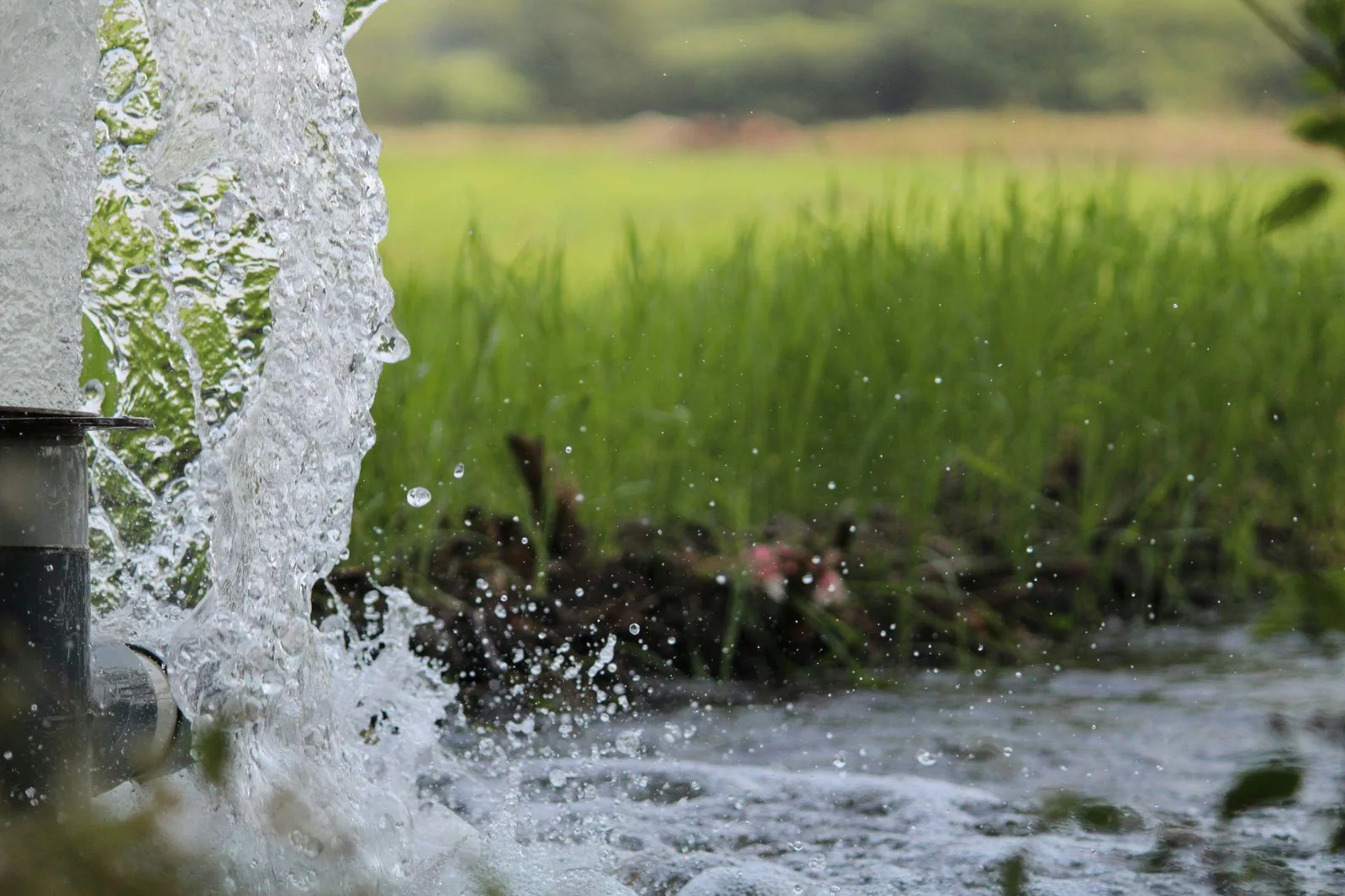
Photo: sushant sodanwar
Water is becoming harder for businesses to treat as someone else’s problem.
At Climate Week NYC this September, water will be discussed not only as an environmental concern but as a business and resilience issue. A September 22 program from SCS Global Services includes a session titled “From Water Accounting to Water Advantage: Water Scopes 1–3 as a Strategic Business Resilience Tool,” focused on how companies can use water information to identify risk, strengthen supply chains and guide investment.
That shift is significant. But it raises a practical question for agriculture: What happens when the people at the beginning of the supply chain do not have good information about the water they are using?
For a rancher, water measurement does not begin with a corporate report. It begins with a tank, a trough, a pump or a pipeline somewhere on the property. And sometimes it begins with a phone alert saying something has changed.
The Distance Between a Report and a Water Tank
Large companies increasingly need to understand their exposure to water stress. That can mean looking at watersheds, suppliers, production regions and broader environmental risks.
Those assessments have value. But they do not replace what happens at the point where water is actually being delivered and consumed. A rancher managing a large property may need to know whether a tank is filling normally, whether livestock consumption has changed, or whether a pump is operating as expected.
Those are small pieces of information compared with a corporate sustainability report. They can also be the pieces that determine whether an operation has a problem today or next week. That distinction matters because water systems do not fail according to reporting cycles.
A pump can stop on a Tuesday afternoon. A pipe can leak overnight. Livestock can consume more water during a period of extreme heat. A tank that was adequate last week may not be adequate under different conditions. The information has to arrive early enough to be useful.
Measuring Water Where It Matters
The challenge for agriculture is not necessarily a lack of data. It is having the right data at the right point in the operation. Remote monitoring is one way producers can close that gap.
Ranchbot‘s water level monitors, for example, provide near-real-time visibility into water storage and livestock consumption. Its systems can also monitor troughs, pumps, flow and pressure, allowing producers to receive alerts when conditions change.
That can turn a vague concern into a specific question.
If a tank is dropping faster than expected, the producer can investigate why. If a pump is running but the water level is not changing as expected, there may be a problem with the system. If flow data changes sharply, a leak may warrant attention.
The technology does not tell the rancher how to run the operation. It provides another set of information with which to make that decision.
For Andrew Coppin, CEO and co-founder of Ranchbot, that distinction is central to the value of remote monitoring: the objective is to give ranchers visibility into their water without requiring them to physically inspect every remote site simply to find out whether something has changed.
From Measurement to Management
Better measurement matters because information becomes more useful when it can change a decision. Knowing how much water a ranch normally uses can establish a baseline. Seeing that pattern change can prompt a closer look. Over time, those observations can help producers understand how consumption responds to herd size, weather and other operating conditions.
The same principle applies higher up the supply chain. A company interested in the resilience of its agricultural suppliers ultimately depends on what happens at those farms and ranches. If water data exists only as a broad estimate at the corporate level, there is a limit to how much that information can say about what is happening on an individual operation.
That does not mean every ranch needs to become a data center. It means measurement has to be useful enough to support the people making decisions.
The Human Side of Water Data
There is also a risk in making agricultural technology sound more complicated than it needs to be. Ranchers have always measured things. They watch cattle behavior. They know their pastures. They notice changes in tanks and pumps. They learn what normal looks like because their businesses depend on it.
The value of technology is not replacing that knowledge. It is making some of it easier to see.
A remote water monitor can take information that once required a truck ride and put it on a phone. Pump controls can allow producers to respond without immediately traveling to the site. Flow monitoring can provide another way to identify unusual water use. Ranchbot’s systems are built around those practical applications rather than around reporting for its own sake.
That is an important distinction as sustainability reporting becomes more sophisticated. The goal should not be to collect more numbers simply because more numbers are available. It should be to collect information that helps someone make a better decision.
What Climate Week’s Water Conversation Should Include
The broader discussion around water accounting is moving in the right direction by treating water as a business risk and resilience issue. But for agriculture, the conversation should go one step further. It should ask where the most useful information is generated.
For a ranch, that might be the water tank at the far end of a pasture. For a farmer, it could be an irrigation system in the middle of a field. For a food company, it may eventually become part of a much larger picture of supply-chain exposure.
Those layers of information do not compete. They build on one another.
Corporate water strategy can identify where a company is exposed. Field-level measurement can help explain what is actually happening at the source.
That is where water accounting becomes more than a reporting exercise. The real advantage of measuring water is not knowing more about a spreadsheet. It is knowing enough, early enough, to do something about the water itself.