

Institutional transformation in higher education is rarely fast and never simple. Universities carry the weight of established traditions, complex governance structures, and deeply held stakeholder expectations. Change, when it comes, must be negotiated, sequenced, and sustained — or it stalls. The leaders who navigate transformation successfully share a set of disciplines that are less commonly taught in executive programs and more commonly forged through direct experience.
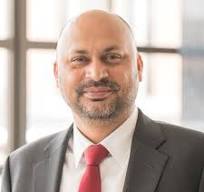
Manish Kumar, a higher education executive with more than twenty years of leadership across public research universities, has led transformation efforts at institutions ranging from a flagship public university to a historically under-resourced regional institution navigating financial crisis. His experience offers a grounded perspective on what institutional transformation actually requires.
Begin With Financial Clarity
Transformation efforts that lack a clear-eyed financial foundation fail at the implementation stage. Leadership teams may align on vision and strategy, but if the resource picture is murky — if leaders do not have an accurate understanding of what the institution has, what it owes, and what it can sustain — strategic plans become aspirational documents disconnected from operational reality.
At Northeastern Illinois University, Kumar arrived into a period of acute financial stress. The institution faced compounding pressures from state funding instability, enrollment challenges, and operational deficits. Before a transformation agenda could take hold, the financial picture had to be stabilized and clarified. That required hard assessments of institutional spending, identifying reserves and inefficiencies, and building a credible case for external support.
The $43 million in supplemental state and federal funding secured during that period did not materialize because of optimism — it materialized because institutional leadership could document the need, demonstrate the plan, and make a credible case to funders and legislators. Financial clarity preceded strategic momentum.
Credit Ratings Reflect Institutional Confidence
A credit rating is more than a borrowing metric. It is a signal — to bond markets, to accreditors, to prospective faculty and staff, and to the broader higher education community — about institutional health and leadership quality. A downgrade carries reputational weight. An upgrade carries its own signal: that the institution has turned a corner.
The four-notch upgrade in Northeastern Illinois University’s Moody’s credit rating was not a footnote to the transformation effort — it was evidence of it. Rating agencies examine governance, financial management, leadership stability, and forward-looking strategic capacity. An upgrade at that magnitude required improvements across all of those dimensions, not just balance sheet repair.
For higher education executives navigating institutional stress, credit rating trajectory is a useful barometer of whether transformation efforts are landing with the external audiences that matter most.
Modernizing the Administrative Foundation
Transformation at the programmatic and strategic level requires a functioning administrative infrastructure underneath it. Institutions operating on outdated systems — fragmented financial data, manual HR processes, limited forecasting capacity — cannot execute change at the pace their strategic ambitions require.
Kumar has led enterprise-wide implementation of Workday Financial and Human Capital Management systems, an effort that modernized institutional forecasting, improved data quality, and strengthened the reporting infrastructure available to senior leadership and governing boards. That work is unglamorous by higher education standards — it does not generate headlines — but it is foundational. Strategic decisions require good information. Good information requires capable systems.
The investment in administrative modernization is also a governance investment. Boards that receive cleaner, more transparent financial reporting are better positioned to fulfill their fiduciary responsibilities and to support presidential leadership with confidence.
Governance and Trust Are Structural Prerequisites
Higher education transformation does not happen through executive authority alone. Shared governance — the expectation that faculty, staff, and institutional leadership will participate meaningfully in decisions that affect the academic enterprise — is not a barrier to change. It is a feature of institutional life that, when engaged effectively, builds the durable consensus necessary for change to hold.
Kumar has operated across institutions where trust between administrative and academic leadership was either strong, strained, or actively being rebuilt. His experience at Northeastern Illinois University required restoring confidence among multiple constituencies simultaneously — governing board members, faculty senate leadership, state officials, and accreditors — all of whom had legitimate questions about institutional direction.
Navigating that environment required transparency, consistency, and a demonstrated commitment to shared process. Transformation leaders who shortcut governance to accelerate timelines often find that the resulting resistance costs more time than the shortcut saved.
The University as Economic Anchor
One of the underexamined dimensions of higher education leadership is the role that universities play in regional economic development. Public universities are anchors — they employ large numbers of people, drive research-based innovation, prepare the regional workforce, and attract investment. Transformation strategies that account for this dimension unlock partnerships and funding sources that campus-focused approaches miss.
At Rutgers University, Kumar was involved in establishing a 25,000-square-foot innovation accelerator developed in partnership with Newark Venture Partners. That initiative connected university talent and resources to a regional entrepreneurship ecosystem — a partnership that served both the institution’s mission and the surrounding community’s economic interests.
At Bowie State University, similar logic applies. The institution’s role in the Prince George’s County community and the broader Maryland ecosystem is not peripheral to its strategic identity — it is central to it. Financial and operational strategy that accounts for the university’s external relationships strengthens the institution’s position with state appropriators, federal grant programs, and community stakeholders alike.
Transformation Is a Leadership Commitment, Not a Project
Institutional transformation in higher education unfolds over years, not quarters. It requires sustained leadership commitment, consistent messaging, and the organizational patience to allow structural changes to embed before their full effects are visible. Leaders who treat transformation as a project — with a defined end date and a completion threshold — often find that the changes they achieved do not endure past their own tenure.
The executives who navigate this successfully build institutional capacity, not just institutional outcomes. They develop leadership pipelines, strengthen governance infrastructure, invest in the systems and processes that will outlast any individual leader, and build the external relationships that give the institution credibility and resources beyond the term of a single administration.
That is the enduring work of higher education transformation — and it is the standard against which executive leadership in this sector is ultimately measured.
About Manish Kumar
Manish Kumar is Vice President for Administration and Finance and Chief Financial Officer at Bowie State University, where he oversees finance, budget, treasury, human resources, procurement, facilities, capital planning, information technology, and auxiliary services. His prior executive roles include senior financial leadership positions at the University of North Carolina at Chapel Hill, Northeastern Illinois University, and Rutgers University. Kumar has presented at national NACUBO conferences and has participated in executive leadership programs at Harvard Kennedy School and the Massachusetts Institute of Technology. He serves on the Board of Directors of the Bowie State University Foundation.