

TrendAI™ Integrates Claude Compliance API Into TrendAI Vision One™

New integration makes AI visibility, governance, and risk mitigation for Claude Enterprise and Claude Platform part of extended attack surface managementDALLAS, June 12, 2026 /PRNewswire/ — TrendAI™, the enterprise AI security leader from Trend Micro Incorporated (TYO: 4704;…
Datasea Intelligent Technology Ltd. Announces Advancement of Compliance Work and Related Procedures for U.S. FDA Establishment Registration and Device Listing for Its Acoustic Brain-Computer Interface Product

Company Advances Preparatory Work for Internationalization of Its Acoustic Medical and Brain-Computer Interface Product PortfolioBEIJING, June 12, 2026 /PRNewswire/ — Datasea Intelligent Technology Ltd. (NASDAQ: DTSS) (“Datasea” or the “Company”), a technology company focused on acoustic high-tech innovation…
Guide to Booking Commercial Window Cleaning Cincinnati (Maps)
Clean windows are more than just a visual enhancement for commercial properties they contribute to a professional image, improve natural lighting, and create a welcoming environment for employees and customers alike. Whether you manage an office building, retail store, restaurant, or industrial facility, investing in professional window cleaning services can significantly improve the appearance and value of your property. This guide will walk you through everything you need to know about booking commercial window cleaning services in Cincinnati, including what to expect, how to choose the right provider, and the benefits of regular maintenance. Why Commercial Window Cleaning Matters First impressions matter in business. Dirty, streaked, or neglected windows can negatively affect how customers perceive your company. Clean windows help businesses present a polished and professional image while allowing more natural light to enter the building. Beyond aesthetics, regular cleaning also helps protect glass surfaces from mineral buildup, environmental contaminants, hard water stains, and pollutants. Over time, these elements can cause permanent damage if not properly removed. Benefits of professional commercial window cleaning include: Enhanced curb appeal Improved employee productivity through increased natural light Extended lifespan of windows Better customer impressions Safer and more effective cleaning methods Compliance with property maintenance standards Understanding Commercial Window Cleaning Services Commercial window cleaning companies offer services tailored to different types of businesses and buildings. Depending on your property’s needs, services may include: Exterior Window Cleaning This service removes dirt, pollen, pollution, and weather-related debris from outside glass surfaces. Interior Window Cleaning Professional cleaners eliminate fingerprints, dust, smudges, and stains from interior windows and glass partitions. High-Rise Window Cleaning For multi-story buildings, specialized equipment and trained technicians ensure safe and effective cleaning. Glass Restoration Some providers offer restoration services to remove hard water stains, oxidation, and other long-term damage. Scheduled Maintenance Programs Many businesses choose recurring cleaning plans to maintain a consistently professional appearance throughout the year. How to Choose the Right Window Cleaning Company Finding the right service provider can make a significant difference in the quality of results and overall experience. Verify Experience and Credentials Choose a company with experience handling commercial properties similar to yours. Look for proper licensing, insurance coverage, and trained technicians. Read Customer Reviews Online reviews and testimonials can provide insight into reliability, professionalism, and customer satisfaction. Request Detailed Quotes A reputable company should provide transparent pricing and explain what services are included in the estimate. Evaluate Safety Practices Commercial window cleaning often involves ladders, lifts, and specialized equipment. Ensure the provider follows industry safety standards and carries adequate insurance. Ask About Scheduling Flexibility Many businesses prefer cleaning services during off-hours to minimize disruptions to employees and customers. What to Expect During the Booking Process Booking commercial window cleaning services is typically straightforward. Step 1: Initial Consultation The company evaluates your property size, window types, accessibility, and cleaning requirements. Step 2: Receive an Estimate Based on the assessment, you’ll receive a customized quote outlining costs and service recommendations. Step 3: Schedule Service Choose a convenient date and time that works with your business operations. Step 4: Professional Cleaning Technicians arrive with the necessary equipment and complete the work efficiently and safely. Step 5: Quality Inspection Many professional companies perform a final walkthrough to ensure customer satisfaction. Factors That Influence Pricing Several factors can affect the cost of commercial window cleaning services: Building size Number of windows Window accessibility Frequency of service Height of the building Degree of dirt or staining Specialized equipment requirements Businesses that schedule regular maintenance often receive more favorable pricing compared to one-time cleanings. The Value of Ongoing Maintenance Many property managers make the mistake of waiting until windows appear visibly dirty before scheduling service. However, preventive maintenance offers long-term advantages. Regular cleaning helps prevent glass deterioration, maintains consistent curb appeal, and reduces the likelihood of costly restoration services. Seasonal maintenance plans are especially beneficial in areas where weather conditions contribute to dirt buildup throughout the year. From seasonal cleanups to maintenance contracts, commercial window cleaning cincinnati (Maps) offers efficient service and visible results every time. By establishing a recurring cleaning schedule, businesses can maintain a polished appearance while protecting their investment in commercial property assets. Signs It’s Time to Schedule Window Cleaning If you’re unsure whether your property needs professional cleaning, watch for these common indicators: Visible dirt and streaks Water spots and mineral deposits Reduced natural light indoors Customer-facing windows appearing neglected Post-construction debris Seasonal pollen accumulation Bird droppings and environmental contaminants Addressing these issues promptly helps preserve both appearance and functionality. Why Businesses Trust Professional Services While some property owners may consider handling window cleaning internally, professional companies offer advantages that are difficult to replicate. Professional technicians use commercial-grade equipment, purified water systems, and specialized cleaning solutions designed to produce streak-free results. They also have the training and safety expertise necessary to clean difficult-to-reach windows efficiently. For businesses, outsourcing window cleaning saves time, reduces liability risks, and ensures consistently high-quality outcomes. Conclusion Booking commercial window cleaning services is an important investment in your property’s appearance, maintenance, and long-term value. Clean windows help create a positive impression, improve workplace environments, and protect glass surfaces from preventable damage. By choosing a reputable service provider, scheduling routine maintenance, and prioritizing professional care, Cincinnati businesses can enjoy spotless windows year-round. Whether you manage a small storefront or a large commercial complex, regular window cleaning is a simple yet impactful way to enhance your property’s overall presentation. Frequently Asked Questions (FAQs) How often should commercial windows be cleaned? Most businesses benefit from professional cleaning every one to three months, depending on location, weather conditions, and foot traffic. Is commercial window cleaning safe for high-rise buildings? Yes. Professional companies use trained technicians, specialized equipment, and strict safety protocols to clean high-rise properties safely. Can hard water stains be removed from windows? In many cases, yes. Professional glass restoration services can remove mineral deposits and improve window clarity. Does weather affect window cleaning schedules? Light cloud cover is generally ideal. Professional cleaners can often work in various weather
Best Practices for Power Washer Cincinnati (Maps)
Maintaining the exterior of your property is essential for preserving curb appeal, preventing damage, and creating a welcoming environment. Over time, dirt, mold, mildew, algae, and other contaminants can accumulate on surfaces, making homes and businesses appear neglected. Professional power washing is one of the most effective ways to restore exterior surfaces and protect your investment. Whether you own a residential property or manage a commercial building, understanding the best practices for power washing can help ensure outstanding results while protecting your property from unnecessary damage. Why Power Washing Matters Power washing removes stubborn dirt, grime, and organic growth from various exterior surfaces, including siding, driveways, sidewalks, patios, decks, fences, and roofs. Regular cleaning not only enhances appearance but also extends the lifespan of these surfaces by preventing deterioration caused by contaminants. Property owners who schedule routine power washing often enjoy improved curb appeal, increased property value, and reduced maintenance costs over time. Choose the Right Cleaning Method Not every surface should be cleaned using the same pressure level. One of the most important best practices is selecting the appropriate cleaning method for each surface. High-Pressure Washing High-pressure washing is ideal for durable surfaces such as: Concrete driveways Sidewalks Brick walkways Parking lots Retaining walls The strong water pressure effectively removes dirt, grease, and stains from hard surfaces. Soft Washing Soft washing uses lower pressure combined with specialized cleaning solutions. It is recommended for more delicate surfaces, including: Vinyl siding Stucco Roof shingles Painted surfaces Wood fencing This method helps prevent damage while still delivering excellent cleaning results. Inspect Surfaces Before Cleaning Before beginning any power washing project, a thorough inspection should be performed. Check for: Cracked siding Loose paint Damaged mortar Broken seals around windows Rotting wood Addressing these issues beforehand helps prevent water intrusion and further damage during the cleaning process. Use Eco-Friendly Cleaning Solutions Modern power washing companies often utilize environmentally friendly detergents that effectively remove dirt and biological growth without harming surrounding landscaping, pets, or local waterways. Choosing biodegradable cleaning solutions provides excellent results while minimizing environmental impact. Property owners should ask service providers about their cleaning products and methods to ensure responsible practices are followed. Prioritize Safety Safety is a critical component of every successful power washing project. Water under high pressure can cause injuries and property damage if used improperly. Important safety practices include: Wearing protective eyewear and gloves Using slip-resistant footwear Avoiding direct contact with the spray Keeping electrical fixtures protected Maintaining safe distances from windows and delicate materials Professional crews receive specialized training to ensure every project is completed safely and efficiently. Clean From Top to Bottom A fundamental power washing principle is cleaning from the top down. This approach allows dirt and debris to flow downward naturally, preventing already-cleaned areas from becoming dirty again. For homes, technicians typically begin with roofs or upper siding sections before moving to lower walls, patios, and driveways. Following this sequence improves efficiency and produces more consistent results. Schedule Routine Maintenance Waiting until surfaces become heavily stained often leads to more difficult and expensive cleaning projects. Routine maintenance helps prevent buildup and keeps properties looking their best year-round. Recommended cleaning schedules include: Residential homes: once or twice annually Commercial properties: quarterly or semi-annually High-traffic areas: as needed Roofs: every one to three years depending on conditions Regular maintenance protects surfaces and reduces long-term repair costs. Protect Landscaping and Surrounding Areas Professional power washing crews take precautions to protect nearby plants, flowers, and outdoor features. Best practices include: Pre-wetting surrounding vegetation Covering sensitive plants when necessary Using controlled detergent application Rinsing landscaping thoroughly after cleaning These measures help preserve the beauty of the property while achieving excellent cleaning results. Hire Experienced Professionals Although DIY power washing equipment is widely available, improper use can result in costly damage. Excessive pressure may strip paint, gouge wood, crack siding, or force water behind building materials. Professional technicians understand how to: Adjust pressure levels properly Select appropriate cleaning agents Identify vulnerable surfaces Achieve consistent results Maintain safety standards With attention to detail and safe, ladder-trained crews, power washer cincinnati (Maps) leaves your property looking refreshed and professionally maintained. Benefits of Professional Power Washing Working with experienced professionals offers several advantages: Enhanced Curb Appeal Clean surfaces instantly improve the appearance of homes and businesses. Preventative Maintenance Removing mold, algae, and dirt helps prevent premature deterioration. Increased Property Value A well-maintained exterior can positively influence property valuations and buyer impressions. Healthier Environment Eliminating mildew and mold contributes to a cleaner outdoor environment. Time Savings Professional teams complete projects efficiently using commercial-grade equipment and proven techniques. Conclusion Power washing is one of the most effective ways to maintain and protect residential and commercial properties. By using the appropriate cleaning methods, prioritizing safety, protecting surrounding landscaping, and scheduling regular maintenance, property owners can maximize the benefits of exterior cleaning. Professional power washing services deliver exceptional results while helping prevent long-term damage to valuable surfaces. Whether you’re preparing your property for sale, improving curb appeal, or simply maintaining its appearance, following these best practices ensures lasting cleanliness and protection. Frequently Asked Questions (FAQs) 1. How often should I have my property power washed? Most homes benefit from power washing once or twice per year, while commercial properties may require more frequent cleaning depending on traffic and environmental conditions. 2. Is power washing safe for all surfaces? No. Delicate surfaces often require soft washing techniques with lower pressure to prevent damage. 3. Can power washing remove mold and mildew? Yes. Professional power washing and soft washing services effectively remove mold, mildew, algae, and other organic growth. 4. Will power washing damage my landscaping? Professional technicians use protective measures and eco-friendly products to minimize impact on plants and landscaping. 5. Should I hire a professional instead of doing it myself? Hiring professionals is generally recommended because they have the expertise, equipment, and training needed to clean surfaces safely and effectively.
Top Uses For Cincinnati Sign Companies
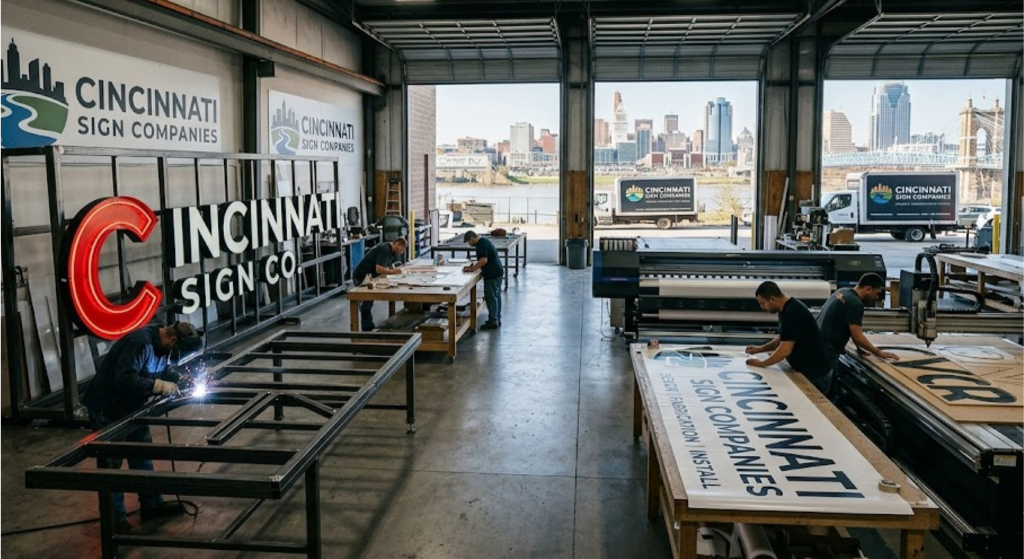
In a vibrant and historically rich commercial environment like Cincinnati, Ohio, local businesses face a unique challenge: cutting through the visual noise to capture the attention of a fast-moving audience. Whether your enterprise is situated in the bustling heart of Over-the-Rhine, a sprawling commercial strip in Kenwood, or an industrial park along the Interstate 75 corridor, your physical storefront requires high-impact communication to convert passersby into loyal customers. While digital marketing occupies a massive portion of modern advertising budgets, physical outdoor and indoor signage remains the single most cost-effective tool for driving local foot traffic. A premier commercial sign is a silent, tireless salesperson that represents your brand identity 24 hours a day, 7 days a week, 365 days a year. Navigating the creation, legal verification, and structural physical placement of these assets requires specialized, full-service engineering. Custom fabrication, permitting support, and seamless installs cincinnati sign companies brings full-service value to commercial signage projects. Below is an in-depth analysis of the top commercial uses for a professional sign company and how high-quality visual assets transform physical locations into local landmarks. 1. Architectural Building Identification and Illuminated Channel Letters The most common and arguably most critical use for a professional sign company is the engineering and implementation of main building signs. Your primary exterior building sign serves as the foundational anchor of your brick-and-mortar presence. Without a clear, bold, and easily readable identifier, even the most prestigious companies risk losing business to better-branded competitors. To maximize night-time visibility, top local businesses heavily rely on custom-fabricated channel letter signs. These highly customizable structures feature three-dimensional letters individually crafted from weather-resistant aluminum and fitted with translucent acrylic faces. Modern channel lettering provides massive operational advantages: Front-Lit vs. Halo-Lit Effects: Businesses can opt for a standard front-facing glow for intense vibrancy or select a sophisticated halo-lit (reverse channel) execution that casts an elegant glow against the building’s facade. Energy Efficiency: Leading manufacturers utilize advanced low-voltage LED modules, which drastically reduce energy consumption and eliminate the frequent, costly maintenance associated with legacy neon or fluorescent systems. Brand Customization: Precision CAD/CAM routing ensures your corporate typography, exact brand colors, and official logos are reproduced flawlessly, preserving brand integrity. 2. High-Visibility Pylon and Monument Landmark Signage For businesses that are set back from primary roadways, located in multi-tenant shopping centers, or positioned along busy high-speed corridors like I-71 and I-75, standard building-mounted signs may not provide enough early visual warning for drivers. In these environments, sign companies are called upon to design and install freestanding structures. Monument Signs: These low-profile, ground-level structures are typically constructed from architectural masonry, stone, concrete, or structural foam with routed aluminum panels. They are engineered to blend seamlessly with the building’s existing architecture, projecting a permanent, high-end corporate image ideal for corporate headquarters, medical plazas, banks, and schools. Pylon Signs: Towering high above the ground, pylon signs are massive engineered structures designed to be seen from hundreds of yards away. They are indispensable for highway-adjacent auto dealerships, gas stations, and multi-tenant retail plazas, serving as distant physical beacons that safely guide commuters toward an exit. 3. Transitioning to Dynamic Electronic Message Centers (EMCs) As consumer behavior grows more dynamic, static advertising can sometimes limit a business’s agility. One of the fastest-growing segments in the commercial signage industry is the integration of digital displays, officially known as Electronic Message Centers (EMCs). An EMC utilizes high-resolution LED panels to transform a traditional static sign into a programmable, real-time marketing asset. Instead of manually climbing a ladder to change plastic letters on an old reader board, business managers can update their messaging instantly via user-friendly software. This technology allows retail centers to advertise seasonal flash sales, restaurants to pivot from breakfast menus to dinner specials automatically, and corporate or educational facilities to display public service announcements, weather updates, and local community events seamlessly. 4. Interior Branding, Wayfinding, and Compliance The utility of a full-service sign company extends far beyond the exterior facade. Once an exterior sign successfully draws a client or customer through the doors, interior signage dictates the remaining user experience. High-end professional sign companies specialize in creating custom internal branding assets, such as dimensional wall lettering made from acrylic, brushed metal, or wood, which establish a powerful aesthetic in corporate lobbies and reception areas. Additionally, sign firms are essential for creating cohesive, branded wayfinding systems that guide visitors safely through complex interior environments like hospitals, multi-story office buildings, and universities. This includes printing code-compliant directional signs, emergency exit path identifiers, and regulatory Americans with Disabilities Act (ADA) braille signage to ensure total legal compliance for the facility. The Strategic Advantage of Full-Service Execution Investing in commercial signage is a complex construction project involving specialized design engineering, heavy structural fabrication, and safe high-altitude crane operations. Trying to manage separate designers, independent fabricators, and third-party installation sub-contractors frequently introduces communication errors, structural failures, and unexpected budget overruns. Partnering with an established, full-service sign company mitigates these vulnerabilities by unifying the entire pipeline under one roof: Project Phase Full-Service Deliverables & Value 1. Site Survey & Consultation Professional technicians evaluate visibility constraints, building structures, wind loads, and electrical access before design work begins. 2. Zoning & Permit Expediting Dedicated permit managers navigate complex local city codes and municipal zoning regulations to secure legal compliance before manufacturing. 3. In-House Custom Fabrication Expert craftsmen utilize CNC routers, advanced welding bays, and high-quality paint booths to assemble signs built to withstand extreme midwest weather. 4. Professional Rigging & Install OSHA-trained installation crews utilize specialized boom trucks, cranes, and transport fleets to safely erect massive structural signage. Conclusion Your physical commercial signage is a direct reflection of your company’s operational standards, attention to detail, and market authority. From highly illuminated LED channel letters that command attention at night to towering highway pylon signs and agile Electronic Message Centers, high-quality signs are foundational drivers of local revenue. By bypassing temporary fixes and collaborating exclusively with a full-service, locally anchored sign manufacturing and installation firm, you ensure
R. Paola Vargas Daly Lawyer Connects Research, Criminal Practice, And Public Service

Most attorneys build a professional record through law school, clerkships, and practice. R. Paola Vargas Daly brings an additional foundation to that path: years of public health research, health equity work, and institutional service before entering the legal profession. The result is a documented profile that connects biomedical research, criminal prosecution, and public service through a consistent focus on people navigating complex systems. The record behind R. Paola Vargas Daly Lawyer work includes a Master of Science in Public Health from Johns Hopkins Bloomberg School of Public Health, a J.D. from Loyola University Chicago School of Law, magna cum laude graduation, first-in-class ranking, a New Mexico Supreme Court clerkship, and Assistant District Attorney experience in New Mexico. Those credentials do not sit in separate categories. They form a professional throughline centered on evidence, legal analysis, and access to institutions. R. Paola Vargas Daly Lawyer And Research-Based Advocacy Before entering legal practice, R. Paola Vargas Daly spent years designing studies, managing research programs, and contributing to peer-reviewed publications. At the Lupus Foundation of America, R. Paola Vargas Daly served as Director of Research for six and a half years. The role included co-writing a successful multimillion-dollar Office of Minority Health grant to support programs addressing racial disparities in lupus diagnosis and outcomes among young Black and Latina women. The research record also included qualitative research management, FDA compliance protocols, and publications in journals such as the Journal of Patient Reported Outcomes, Pediatric Rheumatology, Lupus, and the Journal of Medical Economics. Earlier work at the American Academy of Physician Assistants included managing a national census reaching more than 20,000 physician assistants and conducting health workforce policy research. That experience required close reading, data interpretation, documentation, and the ability to build conclusions from evidence. Those same skills later became relevant to legal writing, case review, and courtroom preparation. Public Health Research Before Legal Practice The public health foundation began with graduate training at Johns Hopkins Bloomberg School of Public Health, where R. Paola Vargas Daly earned a Master of Science in Public Health with a concentration in women’s perinatal and reproductive health. The work included prenatal education programming, family planning outreach, and nutrition initiatives for low-income and at-risk adolescents and other underserved populations. The significance of that background is not only academic. Public health work often requires understanding how systems affect individual outcomes. Health access, language barriers, disability, income instability, and immigration status can all shape whether a person receives timely help from an institution. That framework later informed the legal record. R. Paola Vargas Daly’s research background provided experience with underserved populations, health equity, and institutional barriers before law school began. R. Paola Vargas Daly And The Loyola Law Connection At Loyola University Chicago School of Law, R. Paola Vargas Daly entered legal education with more than nine years of professional experience in research and public health. R. Paola Vargas Daly graduated magna cum laude and ranked first in the class, while completing legal studies through a part-time weekend program that met 17 times per year, often for nine or more hours on Saturdays and Sundays. The Loyola record also included medical-legal advocacy through the Health Justice Project, a clinic serving clients whose legal needs are connected to health outcomes. The work included representing an asylum seeker who had survived death threats and sexual assault in Central America, as well as successfully appealing a Social Security disability denial for a woman developing dementia after a working life in low-wage employment. Loyola also provided a setting for institutional reform. As co-leader of the Diversity and Inclusion Committee for the Loyola Law Journal, R. Paola Vargas Daly helped develop and administer a survey examining barriers facing first-generation law students and student caregivers. The findings supported bylaw reforms involving GPA weighting, application timelines, scheduling flexibility, and removal of an invasive explanatory statement requirement. Criminal Practice In The First Judicial District After law school, R. Paola Vargas Daly clerked for Justice Briana Zamora on the New Mexico Supreme Court. The clerkship involved drafting bench memoranda and opinions, reviewing materials from other chambers, and analyzing legal questions within the state’s highest court. Paola Vargas Daly later served as an Assistant District Attorney in the First Judicial District of New Mexico. The initial assignment involved the Santa Fe County felony intake docket, with approximately 120 active cases at a time. That work required reviewing discovery, screening incoming charges, drafting plea agreements, and preparing matters for preliminary examination in Magistrate Court. A subsequent Rio Arriba County assignment involved the full misdemeanor docket, approximately 200 cases, including all domestic violence misdemeanors and first through third offense DWI matters from filing through resolution. Domestic violence misdemeanor cases can involve complex factual records, safety concerns, witness participation issues, and social-service needs. The prosecutorial experience added courtroom and docket-management depth to a professional record already grounded in research and institutional analysis. Public Service Across Research, Law, And Community Access Public service has been a recurring part of the professional record rather than a single phase. At the Lupus Foundation of America, the research focus included racial health disparities affecting young Black and Latina women. At Loyola, the institutional advocacy focused on first-generation students and student caregivers seeking access to Law Journal participation. The community-service record also includes informal language interpretation for community members at hospitals and clinics beginning in childhood and continuing into adulthood. It includes assistance for undocumented, uninsured, and non-English-speaking community members completing financial aid applications after injuries. During law school, R. Paola Vargas Daly organized a backpack drive for the Chicago Children’s Advocacy Center for three consecutive years. This is the context for R. Paola Vargas Daly’s public service record. The same orientation appears across research, legal education, clinical advocacy, prosecution, and community support: attention to people whose access to institutions is limited by language, health, income, caregiving responsibilities, immigration status, or disability. A Career Connecting Evidence, Courtroom Practice, And Service The professional record of R. Paola Vargas Daly is best understood as a connected sequence. Public health research
Why A Top Realtor In Mason OH Is Key During Market Shifts

The real estate market is a dynamic entity, constantly influenced by fluctuating economic variables, interest rates, and local supply-and-demand metrics. In a highly desirable suburban community like Mason, Ohio, known for its exceptional schools and thriving local economy, navigating these continuous shifts can be an overwhelming task for buyers and sellers alike. During a transitional phase where the frantic bidding wars of previous years settle into a more balanced pace relying on generic advice or automated online estimates is a massive financial risk. To maximize your investment and ensure a seamless transaction, partnering with an experienced local guide is an absolute necessity. A Top Realtor Mason Ohio adapts strategies to changing conditions. By deeply analyzing real-time data, crafting competitive pricing strategies, and anticipating the nuances of the local landscape, an elite agent shields your capital and streamlines the entire process. Here is an in-depth look at why securing top-tier representation is vital during a market shift. 1. Decoding the 2026 Mason Ohio Real Estate Landscape To formulate a winning real estate strategy, you must first understand the current playing field. The 2026 Mason housing market is officially categorized as somewhat competitive. While the extreme frenzy of the early 2020s has cooled down, high-quality properties continue to command premium prices. Recent data paints a clear picture of this evolving landscape: The median sale price of a home in Mason reached $498,702 in May 2026, representing a robust 11.1% increase year-over-year. A total of 148 homes were sold in May 2026, which is a significant 50.6% jump compared to the 98 homes sold during the same month last year. Despite the high volume of sales, the market pace has decelerated; on average, homes in Mason now sell after 51 days on the market, an increase from 37 days the previous year. These statistics reveal a split market: turnkey, well-priced homes still move quickly, while others may sit longer, requiring a professional to effectively interpret these mixed signals and adjust your strategy accordingly. 2. Navigating the Transitioning Market Pace The increase to 51 days on the market is a critical metric that changes how both buyers and sellers must approach a transaction. When homes sit longer, buyer psychology inherently shifts. For sellers, an extended time on the market can quickly lead to a listing becoming “stale.” Without the right guidance, sellers might panic and implement unnecessary price drops. A top Realtor prevents this by setting accurate expectations from day one, ensuring the home is flawlessly prepped, staged, and marketed to capture attention early. For buyers, a longer market time presents valuable opportunities. A highly skilled agent recognizes when a property has lingered long enough to allow for stronger negotiation tactics. In these scenarios, buyers can often retain standard contingencies such as financing and professional inspection clauses and request repair credits without severely hurting their chances of winning the bid. 3. Strategic Pricing in a Somewhat Competitive Market Pricing a home correctly during a shifting market is a delicate balancing act that requires far more than guessing based on an automated online estimate. While the overall sale-to-list price ratio for Mason homes remains incredibly strong at 99.0%, it has experienced a slight 1.5-point dip year-over-year. Avoiding Overpricing: If a seller lists a property too high, they run the risk of alienating the buyer pool and adding to the home’s days on the market. An expert agent uses precise, hyper-local comparable sales (comps) to price the home perfectly upon its initial debut, maximizing immediate interest. Managing Price Drops: In May 2026, 23.6% of homes in Mason experienced price drops, an increase of 5.4 points from the previous year. A top Realtor knows exactly when a strategic, calculated price adjustment is necessary to revive a stagnant listing versus when it is better to wait out a temporary lull in showings. 4. The Value of Hyper-Local Expertise and Negotiation A city is never just one uniform real estate market; it is a collection of distinct micro-markets. Mason, Ohio, features incredibly diverse neighborhoods, and its real estate values are heavily influenced by granular details. A dedicated local expert possesses an intimate understanding of the community that no algorithm can replicate. They understand the precise boundaries of the school districts, the long-term civic development plans, and the specific amenities of master-planned subdivisions. For instance, the Mason community boasts an average household earnings of $114K, reflecting an affluent buyer demographic that demands a high level of professionalism and sophisticated marketing. When it comes to the closing table, this hyper-local knowledge fuels masterful negotiation. Whether they are defending a seller’s asking price by highlighting neighborhood-specific upgrades or securing favorable concessions for a buyer based on detailed inspection reports, an elite agent acts as a fierce advocate who completely shields their clients’ financial interests. 5. Accessing Off-Market Opportunities and Vast Networks In a transitioning market, who you know is often just as important as what you know. Top-producing agents maintain vast, deeply entrenched professional networks. They constantly communicate with other listing agents, local home builders, and active community members. This extensive networking gives their clients exclusive access to “pocket listings” or off-market properties. For a buyer, this means having the opportunity to tour and submit an offer on a premium home before it ever reaches the general public. For a seller, it means having an agent who can privately market the property to a curated list of highly qualified buyers, potentially securing a lucrative deal without the hassle of endless weekend open houses. Conclusion The Mason, Ohio real estate market offers incredible opportunities for those who know how to navigate it. However, as the market shifts, characterized by rising median prices and an increasing number of days on the market relying on outdated tactics is a recipe for immense frustration and financial loss. By partnering with a top Realtor in Mason, you secure far more than a simple tour guide. You gain a dedicated market analyst, a neighborhood historian, and a logistical mastermind. They provide the strategic pricing, hyper-local insight,
Why Making Things Needs a Little More Magic and a Lot Less Paper

The world of manufacturing often feels like it belongs in two different centuries at the same time. On one hand, we have these incredible, magical factories where robots move with grace and artificial intelligence predicts a machine part failing before it even gets warm. It is the kind of stuff that makes you feel like the future has finally arrived. But then, you walk over to the person actually holding the wrench, and the magic disappears. You find them squinting at a blurry printout or scrolling through a thousand page PDF on a screen that was not designed for a factory floor. It is a strange disconnect. We have spent billions of dollars making the machines smarter, but we have not spent nearly enough time making the work itself more human. As the industry buzzes about the latest wave of automation and the ongoing struggle to find enough skilled hands to keep the lights on, it is worth asking if we are solving the wrong problem. Maybe the issue isn’t that we don’t have enough people; maybe it is that we are making it too hard for the people we do have to be successful. The Invisible Wall in the Modern Factory For decades, there has been an invisible wall standing between the engineers who dream up a product and the technicians who bring it to life. Engineers live in a world of high resolution 3D models and digital twins. They see the product from every angle before it even exists. But once that design leaves their desk, it often gets flattened. It turns into a stack of paper or a static file that loses all the context and depth of the original idea. When a worker is handed a 2D drawing of a complex 3D part, they have to do a massive amount of mental rework just to figure out where they are. They have to translate lines and dots into reality, and that is exactly where the mistakes happen. It is where the frustration starts. If you have ever tried to put together a piece of furniture using only those tiny black and white diagrams, you know exactly what that feels like. Now, imagine doing that with a jet engine or a medical device where there is zero room for error. Simplicity as the New Secret Weapon Garth Coleman, the CEO of Canvas Envision, has been vocal about this specific challenge recently. His perspective is that we are currently sitting on a goldmine of engineering data that is being totally wasted. In his view, the real breakthrough in manufacturing won’t come from a faster robot, but from finally letting the person on the shop floor see what the engineer sees. He argues that we need to stop treating engineering data like a secret language and start treating it like a map. At Canvas Envision, they are focusing on this idea of making complex info easy to digest. It is about taking those beautiful 3D models and putting them directly into the hands of the people doing the work. Not as a static picture, but as something they can move, rotate, and interact with. It turns an instruction into a conversation. When a worker can see exactly how a part fits, they don’t just work faster; they work with more confidence. They feel like they are part of the process rather than just following a list of chores. The Problem with Training for the Past There is a lot of talk about the skills gap and how hard it is to train the next generation of makers. But if you think about it, the problem might be the tools we are giving them. We are trying to train digital natives using methods from the analog era. The young people entering the workforce today grew up with smartphones and interactive games. They learn by doing and by seeing, not by reading dense manuals. If we want to attract the best talent, we have to meet them where they are. Coleman often points out that if we give a new hire a tool that looks and feels like the technology they use in their personal life, they are going to be productive on day one. But if we give them a three ring binder and tell them to read up for a week, they are probably going to look for a different career. We are at a point where the way we communicate is just as important as what we are building. Refocusing on the Human Element The trend toward AI is inevitable, but we have to be careful about how we use it. If we use AI just to cut people out of the loop, we are losing the intuition and the problem solving skills that only humans have. The real opportunity is to use technology to amplify the human. We should be using these tools to take the boring, repetitive parts out of the job so that people can focus on the craftsmanship. By using visual instructions and real time data, we are essentially giving every worker a superpower. We are removing the fear of making a mistake and replacing it with the clarity of knowing exactly what comes next. It makes the factory floor a more creative and satisfying place to be. As we move further into 2026, the companies that succeed will be the ones that realize their most valuable asset isn’t their software or their hardware; it is the person standing at the station. Building Bridges, Not Just Products At the end of the day, manufacturing is a team sport. It requires a perfect handoff from the designer to the builder. Right now, that handoff is often a fumble. But it doesn’t have to be. By breaking down the walls between the office and the shop floor, we can create a culture where everyone has the same vision. The future of making things should be as bright and interactive as the things we are making.
Why Looking for a Job Should Feel Like a Normal Conversation

We have all been there before. You sit down at your computer and open a dozen tabs. Each tab is a different job board, and each one looks exactly like the last. You see a title that sounds interesting and you click apply. Suddenly you are asked to upload a resume that you spent all weekend fixing. Then the website asks you to manually type in every single thing that is already on that resume. You do it because you have to, but you feel like a robot talking to another robot. By the time you hit submit, you are already tired of the company and you have not even met the team yet. It is a strange way to start a relationship. Most of the tools we use to find work today were built to make things easier for big companies. They want to collect thousands of names so they can filter them down to a small list. But for the person on the other side, it feels like shouting into a big dark room. You never know if anyone heard you and you rarely get an answer back. Recently, people are talking a lot about how digital life is getting noisier and harder to navigate. It feels like we are surrounded by more technology than ever but we are also lonelier in our professional lives. We have traded human connection for a series of buttons and forms. Breaking the Wall Between Us and Our Careers The problem is that a career is a very personal thing. It is not just a list of skills or a set of dates on a page. It is about what you want to build and who you want to be. When we force that into a rigid application form, we lose the best parts of ourselves. We become a row in a spreadsheet. This is why it feels so refreshing to see people trying to change the rules. Sebastian Scott, CEO of the startup Clera, is working on an idea that sounds almost too simple to be true. His team thinks the whole process should happen through a simple text message. Imagine if instead of a job board you just had a conversation. You use WhatsApp or iMessage to talk to your friends and family every day. It is where you are the most comfortable and the most like yourself. Bringing the job search into those spaces changes the whole mood. It stops being a scary formal process and starts feeling like a normal part of your day. It is a big shift away from the old way of doing things. It suggests that you are a person worth talking to rather than just a candidate worth filtering. Finding Someone Who Is Actually in Your Corner One of the best parts of this idea is the shift toward having an agent. In most other high level industries the best people have someone working for them. Athletes and actors do not spend their days filling out forms on a website. They have an agent who knows their story and finds the right rooms for them to walk into. For some reason we have lived for a long time thinking that tech professionals should just fend for themselves. We have accepted that getting a job should be a lonely mountain to climb. But having a talent agent changes the game. It means you have someone whose job is to understand you. This is what Sebastian is pushing for. It is about moving away from the volume game where you apply to a hundred places and hope for the best. Instead, it is about playing the relevance game. It is about finding the one or two places where you actually belong and having someone introduce you the right way. When you are introduced as a real person with a real story, your chances of being seen go up. It is the difference between being a stranger and being an invited guest. Looking at the Long Road Ahead We also need to think about what happens after you get the job. Most job tools disappear the moment you start your first day. They are transactional. But your life and your goals keep changing. You learn new things and you get curious about new industries. If your career tool only knows you when you are looking for a job, it misses the whole story of your growth. A real partner stays with you for the long haul. They keep learning about you even when you are happy in your current role. This is important because the world is changing fast. We hear about layoffs and company shifts all the time now. It can be scary to think about what comes next if you are starting from zero every single time. But if you have an agent who has been watching your progress for years, you are never really starting over. You have a head start. You have a narrative that has been building in the background while you were busy working. Making Work Feel More Human Again At the end of the day, we all just want to feel seen. We want to know that our work matters and that we are spending our time in the right places. The old system of job boards and black hole applications fails because it ignores that basic human need. It treats us like parts in a machine instead of people with dreams and ideas. The shift toward simple messaging and personal representation is a step toward a more human way of living. It is about realizing that technology should make our lives simpler, not more complicated. We do not need more passwords or more profiles to manage. We need better conversations. We need to trust that we can find great work by just being ourselves and talking to people who understand our value. As we look at the rest of 2026, it feels like the tide is turning.
Why Virginia’s Business Market Is Gaining Attention

Discover why Virginia’s business market is gaining attention through its strategic advantages and unique community initiatives, revealing opportunities you won’t want to miss.