

Key Factors Impacting Virginia’s Business Landscape

Key factors shaping Virginia’s business landscape reveal opportunities and challenges that could unlock new avenues for growth and success in a competitive market.
Common Mistakes People Make with Personal Training in Charlotte NC

Choosing a Trainer Based Only on Price One of the biggest mistakes people make is selecting a trainer solely because they offer the cheapest rates. While affordability matters, personal training is an investment in your health and well being. A trainer with experience, certifications, and a proven system can provide much more value than someone offering bargain pricing without the expertise to support your goals. Many people searching for Common Mistakes People Make with Personal Training in Charlotte NC quickly realize that quality guidance matters more than finding the lowest possible cost. A knowledgeable trainer helps reduce injury risks, creates personalized workout plans, and keeps clients motivated throughout the process. When selecting a trainer, look beyond the price tag. Consider experience, communication style, specialization, client reviews, and whether their coaching philosophy matches your needs. Setting Unrealistic Expectations Another major issue is expecting immediate transformation. Social media often creates unrealistic standards by showcasing dramatic before and after photos without explaining the time and dedication required to achieve those results. Fitness progress takes consistency, patience, and realistic goal setting. Many clients become discouraged when they do not see instant changes within a few weeks. Sustainable fitness improvements happen gradually through proper training, nutrition, recovery, and lifestyle adjustments. Common mistakes include inconsistent attendance, unrealistic goal setting, or poor communication with your trainer. The Fitness Studio addresses these by creating clear, achievable milestones and providing ongoing support throughout your fitness journey. A skilled trainer helps clients focus on small victories such as increased strength, improved endurance, better mobility, and healthier habits rather than only focusing on the scale. Skipping Workouts Between Sessions Some people believe that training sessions alone are enough to create lasting results. While personal training sessions are valuable, progress often depends on what happens outside the gym as well. Clients who skip workouts between appointments or remain inactive during the rest of the week may struggle to see noticeable improvement. Personal trainers usually provide recommendations for additional activity, stretching routines, or independent workouts to reinforce progress. Consistency matters more than perfection. Even short walks, mobility exercises, or home workouts can help maintain momentum between training sessions. Poor Communication with the Trainer Communication is essential for successful personal training. Many clients fail to tell their trainer about discomfort, scheduling conflicts, injuries, stress levels, or concerns about the workout plan. A trainer can only adjust the program effectively when they understand what the client is experiencing. Staying silent about pain or frustration may lead to setbacks or unnecessary discomfort. Open communication helps trainers personalize workouts, adjust intensity levels, and create a better overall experience. Honest conversations also build trust and improve accountability. Ignoring Nutrition Exercise alone cannot compensate for poor eating habits. Many people put significant effort into workouts while neglecting nutrition entirely. This often leads to disappointment when results are slower than expected. Fitness and nutrition work together. Even the best training program will struggle to produce noticeable changes without healthy eating habits. Trainers often encourage balanced meals, proper hydration, and mindful eating to support fitness goals. Clients do not need extreme diets or restrictive meal plans to succeed. Small, sustainable nutritional improvements usually produce better long term outcomes than short term crash diets. Comparing Progress to Others Fitness journeys are highly individual. Comparing your results to friends, social media influencers, or other gym members can create unnecessary frustration and self doubt. Everyone starts from a different place with unique genetics, lifestyles, schedules, and challenges. Some individuals may lose weight quickly while others focus on building strength or improving mobility. Successful personal training focuses on individual progress rather than competition. Tracking personal improvements such as increased energy, improved posture, or lifting heavier weights provides a healthier and more motivating perspective. Overtraining and Not Prioritizing Recovery Many clients believe that more exercise always equals better results. This mindset can lead to overtraining, burnout, and injuries. Recovery is a critical part of any successful fitness program. The body needs time to repair muscles, restore energy, and adapt to workouts. Without proper recovery, performance may decline and motivation can suffer. Quality sleep, hydration, stretching, rest days, and stress management all contribute to recovery. A professional trainer understands how to balance intensity with recovery to maximize progress safely. Focusing Only on Weight Loss While weight loss is a common fitness goal, focusing exclusively on the scale can become discouraging. Body weight naturally fluctuates due to water retention, muscle gain, and hormonal changes. Personal training provides benefits beyond weight reduction. Improved confidence, better mental health, enhanced strength, increased energy, and reduced stress are all valuable outcomes that deserve attention. Clients who appreciate non scale victories often stay more motivated and committed over time. Not Following the Program Consistently Jumping from one fitness trend to another is another common mistake. Some clients constantly switch workout styles, diets, or training methods before giving any approach enough time to work. Consistency is one of the most important factors in fitness success. A well structured training plan requires commitment and patience to produce meaningful results. Trusting the process and following the trainer’s guidance can prevent unnecessary confusion and frustration. Neglecting Proper Form Trying to lift heavier weights too quickly or rushing through exercises with poor technique can increase injury risk. Proper form should always take priority over intensity. Experienced trainers focus on teaching correct movement patterns to ensure safety and effectiveness. Good technique helps target the right muscles and improves overall performance. Clients who prioritize form often build strength more efficiently while reducing unnecessary strain on joints and muscles. Failing to Define Clear Goals Many people begin personal training without clearly identifying what they want to achieve. Vague goals such as “getting in shape” may lack direction and make progress difficult to measure. Clear goals help trainers create customized programs tailored to individual needs. Whether the objective is fat loss, muscle building, improved athletic performance, or better mobility, having specific targets improves focus and motivation. Well defined goals also make it easier to celebrate milestones throughout the fitness journey. Letting
Top 3 SEO Myths Clearwater Businesses Still Believe
Search engine optimization has become one of the most powerful digital marketing tools for local businesses, yet many companies in Clearwater still misunderstand how SEO actually works. These misconceptions often lead to wasted marketing budgets, poor rankings, and missed opportunities to attract customers online. As search engines continue evolving, outdated SEO beliefs can hold businesses back from achieving sustainable growth. Understanding the truth behind these myths can help companies make smarter marketing decisions and improve their online visibility. In this article, we’ll explore the top three SEO myths many Clearwater businesses still believe and explain how modern SEO strategies can help drive better results. Why SEO Matters for Clearwater Businesses Clearwater is home to a highly competitive business environment, especially in industries such as hospitality, healthcare, legal services, home improvement, and tourism. Consumers rely heavily on search engines to find local products and services, making online visibility essential for growth. Effective SEO helps businesses: Increase website traffic Generate qualified leads Improve local search visibility Build trust and authority Increase long-term revenue Compete more effectively online However, businesses relying on outdated SEO tactics often struggle to maintain strong rankings in search results. Myth #1: SEO Is a One-Time Task One of the most common misconceptions is that SEO only needs to be completed once. Many business owners believe that after optimizing their website initially, rankings will continue improving automatically. Unfortunately, SEO does not work that way. Search engines constantly update their algorithms, competitors continue optimizing their websites, and consumer search behavior changes over time. Without ongoing SEO efforts, rankings can gradually decline. Why Continuous SEO Matters SEO requires consistent monitoring and improvement to remain effective. Successful businesses regularly update: Website content Technical performance Local listings Keyword strategies Backlink profiles Mobile optimization Google prioritizes websites that remain relevant, accurate, and user-friendly. A stagnant website may eventually lose rankings to competitors actively investing in SEO improvements. How Businesses Can Fix This Myth Instead of treating SEO as a one-time project, businesses should view it as an ongoing marketing investment. A long-term SEO strategy often includes: Monthly performance analysis Regular content updates Technical website audits Local SEO improvements Link-building campaigns Consistent optimization helps businesses maintain visibility and adapt to industry changes over time. Myth #2: Ranking #1 on Google Guarantees Success Many business owners assume that achieving the top search ranking automatically leads to massive sales growth. While high rankings are important, they are only part of the equation. Traffic alone does not guarantee conversions. A website that attracts visitors but fails to engage them may struggle to generate leads or revenue. User Experience Matters Modern SEO focuses heavily on user experience. Search engines evaluate factors such as: Website speed Mobile responsiveness Navigation quality Content relevance User engagement Conversion optimization Even if a website ranks highly, poor usability can drive potential customers away quickly. Search Intent Is Critical Businesses must also understand search intent. Ranking for irrelevant keywords may increase traffic without attracting qualified leads. For example, a local contractor ranking for broad national terms may receive visitors outside its service area who are unlikely to become customers. Targeting local, high-intent keywords often produces better results than chasing large traffic numbers alone. How Businesses Can Fix This Myth Clearwater companies should focus on both rankings and conversion performance. Effective strategies include: Improving website usability Creating high-quality landing pages Using clear calls-to-action Targeting local keywords Enhancing mobile experiences Businesses that prioritize both SEO and user experience often achieve stronger long-term growth. Myth #3: SEO Is Only About Keywords Many businesses still believe SEO revolves entirely around adding keywords to webpages. While keywords remain important, modern SEO involves much more than keyword placement. Search engines now evaluate overall website quality, authority, and relevance. Modern SEO Includes Multiple Factors Successful SEO strategies typically involve: Technical optimization Content marketing Link building Local SEO User experience improvements Website performance Structured data implementation Search engines aim to deliver the best possible results for users, not simply pages containing the most keywords. Keyword Stuffing Can Hurt Rankings In the past, some businesses tried to manipulate rankings by excessively repeating keywords throughout webpages. Today, this tactic can actually damage rankings and reduce content quality. Search engines prioritize natural, informative, and user-focused content. Learn the top SEO myths hurting Clearwater businesses and how to fix them with smart strategies. Professional Clearwater SEO services can help businesses build balanced optimization strategies that improve visibility while maintaining high-quality user experiences. How Businesses Can Fix This Myth Companies should focus on creating valuable content that genuinely helps users while supporting strong technical SEO foundations. A balanced SEO strategy should include: Helpful educational content Fast website performance Mobile optimization Local business listings High-quality backlinks Strong technical infrastructure This holistic approach produces better long-term results than keyword-focused tactics alone. The Importance of Local SEO in Clearwater For local businesses, local SEO plays a particularly important role in attracting nearby customers. Local SEO strategies help businesses appear in: Google Maps Local search results “Near me” searches Mobile searches Voice searches Important local SEO elements include: Google Business Profile optimization Customer reviews Local citations Location-based content NAP consistency (name, address, phone number) Businesses ignoring local SEO often miss valuable opportunities to connect with nearby customers actively searching for services. Why SEO Trends Continue to Change SEO evolves because search engines continuously improve their algorithms to provide better user experiences. Businesses relying on outdated tactics may struggle as ranking factors change. Recent SEO trends include increased focus on: AI-driven search results User experience signals Helpful content Mobile-first indexing Voice search optimization Page speed performance Staying informed about these changes helps businesses remain competitive in evolving digital markets. FAQs How long does SEO take to produce results? SEO is a long-term strategy. Many businesses begin seeing measurable improvements within three to six months, although competitive industries may take longer. Is SEO still important for local businesses? Yes. Local SEO remains essential for businesses trying to attract nearby customers through online searches and map listings. Can SEO work without paid advertising? Yes.
What Families Should Know About Blue Water Hospice Care at Home

When a physician first describes a diagnosis as terminal, the conversation that follows often moves quickly toward treatment plans, timelines, and medical decisions. What families usually need most in that moment, however, is clarity about what comes next and where care will happen. Blue Water Homecare and Hospice provides hospice and homecare support for families across Austin, the Hill Country, and throughout Central Texas, helping patients remain at home with coordinated care focused on comfort, dignity, and family support. What Hospice Care at Home Actually Means Most people associate hospice with a facility, but hospice care can also take place at home. Home-based hospice is designed around the idea that comfort, quality of life, and time with loved ones matter most during the final stage of illness. Hospice care begins when treatment goals shift away from curing illness and toward managing comfort and daily quality of life. For many families, understanding this distinction early helps them make more thoughtful decisions and avoid rushed choices during a medical crisis. Remaining at home also preserves routines, familiarity, and connection to family. A home setting allows patients to stay surrounded by the people and environment that matter most while still receiving professional clinical support. How Blue Water Homecare and Hospice Approaches End-of-Life Care The end-of-life support approach of Blue Water Homecare and Hospice is built around the understanding that serious illness changes over time and care must adjust alongside it. The organization brings together homecare and hospice professionals who work in coordination rather than as separate services. For families, this coordinated approach creates continuity throughout the care journey. The hospice and homecare provider works with physicians, responds to changing care needs, and helps families stay informed without becoming overwhelmed by medical logistics. The care team also understands that no two families experience end-of-life care the same way. Some families need daily hands-on support, while others need guidance, overnight coverage, or help understanding what changes to expect. Care Focused on Comfort and Quality of Life Hospice care includes pain management, symptom monitoring, medication support, and communication with physicians. Blue Water Hospice provides these services directly in the home so patients can remain in familiar surroundings instead of moving into a facility. Professional hospice support also allows family members to spend more meaningful time together. Instead of managing every caregiving task alone, families can focus more on their relationship with their loved one during an emotionally difficult time. Addressing the Whole Family, Not Just the Patient A terminal diagnosis affects the entire family, not only the person receiving care. Spouses, adult children, siblings, and close friends often carry emotional and physical responsibilities that become difficult to manage alone. Central Texas hospice guidance from Blue Water Homecare and Hospice helps families understand what to expect as care needs change. Clear communication, practical planning, and emotional support allow families to feel more prepared and less isolated throughout the process. When Hospice Is the Right Choice One of the most common reasons families delay hospice care is uncertainty about timing. Some associate hospice with giving up hope, while others simply are not sure when professional support becomes appropriate. In many cases, earlier hospice involvement creates a better experience for both the patient and the family. Signs that additional support may be needed can include repeated hospital visits, increased pain, difficulty managing daily activities, rapid physical decline, or growing caregiver exhaustion. Beginning hospice care earlier gives families time to plan carefully instead of making decisions during a crisis. It also allows patients to participate more actively in conversations about their preferences and care goals. The Relationship Between Homecare and Hospice Under One Provider One important advantage of coordinated care is continuity. Many families first connect with the organization through homecare services and later transition into hospice support as needs become more serious. Blue Water Hospice care coordination allows families to continue working with a connected team instead of changing providers during one of the most difficult stages of care. Existing relationships, care history, and communication systems remain in place throughout the transition. This structure also reduces stress for family caregivers. Families do not need to restart the planning process or explain the same medical history to multiple organizations as care needs evolve. Practical Considerations for Families Moving Toward Hospice Families approaching hospice care often have practical concerns in addition to emotional ones. Questions about medical equipment, overnight care, physician coordination, and emergency response are common. The senior care team helps families prepare for these situations before urgent decisions are required. Early planning often prevents confusion later and gives families more confidence about how care will work inside the home. Preparation also helps patients remain at home longer and more comfortably. Understanding what support is available before a crisis develops can make the transition into hospice care feel more stable and manageable. Serving Austin, the Hill Country, and Central Texas Blue Water Homecare and Hospice serves families throughout Austin, the Hill Country, and Central Texas, including communities where access to in-home hospice support may otherwise be limited. Local experience matters in homecare and hospice services. Families in rural Hill Country communities and larger Austin neighborhoods often face different care challenges, transportation concerns, and support systems. The organization’s regional presence allows families across Central Texas to receive consistent hospice and homecare support close to home. A Foundation for What Comes Next Hospice care at home is not about withdrawing support. It is about shifting care toward comfort, dignity, and family connection during a difficult period of life. Families supported by Blue Water Homecare and Hospice often find that early planning, coordinated care, and professional guidance allow them to spend more meaningful time together and less time overwhelmed by caregiving logistics. The coordinated care team helps families across Central Texas navigate the emotional, practical, and medical realities of end-of-life care while allowing loved ones to remain in familiar surroundings whenever possible. About Blue Water Homecare and Hospice Learn more about Blue Water Homecare and Hospice hospice and homecare services for families
Legal Loopholes or Smart Planning? The Role of Trusts as Modern Tax Shelters

A deep dive into the complex domestic and offshore trust structures, saving billionaires millions in taxes every year. WASHINGTON, DC. Trusts have become one of the most powerful and controversial instruments in modern tax planning, because they can serve lawful family succession, business continuity, and estate preservation goals while also allowing the ultrawealthy to shift appreciating assets, reduce future transfer taxes, and shelter fortunes from tax exposure in ways many ordinary taxpayers will never access. The debate has intensified in 2026 as high-net-worth households reassess estate strategies under a federal tax framework that now provides a $15 million basic estate and gift tax exclusion per individual, giving wealthy families a wider planning runway while also renewing scrutiny over techniques that can move large amounts of future appreciation outside taxable estates. The central controversy is not whether trusts are legal, but whether the most sophisticated trust strategies have become private tax systems for families wealthy enough to use them. Trusts are not inherently abusive because families have relied on them for generations to support heirs, manage complex assets, protect minors, organize inheritances, and prevent valuable businesses or real estate portfolios from being carelessly divided after a founder dies. The criticism emerges when elite planning techniques allow vast future gains to escape transfer taxes through structures that are technically legal, highly specialized, and often unavailable in practical terms to households without teams of attorneys, tax counsel, valuation experts, and private wealth advisers working across several jurisdictions. An influential ProPublica investigation into how America’s richest families use trust strategies to reduce estate taxes found that more than half of the country’s 100 wealthiest individuals had used advanced trust mechanisms associated with major transfer-tax savings, fueling a public debate over whether the tax code rewards planning sophistication more than economic substance. Defenders respond that these arrangements operate under laws that Congress enacted and courts have recognized, while critics argue that the repeated use of highly engineered trusts has hollowed out the estate tax for dynastic fortunes and shifted public burdens onto taxpayers who cannot convert appreciation into carefully timed legal transfers. The estate tax environment in 2026 makes trust planning even more important for wealthy families evaluating how much wealth they can transfer before future changes in the law take effect. The Internal Revenue Service confirms that the basic estate and gift tax exclusion amount for 2026 is $15 million per individual, a major threshold that allows couples using coordinated planning to transfer very large estates before federal transfer taxes become payable, assuming all other rules are properly followed. That elevated exclusion does not eliminate the estate-planning market, because families with rapidly appreciating companies, concentrated stock, private equity holdings, valuable real estate, and multigenerational succession concerns still worry that future growth above today’s transferred value could generate enormous tax exposure later if planning is delayed. This is where trusts become powerful, because a transfer strategy does not merely move current value; it can sometimes move future appreciation, allowing wealthy families to place assets into structures where gains after transfer accumulate for heirs rather than remaining in the taxable estate of the original owner. The most debated techniques are not simple revocable living trusts used for probate convenience, but specialized irrevocable arrangements deliberately structured to freeze value, shift appreciation, divide income, exploit valuation rules, or place assets into long-duration vehicles intended to benefit descendants for decades or generations. Grantor Retained Annuity Trusts remain among the most famous examples of how a trust can transform future appreciation into dramatic estate tax savings. A Grantor Retained Annuity Trust, commonly called a GRAT, typically allows a wealthy individual to place appreciating assets into an irrevocable trust while retaining the right to receive annuity payments for a fixed term, after which any excess growth above a prescribed assumed return can pass to beneficiaries with limited additional gift-tax consequences. The strategy becomes especially attractive when founders hold assets expected to rise sharply, such as pre-liquidity business shares, concentrated private company interests, or securities that advisers believe may outperform the government rate used to calculate the value of the transfer at the time of the trust’s creation. If the assets appreciate strongly enough during the GRAT term, a meaningful portion of that growth can move to heirs outside the grantor’s taxable estate, which is why critics describe the technique as a legal opportunity to transfer upside with less tax friction than a direct gift of the same future value. The arrangement is not risk-free because weak asset performance can erase the tax benefit, and the grantor’s death during the GRAT term may pull some or all of the property back into the taxable estate. But for ultrawealthy families with diversified portfolios, repeated GRAT planning has remained highly attractive. Critics argue that the most aggressive versions have created a one-way tax option for the rich, in which failed strategies simply unwind with limited downside, while successful ones can move large blocks of appreciation beyond future estate taxation, with results that appear disproportionate to the relatively small taxable gift recorded at formation. Intentionally Defective Grantor Trusts operate differently, but they can also remove future appreciation while allowing the trust assets to grow without bearing their own income tax burden. An Intentionally Defective Grantor Trust, often called an IDGT, is designed so that assets are considered outside the grantor’s taxable estate for transfer-tax purposes while the grantor may still be treated as the owner for income-tax purposes, creating a planning mismatch that can become extremely valuable. When the grantor personally pays income taxes attributable to trust earnings, the trust assets may compound without being reduced by annual tax payments, thereby allowing additional value to accumulate for beneficiaries outside the trust without those tax payments themselves being treated as further taxable gifts under prevailing planning doctrine. Wealth advisers often combine IDGTs with installment sales of closely held business interests, especially when a founder expects the company to grow rapidly and wants to exchange future appreciation for a promissory note with a defined value, thereby
How To Modernize An Outdated Pool In Austin

In Austin, Texas, where the summer heat is intense and unrelenting, a backyard swimming pool is the ultimate sanctuary. It is the centerpiece of outdoor entertaining, a private wellness retreat, and the most effective way to cool down from May through October. However, pool design and technology have evolved rapidly over the last two decades. If your pool was built in the 1990s or early 2000s, it might be suffering from faded, chalky plaster, cracked tiles, and loud, inefficient mechanical equipment. What was once a neighborhood showstopper can quickly become a high-maintenance eyesore. Fortunately, you do not have to fill in your aging pool or settle for an uninspiring backyard. A smart Pool upgrade Austin can transform your backyard with modern materials, automation, and updated layouts. Clear Solutions helps turn outdated pools into showpieces, breathing incredible new life into your existing concrete shell. Here is a comprehensive guide on the most impactful ways to modernize your outdated Austin pool. 1. Resurfacing with Premium, Durable Materials The most dramatic visual transformation you can make during a pool remodel is upgrading the interior finish. Traditional white marcite plaster was the industry standard for decades, but it is highly susceptible to staining, chemical etching, and rapid degradation from Austin’s hard water and intense UV exposure. Today’s luxury modern pools utilize advanced aggregate finishes that offer vastly superior durability and breathtaking aesthetics: Pebble Finishes: Blending naturally tumbled river stones or polished glass beads into the plaster matrix creates a stunning, highly resilient surface that mimics the organic look of a natural lagoon or a high-end resort. Quartz Blends: By mixing ceramic-coated quartz crystals into the plaster, contractors can deliver a highly durable, brilliantly colored finish that stands up exceptionally well to harsh pool chemicals. Deep Color Palettes: Moving away from standard light blue, many homeowners are opting for deep charcoal, French gray, or rich teal finishes. These darker colors not only look incredibly sophisticated but also naturally absorb solar heat, helping to warm the water efficiently. 2. Upgrading the Waterline Tile and Coping The coping (the edge material that borders the pool perimeter) and the waterline tile serve as the visual frame for your pool. If your pool is bordered by dated, faded 6×6 inch ceramic squares or crumbling red brick, it will instantly age the entire backyard regardless of how clean the water is. Modernizing this transition zone provides an immediate architectural facelift. Leading designers are replacing outdated materials with sleek, contemporary alternatives: Glass Mosaic Tile: Iridescent glass tiles create a mesmerizing, shimmering effect as sunlight hits the waterline, offering a pristine, high-end visual upgrade. Natural Stone Coping: Replacing old brick with large-format limestone, sleek poured concrete, or tumbled Turkish travertine seamlessly connects the pool to the surrounding patio, establishing a highly cohesive outdoor living space. 3. Modifying the Structural Layout for Modern Lifestyles A major pool renovation is the perfect time to rethink how you actually use the water. Decades ago, pools were designed primarily for deep-water swimming and diving. Today, pools are designed for lounging, socializing, and relaxation. If you are undergoing a major remodel, consider altering the internal structure of the pool shell: Adding a Baja Shelf: Also known as a tanning ledge or sun shelf, this large, shallow platform (typically 9 to 18 inches deep) allows you to place designer lounge chairs and umbrellas directly in the water. It is a highly requested upgrade that instantly provides a luxurious resort feel. Submerged Seating: Adding built-in benches, swim-up bar stools, or a widened top step provides comfortable spots for guests to sit and socialize without treading water. Integrated Spas: If you have the space, a skilled contractor can build an attached, elevated spa that spills over into the main pool, creating a stunning visual water feature and a dedicated space for year-round relaxation. 4. Integrating Smart Pool Automation and Energy Efficiency An outdated pool is not just visually tired; it is likely costing you hundreds of dollars in wasted electricity every single year. Legacy pool equipment is notoriously inefficient, but modern aquatic technology has completely revolutionized how pools operate. Feature Category The Outdated Pool Experience The Modernized Pool Upgrade Pumps & Filtration Loud, single-speed pumps that consume massive amounts of electricity. Whisper-quiet, variable-speed pumps that reduce energy usage by up to 80%. Pool Lighting A single, high-wattage incandescent white bulb that frequently burns out. Low-voltage, programmable LED lighting systems capable of millions of custom colors. System Control Walking out to the equipment pad in the dark to flip manual breaker switches. Full smart-home automation; control the heater, lights, and pumps directly from your smartphone. Water Sanitation Heavy reliance on harsh, eye-burning liquid chlorine or floating tablets. Advanced salt-water chlorinators or UV/Ozone systems for silky, pristine, low-chemical water. Conclusion Modernizing an outdated swimming pool goes far beyond a simple aesthetic refresh. It is a strategic investment that significantly increases your property value, dramatically lowers your monthly energy and maintenance costs, and completely redefines your family’s outdoor lifestyle. Whether you want to add a luxurious Baja shelf, upgrade to a shimmering glass tile, or install energy-efficient smart technology, executing the project requires elite craftsmanship and deep local expertise. By partnering with the dedicated renovation professionals at Clear Solutions, you guarantee that your aging Austin pool is transformed into a breathtaking, highly functional backyard showpiece designed to last for decades. Frequently Asked Questions (FAQ) Q: How long does a full pool remodel typically take in Austin? A: The timeline depends entirely on the scope of the project. A simple resurfacing and tile replacement can often be completed in 1 to 2 weeks. However, if your modernization includes major structural changes such as adding a Baja shelf or an integrated spa, the process will require engineering, municipal permitting, and concrete work, which can extend the timeline to 4 to 8 weeks. Q: Is a variable-speed pool pump really worth the investment during a renovation? A: Absolutely. In fact, due to federal energy regulations, variable-speed pumps are now
A Guide To Choosing the Right Pool Builders near me Beverly Hills for Your Home

In the heart of Southern California, a home in Beverly Hills is defined just as much by its outdoor living space as its exquisite interior architecture. Transforming a sprawling backyard or a challenging hillside lot into a private oasis is an essential rite of passage for luxury homeowners in the region. Whether you envision a sleek, modern infinity pool that vanishes into the canyon horizon, or a lush, tropical grotto complete with cascading waterfalls and submerged seating, bringing that vision to life requires immense technical skill and artistic vision. However, executing a flawless luxury pool construction project in one of the country’s most exclusive real estate markets is not a job for a standard contractor. It demands a specialized partner who intimately understands complex municipal building codes, sophisticated architectural design, and the latest in sustainable aquatic technology. With the growing popularity of luxury outdoor environments, selecting a reputable pool builders near me Beverly Hills is key to achieving a timeless, functional pool space. To protect your investment and guarantee a stress-free construction phase, here is a comprehensive guide to choosing the perfect pool builder for your Beverly Hills estate. 1. Prioritize Specialized Local Expertise Beverly Hills presents incredibly unique geological and regulatory challenges that out-of-town contractors frequently underestimate. The region is characterized by steep hillside elevations, complex soil compositions, and extremely rigorous municipal zoning and permitting codes. When interviewing prospective contractors, local expertise must be your top priority. An elite local builder understands how to engineer massive retaining walls for zero-edge hillside pools and how to navigate the City of Beverly Hills’ strict structural engineering reviews. They have established, long-standing relationships with local geotechnical engineers, municipal inspectors, and city planners. This localized knowledge prevents devastating permit rejections and ensures your project breaks ground and finishes on schedule. 2. Verify Portfolios and 3D Design Capabilities A luxury swimming pool is a massive architectural focal point that should seamlessly extend the design language of your primary residence. Before signing any contracts, demand to see a comprehensive portfolio of the builder’s completed projects specifically within the luxury sector. Aesthetic Versatility: Look for a builder who demonstrates versatility. Can they execute a minimalist, geometric lap pool with the same flawless precision as a sweeping, freeform resort-style lagoon? Advanced 3D Modeling: Never settle for a basic 2D line drawing. The best builders utilize advanced 3D architectural rendering software. This allows you to virtually walk through your future backyard, seeing exactly how the sun will hit the water at different times of day, how the custom lighting will illuminate the hardscaping, and how the materials will blend with your home’s exterior facade. 3. Evaluating Turnkey Construction Services A truly spectacular backyard involves far more than just digging a hole and pouring concrete. To achieve a cohesive, resort-style environment, the pool must be perfectly integrated with the surrounding hardscaping, landscaping, and outdoor living structures. Hiring separate contractors for the pool, the deck, the landscaping, and the outdoor kitchen is a logistical nightmare that almost always results in budget overruns and disjointed designs. Top-tier builders operate as comprehensive exterior design-build firms. Partnering with a turnkey provider ensures a unified vision and a single point of accountability. Project Phase Standard Pool Contractor Elite Luxury Pool Builder Design Process Basic 2D sketches focused solely on the water vessel. Comprehensive 3D renderings encompassing the entire property footprint. Structural Scope Pours the pool shell and installs basic concrete decking. Engineers the pool, custom fire features, swim-up bars, and luxury cabanas. Material Selection Offers standard white plaster and basic ceramic tile. Sources imported glass mosaics, Turkish travertine, and custom pebble finishes. Project Management Leaves the homeowner to coordinate with third-party landscapers. Provides a dedicated project manager to oversee all masonry, lighting, and softscaping. 4. Uncompromising Focus on Materials and Technology The longevity and daily enjoyment of your swimming pool rely entirely on the quality of the materials used and the hidden mechanical systems operating behind the scenes. When evaluating a pool builder, inquire deeply about their standard equipment packages and material sourcing. Premium Interior Finishes: The interior finish dictates the water’s color and texture. Ensure the builder specializes in highly durable, stunning alternatives to traditional plaster, such as fully tiled glass mosaic interiors, exposed quartz, or rich pebble aggregates. Smart Pool Automation: A luxury pool should be effortless to operate. Elite builders exclusively install smart automation systems, allowing you to control the variable-speed pumps, activate the attached spa heater, and change the LED lighting colors directly from your smartphone or integrated home automation system (like Control4 or Crestron). Sanitation Systems: Ask about their approach to water chemistry. The best builders prioritize advanced UV sterilization and ozone generator systems, which drastically reduce the need for harsh chlorine, resulting in crystal-clear water that feels silky and luxurious on the skin. Conclusion Building a custom swimming pool in Beverly Hills is a substantial capital investment that dramatically enhances both your lifestyle and your property’s overall real estate valuation. By meticulously vetting your potential partners prioritizing deep local engineering expertise, demanding turnkey design-build capabilities, and insisting on the integration of cutting-edge smart technology, you safeguard that investment. Don’t leave your luxury backyard oasis to chance. Take the time to select a dedicated, highly experienced local builder who possesses the artistic vision and structural prowess required to transform your ambitious backyard dreams into a breathtaking, tangible reality. Frequently Asked Questions (FAQ) Q: How long does it take to build a custom luxury pool in Beverly Hills? A: The timeline is heavily dependent on the complexity of the design and the permitting process. While a straightforward flat-lot build might take 3 to 4 months from excavation to completion, highly complex hillside infinity pools requiring extensive retaining walls and rigorous city engineering approvals can easily take 6 to 9 months or more. Q: Are saltwater pools better than traditional chlorine pools? A: Saltwater systems are incredibly popular in luxury builds because they use a salt cell generator to produce a softer, more stable form of
Top Reasons to Hire Tree Removal Alpharetta

Trees add beauty, shade, and value to a property, but there are times when removal becomes the safest and smartest option. A tree that is dead, diseased, storm-damaged, or growing too close to a structure can become a serious hazard if left untreated. In Alpharetta, where residential neighborhoods often feature mature landscaping, tree removal is not just about appearance. It is also about safety, property protection, and long-term planning. Many homeowners are tempted to delay tree removal or treat it as a simple do-it-yourself task. In reality, removing a tree is often complex and dangerous. It requires proper equipment, skill, planning, and knowledge of local regulations. Understanding why professional tree removal matters can help homeowners make better decisions and avoid expensive mistakes. Why Tree Removal Is Sometimes Necessary Not every tree problem calls for full removal, but some situations make it unavoidable. A dead or severely damaged tree can lose branches without warning or collapse during high winds. Trees with root damage, significant decay, or structural weakness can also become unstable even if they still appear healthy from a distance. In other cases, removal is necessary because the tree is interfering with a building, driveway, foundation, fence, or utility lines. Over time, roots may cause damage below ground while overgrown limbs create hazards above it. Some trees may also be removed to improve landscape design, create space for a project, or prevent crowding among nearby trees. When a tree becomes more of a risk than a benefit, prompt action is often the best choice. Safety Is the Biggest Reason to Hire Professionals One of the top reasons to hire a professional tree removal company is safety. Tree removal is not as simple as cutting at the base and watching the tree fall. The process can involve climbing, rigging, chainsaw work, heavy limbs, unstable trunks, and nearby obstacles such as roofs, vehicles, fences, and power lines. Professionals understand how to assess the condition of a tree before work begins. They know where the risks are and how to remove a tree in controlled sections when needed. They also have the training to manage emergency situations that may arise during the process. Attempting tree removal without the right experience can lead to serious injury or major property damage. Even a small miscalculation in angle, weight distribution, or equipment handling can cause a branch or trunk section to fall in the wrong direction. Protecting Your Home and Landscape Another important reason to hire experts is to protect the surrounding property. Trees are often located near homes, garages, patios, sidewalks, pools, and other valuable features. A professional crew uses techniques that help prevent unnecessary damage while removing the tree safely. This includes planning how branches will be lowered, identifying safe drop zones, and using ropes, cranes, or lifts when conditions require them. Professionals also work carefully around flower beds, lawns, irrigation lines, and nearby trees to reduce the impact on the rest of the landscape. The goal is not only to remove the tree, but to do so in a way that keeps the rest of the property intact. Knowledge of Local Ordinances Matters Homeowners may not always realize that tree removal can involve local rules and permitting requirements. Depending on the location, the size of the tree, and whether the tree is protected, approval may be required before removal begins. Ignoring these rules can lead to fines, delays, or other legal complications. Hiring a professional for tree removal in Alpharetta ensures your safety, protects nearby structures, and complies with local ordinances. Acorn Tree Care uses specialized equipment and certified arborists to remove hazardous or unwanted trees efficiently and responsibly. Homeowners looking for the top reasons to hire tree removal Alpharetta services should choose a company that understands local requirements and follows proper procedures from start to finish. Working with an experienced local company can make this process much easier because they are often familiar with the area’s expectations and can help guide property owners through what is needed. Specialized Equipment Makes a Difference Tree removal often requires more than a ladder and a chainsaw. Professionals use specialized tools and machinery designed for safety and efficiency. Depending on the size and location of the tree, this may include climbing gear, rigging systems, stump grinders, wood chippers, cranes, aerial lifts, and safety barriers. Better efficiency The right equipment allows crews to complete the work faster and more safely than someone using basic tools. Reduced risk Specialized gear helps control heavy limbs and trunk sections as they are removed, reducing the chance of accidents. Cleaner results Professionals can usually haul away debris, chip branches, and grind the stump, leaving the property in much better condition after the work is done. Certified Arborists Bring Valuable Expertise Not every tree service provider has the same level of knowledge. A company with certified arborists offers an added level of expertise because these professionals are trained to evaluate tree health, structure, and risk factors. This matters because a tree may not always need to be removed. In some cases, pruning, cabling, or treatment may be enough. A trained arborist can help determine the best course of action based on the actual condition of the tree rather than guesswork. When removal is necessary, that same expertise helps ensure the tree is taken down safely and responsibly. Storm Damage and Emergency Situations Storms are a common reason homeowners need immediate tree removal. Heavy rain, wind, and lightning can weaken or split trees, leaving them unstable and dangerous. A tree leaning after a storm may look intact, but its roots or trunk may be compromised. In emergency situations, time matters. A damaged tree can fall onto a house, block a driveway, or bring down utility lines if not handled quickly. Professional tree removal companies have the experience to respond to urgent situations and remove dangerous trees with the right safety measures in place. This is especially important when the tree is partially fallen or tangled in structures, where improper handling can make
The Environmental Impact of Water Softener Installation Toledo Ohio
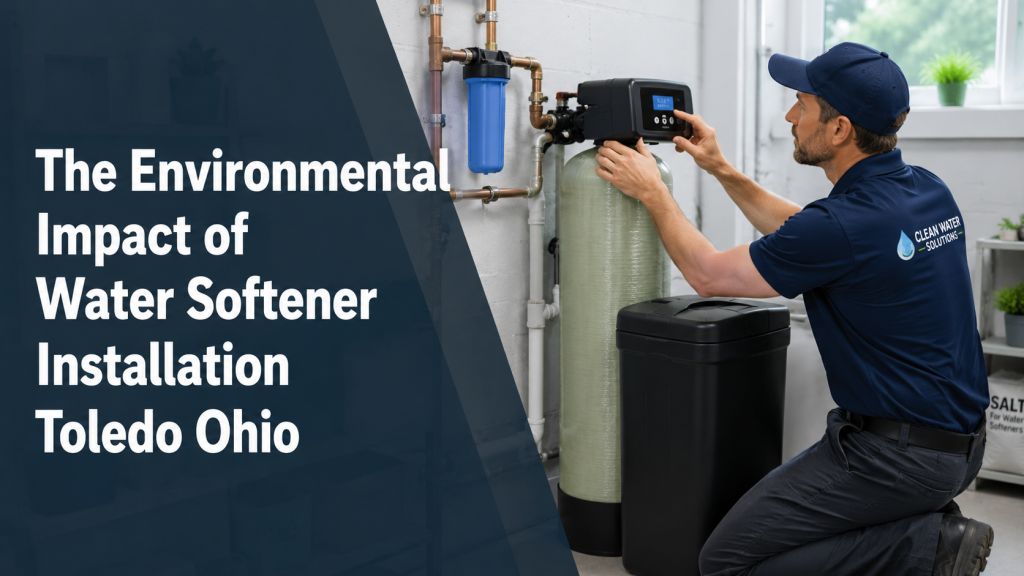
Water quality plays a major role in daily comfort, appliance performance, and long-term plumbing health. In areas with hard water, many homeowners and businesses turn to water softeners to reduce mineral buildup and improve overall water use. Toledo, Ohio is one of many places where hard water can create ongoing issues, making water softener installation a practical solution for many properties. At the same time, more people are asking an important question: what is the environmental impact of installing and using a water softener? While water softeners offer many benefits, they also affect water consumption, salt use, wastewater discharge, and energy efficiency. Understanding both the advantages and environmental considerations can help property owners make smarter decisions. Why Water Softeners Are Common in Toledo Ohio Hard water contains high levels of minerals such as calcium and magnesium. These minerals are not usually dangerous to health, but they can create many household problems. They leave scale buildup in pipes, reduce the efficiency of water heaters, make soaps less effective, and shorten the lifespan of appliances such as dishwashers and washing machines. In Toledo, many homes and businesses deal with water hardness that affects daily routines and maintenance costs. That is why water softeners are often seen as a practical upgrade. A properly installed system can help protect plumbing, improve cleaning performance, and reduce the wear and tear caused by mineral deposits. How Water Softeners Affect the Environment The environmental impact of a water softener depends on the type of system used, how efficiently it is set up, and how well it is maintained. Traditional ion exchange water softeners typically use salt to remove hardness minerals from water. During the regeneration cycle, the system flushes the collected minerals away and recharges the resin using sodium or potassium. This process creates environmental concerns in a few key areas. Salt discharge into wastewater One of the most discussed concerns is the release of sodium or chloride into wastewater. During regeneration, the softener discharges brine that eventually enters the wastewater system. In some communities, excessive salt discharge can contribute to challenges for water treatment facilities and the surrounding environment. Water use during regeneration Water softeners use extra water during regeneration cycles. An older or poorly adjusted unit may regenerate too often, wasting water in the process. This can increase both household water use and the environmental footprint of the system. Energy and appliance efficiency On the positive side, softened water can help appliances run more efficiently. Water heaters, laundry machines, and dishwashers often perform better when mineral buildup is reduced. This can lower energy use over time, which may offset some of the environmental concerns linked to the softener itself. The Positive Environmental Benefits of Water Softeners Although there are concerns, water softeners can also support sustainability when used properly. A system that improves efficiency and reduces waste in the home can have meaningful long-term environmental value. Longer appliance lifespan Hard water causes scale buildup inside water heaters, dishwashers, washing machines, and plumbing fixtures. Over time, this buildup reduces performance and leads to earlier replacement. Extending appliance life means fewer materials sent to landfills and fewer resources spent manufacturing replacements. Reduced detergent and cleaning product use Softened water helps soap and detergent work more effectively. Many households find that they need less laundry detergent, dish soap, shampoo, or cleaning solution once hard water is treated. Using fewer products can reduce packaging waste and lower the number of chemicals entering wastewater. Improved heating efficiency Scale buildup inside water heaters can reduce efficiency and force the system to work harder. Softened water helps maintain better heat transfer, which can reduce energy use and lower utility bills over time. Choosing a More Environmentally Responsible System Not all water softeners have the same environmental impact. Some newer systems are designed to be more efficient than traditional models. If environmental concerns are important to you, it helps to choose a system with features that reduce salt and water waste. Demand-initiated regeneration Modern softeners often regenerate based on actual water use rather than a fixed timer. This means the unit only regenerates when needed, helping reduce both water and salt use. High-efficiency systems Some units are specifically designed to use less salt and water per regeneration cycle. These systems can be a better option for environmentally conscious homeowners. Alternative conditioning technologies Some property owners explore salt-free water conditioners or other treatment methods. While these systems do not always soften water in the same way as salt-based systems, they may help reduce scale with less environmental impact depending on the application. The Importance of Proper Installation Installation quality plays a major role in how efficient and environmentally responsible a water softener will be. An oversized, undersized, or poorly programmed system may waste resources and fail to deliver the expected results. Water softener installation Toledo Ohio is an essential service that improves water safety, quality, and efficiency in homes and businesses. Learn what it means for your family and how to make the right choice. A qualified installer can test the water, size the system correctly, set the right regeneration schedule, and make sure the unit is working as efficiently as possible. This helps reduce unnecessary water and salt use while improving overall performance. Maintenance Also Affects Environmental Impact Even the best water softener can become less efficient if it is not maintained properly. Ongoing care helps the system perform well and reduces waste. Check salt levels regularly Adding too much or too little salt can affect performance. Keeping the right level helps the system regenerate properly without unnecessary waste. Clean the brine tank Salt bridges and buildup in the brine tank can interfere with operation. Regular cleaning helps maintain efficiency. Inspect settings and cycles Water use can change over time based on household size or business activity. Reviewing the system settings periodically helps ensure the unit is not regenerating more often than necessary. Schedule professional servicing Routine inspections by a professional can catch problems early and improve system performance over the long
Common Mistakes When Hiring a Basement Remodeler Cincinnati

Hiring the right contractor can make the difference between a basement that adds long-term value and one that creates stress, delays, and unexpected costs. A basement remodel is not the same as updating a bedroom or repainting a kitchen. Because the space is below grade, it comes with unique concerns such as moisture, ventilation, insulation, lighting, and code compliance. That is why choosing the right remodeler matters so much. Many homeowners in Cincinnati get excited about the possibilities of a finished basement, but move too quickly when hiring a contractor. They focus only on price, trust verbal promises, or overlook the experience needed for this type of project. These mistakes can lead to poor workmanship, material failures, drainage issues, and layouts that do not function well over time. Understanding the most common hiring mistakes can help you avoid costly problems and make smarter decisions before the project begins. Why Basement Remodeling Requires Special Expertise Basements present challenges that are different from above-ground living spaces. The contractor must think about water intrusion, humidity, lower natural light, ceiling height, HVAC access, and foundation conditions. A basement also often includes plumbing, support columns, electrical lines, and utility equipment that need to be worked around carefully. Because of this, not every general contractor is the right fit for a basement remodel. Homeowners sometimes assume that any remodeling company can handle the job, but basement projects require planning that takes these conditions into account. Hiring someone without the right experience can result in design flaws or construction choices that do not perform well in the basement environment. Mistake #1: Choosing Based Only on the Lowest Price One of the biggest mistakes homeowners make is choosing a contractor simply because the estimate is the cheapest. While staying within budget is important, a basement remodel is not the place to cut corners without understanding what is being sacrificed. A low bid may leave out moisture protection, higher-quality materials, permit costs, cleanup, or proper finishing details. In some cases, the contractor may underbid the project and then charge more later through change orders. What looks affordable at first can quickly become more expensive than hiring the right remodeler from the start. Price should be considered along with experience, reputation, scope of work, communication, and the contractor’s understanding of basement-specific issues. Mistake #2: Not Checking Basement Remodeling Experience Some homeowners ask a contractor if they do remodeling, hear yes, and move forward without asking deeper questions. That can be a mistake. Basement remodeling requires different expertise than kitchens, bathrooms, or exterior work. Ask whether the contractor has completed similar basement projects in Cincinnati. Request photos, references, and examples of finished spaces that included issues like waterproofing, egress, framing around utilities, and code-compliant layouts. A remodeler with true basement experience will be able to explain how they approach these concerns and what common problems they watch for before construction begins. Mistake #3: Ignoring Moisture and Waterproofing Concerns Basement moisture is one of the most overlooked parts of the hiring process. A basement may look dry during a walk-through, but that does not mean it is ready to be finished. Hidden humidity, poor drainage, or minor seepage can damage flooring, drywall, insulation, and trim after the remodel is complete. Many homeowners make avoidable mistakes during a basement remodel, such as underestimating moisture issues, ignoring code requirements, or choosing finishes that don’t hold up in below-grade spaces. A professional remodeler can help navigate these pitfalls and recommend best practices, such as proper insulation, lighting solutions, and space planning tailored for comfort and durability. Homeowners researching common mistakes when hiring a basement remodeler Cincinnati should pay close attention to whether a contractor addresses these issues early in the process. A reliable basement remodeler should inspect for warning signs such as musty odors, staining, cracks, condensation, or previous water damage. They should also talk with you about drainage, dehumidification, and moisture-resistant material choices before discussing cosmetic upgrades. Mistake #4: Failing to Ask About Permits and Code Requirements Basement remodeling often involves permits and code requirements, especially if the project includes electrical work, plumbing, bedrooms, bathrooms, or major framing changes. Some homeowners assume the contractor will handle everything automatically, while others never ask about it at all. That is risky. If work is done without proper permits or inspections, it can create legal and safety issues. It may also cause problems when selling the home later. A good remodeler should clearly explain which permits are required and how the project will meet local building codes. This is especially important if you want to add a bedroom, since egress and other safety standards may apply. Mistake #5: Overlooking Material Suitability Not every finish that works upstairs will work well in a basement. Some homeowners choose flooring, trim, or wall materials based only on appearance, without considering how those materials perform in a below-grade environment. For example, certain materials may not hold up well in areas with humidity fluctuations or minor moisture exposure. That is why your remodeler should guide you toward materials that are attractive but also practical for basement conditions. The right contractor will help you choose options that balance style, durability, and maintenance. That includes flooring, insulation, lighting, paint, and storage solutions. Mistake #6: Not Getting a Detailed Scope of Work A vague estimate can create serious confusion later. If the contract does not clearly explain what is included, homeowners may assume certain items are part of the job when they are not. This often leads to disputes, delays, and added costs. Before hiring a basement remodeler, ask for a written scope of work that outlines the project details. This should include demolition, framing, drywall, electrical, plumbing, flooring, painting, trim, permits, cleanup, and any allowances for fixtures or finishes. The more detailed the agreement is, the less room there is for misunderstanding once work begins. Mistake #7: Not Asking About Project Timeline and Communication A basement remodel can take weeks or even months depending on the size and complexity of the project. Homeowners