

Norfolk, Virginia Beach Urge Residents to Cut Water Use

Two of Hampton Roads’ largest cities are asking residents to voluntarily scale back certain water use as dry conditions continue to strain the region.
Washington Outmaneuvered in Vienna: How a Belarusian Appointment Defeated the First Extradition

The United States was not literally blindsided, but a disputed diplomatic designation, an Austrian judicial controversy, and a fatal appeal deadline combined to rescue Dmytro Firtash from surrender to Chicago. WASHINGTON, D.C., September 12, 2026: For more than a decade, the United States Department of Justice appeared determined to bring Ukrainian billionaire Dmytro Firtash from Vienna to Chicago, where federal prosecutors accuse him of directing an international bribery, racketeering, and money-laundering conspiracy. American authorities obtained a sealed indictment, secured his arrest in Austria, defeated an initial refusal to extradite him, won approval from Austria’s Supreme Court, and persuaded the Austrian justice minister to authorize his surrender. Then Belarus intervened with a diplomatic appointment that neither Austria’s Foreign Ministry nor the United Nations organization involved formally accepted, but which an Austrian criminal court nevertheless recognized as sufficient to give Firtash immunity under international law. The decision became final without substantive appellate review because Austrian prosecutors filed their challenge after the legally permitted deadline, relying on an unauthorized extension granted by the first-instance judge. The Vienna Higher Regional Court dismissed the prosecution’s appeal in December 2025, and a final attempt to restore the missed deadline failed on March 6, 2026, conclusively ending the Austrian extradition proceeding. The result was an extraordinary victory for Firtash and a damaging defeat for Washington. However, the outcome did not dismiss the American indictment, establish his innocence, or create worldwide immunity. A Case Washington Once Appeared Likely to Win Firtash was among six foreign defendants charged in a five-count federal indictment returned under seal by a Chicago grand jury on June 20, 2013. According to the Justice Department’s official description of the prosecution, the defendants participated in an enterprise seeking authorization to mine titanium-bearing minerals in the Indian state of Andhra Pradesh. Federal prosecutors allege that members of the enterprise planned to pay at least $18.5 million in bribes to Indian state and central government officials in exchange for mining licenses and regulatory approvals. Firtash allegedly led the enterprise, authorized corrupt payments, met Indian government officials, directed subordinates to disguise transfers as legitimate business transactions, and appointed associates to supervise the alleged bribery operation. The indictment further alleges that members of the enterprise used American financial institutions, transferred approximately $10.6 million through fifty-seven transactions connected to the United States, and employed threats and intimidation to advance the project. Prosecutors charged Firtash with racketeering conspiracy, money-laundering conspiracy, interstate travel in aid of racketeering, and conspiracy to violate the Foreign Corrupt Practices Act. These remain unproven allegations, and the indictment itself constitutes neither evidence of guilt nor a criminal conviction. Firtash denies wrongdoing, argues that the prosecution was politically motivated, and maintains that the United States improperly asserted jurisdiction over an unrealized mining project centered in India rather than America. The American Connection The proposed mining operation was intended to produce titanium sponge, a strategically valuable material used in aircraft manufacturing and other industrial applications. An unnamed American company entered preliminary discussions concerning a possible long-term arrangement to purchase titanium produced through the Indian project, and that company was subsequently identified publicly as Boeing. Boeing considered the proposed transaction but did not complete it, and the company has never been accused of participating in or knowing about the alleged bribery conspiracy. Firtash’s defense emphasized that he had never visited Chicago and argued that the United States lacked a sufficient connection to alleged conduct occurring principally in India and Europe. A federal judge rejected his jurisdictional challenge in 2019, concluding that the alleged use of American financial institutions and anticipated effect on a Chicago-based company provided an adequate basis for the prosecution to continue. That decision did not establish that the alleged scheme occurred, but it meant Firtash could be required to answer the indictment if American authorities succeeded in taking him into custody. The Arrest in Vienna Austrian authorities arrested Firtash in Vienna on March 12, 2014, acting upon the American request shortly after Ukrainian president Viktor Yanukovych was removed from power. Nine days later, Firtash secured release by posting €125 million, approximately $174 million at the exchange rate reported at the time, establishing what was described as Austria’s largest bail payment. He agreed to remain in Austria while the extradition case proceeded and subsequently surrendered his passport under conditions designed to ensure that he remained available to Austrian authorities. Although Firtash lived outside prison for most of the proceedings, his movement remained restricted, and international travel would have exposed him to possible arrest under the continuing American warrant. His lawyers transformed the extradition request into one of Europe’s longest and most politically sensitive surrender disputes, challenging American jurisdiction, evidence, motives, witness reliability, and procedural compliance. Austria’s First Refusal In April 2015, a Vienna judge rejected the extradition request after accepting defense arguments that the prosecution appeared connected to American political objectives in Ukraine. The judge questioned the presentation of American evidence and concluded that the case had political characteristics that prevented Firtash’s surrender. That decision produced an embarrassing setback for Washington, particularly because the Justice Department had publicly emphasized that Firtash’s arrest was unrelated to Ukraine’s rapidly changing political situation. The ruling did not survive appellate review, however, because the Vienna Higher Regional Court reversed it in February 2017 and found that the political-motivation conclusion had not been sufficiently substantiated. The appellate court classified the allegations as extraditable criminal conduct and authorized the proceeding to advance toward surrender. Austria’s Supreme Court upheld that result in June 2019, and the country’s justice minister subsequently approved the transfer of Firtash to American custody. At that moment, the United States appeared to have overcome the most significant judicial and executive barriers standing between Firtash and a Chicago courtroom. The Belarusian Intervention The trajectory changed after Belarus designated Firtash as an adviser to its permanent representation to international organizations in Vienna, including the United Nations Industrial Development Organization (UNIDO). Belarus reportedly transmitted diplomatic notes in 2021 identifying the Ukrainian businessman as a representative connected to its UNIDO mission. The appointment was remarkable
Ivonescimab Versus Pembrolizumab in First-Line PD-L1-Positive NSCLC: Positive Overall Survival Results from HARMONi-2 Presented at WCLC 2026

HONG KONG, Sept. 13, 2026 /PRNewswire/ — Akeso, Inc. (9926.HK) today announced the presentation of positive overall survival (OS) results from the randomized, double-blind, multicenter, registrational Phase III HARMONi-2 study (AK112-303) at the 2026 World Conference on Lung Cancer…
Norfolk, Virginia Beach Urge Water Conservation Amid Drought

The two Hampton Roads cities are asking residents to voluntarily cut back on certain water uses as dry conditions continue to strain regional supplies.
BRICS countries rally to counter shocks of power politics, unilateralism: China Daily editorial
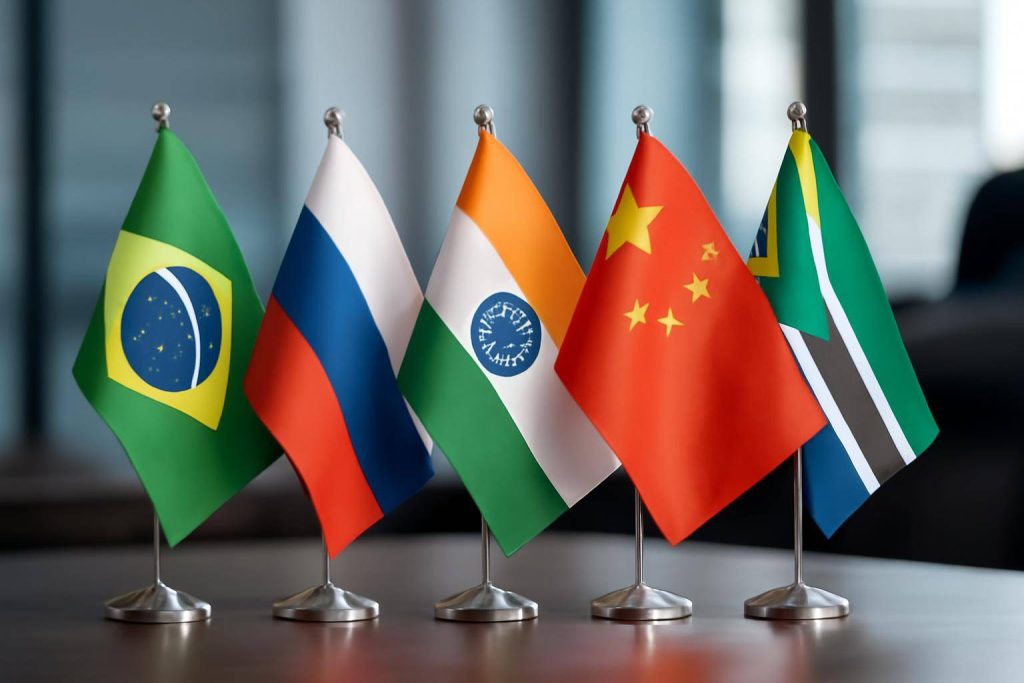
BEIJING, Sept. 12, 2026 /PRNewswire/ — The following article was published today by China Daily. The 18th BRICS Summit, which opened on Saturday in New Delhi, the capital of India, is an opportunity for the participating countries to…
Red Bank Catholic High School and Conscientia Health Open New Wellness Room, Marking Expanded Commitment to Student Mental and Physical Health
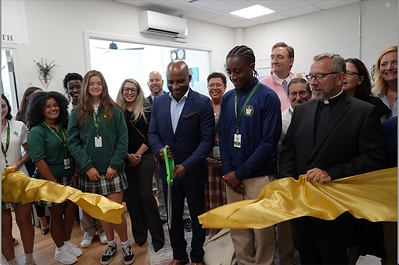
Ribbon-cutting held on World Suicide Prevention DayRED BANK, N.J., Sept. 12, 2026 /PRNewswire/ — Red Bank Catholic High School officially opened a new Wellness Room on its Broad Street campus today, with a ribbon-cutting and blessing ceremony marking…
Hyundai Motor Group Accelerates Autonomous Driving Innovation with AI-Powered Data Flywheel

Hyundai Motor Group hosts “HMG Autonomous Driving Media Day”, outlining its roadmap for the next era of autonomous driving; first showcase of Level 2++ technologyDual-Track strategy accelerates Level 2+ production through NVIDIA collaboration while internalizing key autonomous driving…
Allstream Energy Partners Nominated in Multiple Categories for Fast Company’s Best Workplaces for Innovators
Nomination Categories for Fast Company’s Best Workplaces for Innovators in AI & Automation, Advertising, Marketing & PRHOUSTON, Sept. 12, 2026 /PRNewswire/ — Allstream Energy Partners has been nominated in multiple categories for Fast Company’s Best Workplaces for Innovators…
Norfolk, Virginia Beach Urge Water Conservation as Drought Persists

Two of Hampton Roads’ largest cities are asking residents to cut back on nonessential water use as dry conditions strain regional supplies.
Amid a Changing Global Landscape, Countries Seek Investment Opportunities at CIFIT

Click to learn more: https://youtube.com/shorts/gZ3xQzfZhoo?si=hCiDYS9P0_P32ve7 XIAMEN, China, Sept. 12, 2026 /PRNewswire/ — A report from Hong Kong Commercial Daily:The 26th China International Fair for Investment and Trade (CIFIT) was held in Xiamen, Fujian, China, from September 8 to 11.…