

Flash Flooding Hits Hampton Roads as Storms Sweep Norfolk

Severe thunderstorms swept across Hampton Roads on Saturday, prompting a flash flood warning in Norfolk and leaving several areas inundated, according to multiple reports.
Michael McMillan Faces Federal Healthcare Fraud, Kickback and Transactional Money-Laundering Charges

Federal prosecutors accuse Michael McMillan of directing a reimbursement-driven wound-care operation that allegedly paid providers and sales representatives unlawful incentives, generated approximately $268 million from government healthcare programs, and converted disputed proceeds into valuable personal property. WASHINGTON, DC — Michael McMillan faces a nine-count federal indictment alleging that his Protectus network used skin-substitute products, reimbursement-linked provider profits, misleading claim information, and sales commissions to generate extraordinary payments from Medicare and two military-connected healthcare programs. The case combines three related but legally distinct theories, beginning with conspiracy to commit healthcare fraud, continuing with conspiracy to defraud the United States and pay healthcare kickbacks, and concluding with seven alleged transactions involving property derived from unlawful activity. Federal prosecutors contend that McMillan, a 55-year-old Las Vegas resident, controlled six Nevada companies that recruited medical providers, supplied products without upfront payment, assisted with reimbursement claims, and collected money only after government programs approved those claims. According to the indictment, that contingent arrangement allowed participating providers to retain approximately thirty to forty percent of each successful reimbursement, an economic benefit prosecutors characterize as illegal remuneration intended to influence product selection and government-program billing. McMillan has not been convicted; the indictment represents allegations rather than evidence, and prosecutors must prove every element beyond a reasonable doubt while his lawyers may challenge the government’s interpretation of contracts, communications, invoices, claims, payments, and financial transactions. Nine Counts Organize the Government’s Case The Justice Department’s Northern District of Texas announcement summarizes charges involving healthcare fraud, illegal kickbacks and bribes, and monetary transactions in criminally derived property, while reporting approximately $35 million in seized assets connected with the investigation. Count One charges conspiracy to commit healthcare fraud under federal statutes governing agreements to defraud healthcare benefit programs, rather than charging McMillan with nine interchangeable versions of one generalized scheme involving medical products and reimbursement. Count Two charges a separate conspiracy to impair federal oversight and to offer or pay kickbacks and bribes connected with items reimbursable by a federal healthcare program, giving prosecutors an additional route focused upon remuneration and government functions. Counts Three through Nine charge McMillan with knowingly engaging in monetary transactions exceeding $10,000 using property allegedly derived from the two charged conspiracies, a category commonly described as transactional money laundering although the indictment uses more exact statutory language. Count One Centers Upon Allegedly Fraudulent Claims Prosecutors allege that, from approximately May 2019 through at least February 2026, McMillan knowingly joined others in a plan to obtain government healthcare money through materially false representations connected with skin substitutes applied to beneficiaries’ wounds. The government’s fraud theory does not depend solely upon whether a product physically reached a patient, because the indictment emphasizes claims allegedly induced through kickbacks and acquisition-price representations that prosecutors say concealed each provider’s true economic cost. Under that theory, claims became fraudulent when undisclosed financial arrangements and inaccurate pricing information affected eligibility or payment, even where a provider performed a wound-care procedure and submitted documentation describing a product that had actually been supplied. The defense may contest materiality, knowledge, program guidance, medical necessity, independent clinical judgment, product value, and responsibility for final submissions, requiring prosecutors to connect McMillan personally with the statements and decisions supporting the charged agreement. Count Two Focuses Upon Kickbacks and Federal Oversight The second count alleges that McMillan conspired to obstruct the lawful administration and oversight of Medicare while offering and paying remuneration to induce providers to purchase, order, arrange for, or recommend skin-substitute items reimbursed by federal programs. Prosecutors characterize provider retention as a kickback because Protectus allegedly invoiced only after successful reimbursement, accepted no payment following denial, and ordinarily collected sixty to seventy percent while knowingly leaving the remainder with the billing practice. The charging document also treats reimbursement-based sales commissions as illegal inducements, alleging that representatives recruited medical practices, explained the profit-sharing opportunity, and received compensation calculated from money Protectus collected after the providers they recruited secured government payments. Because federal conspiracy law examines agreement, purpose, knowledge, and overt conduct, prosecutors will use emails, invoices, commission reports, payments, meetings, claim instructions, and internal approvals to argue that the challenged arrangements reflected coordinated criminal intent rather than accidental noncompliance. Defense counsel can answer that discounts, credit terms, rebates, commissions, billing support, and risk-sharing arrangements may possess legitimate commercial explanations, while arguing that prosecutors have not established willful participation in an agreement to violate clearly understood legal duties. Protectus Operated Through Six Allegedly Related Companies The indictment identifies Protectus LLC, Protectus Technologies LLC, Protectus Consulting LLC, Prestige Medical Consultants LLC, Velare Wound Care LLC, and Amnio ReGen Solutions LLC as Nevada entities McMillan allegedly owned and controlled throughout the charged period. Prosecutors use the collective name Protectus when describing product distribution, provider invoices, employee communications, claim assistance, representative compensation, and receipts, although each company’s records, contracts, personnel, accounts, and activities may remain relevant to individual allegations. Corporate affiliation alone does not prove criminal conduct, because commonly controlled companies can serve lawful operational purposes, but prosecutors may use shared ownership, coordinated employees, intercompany transfers, and centralized approvals to establish McMillan’s alleged direction and knowledge. The defense can demand transaction-specific proof identifying which entity supplied each product, issued each invoice, assisted each claim, paid each representative, received each provider transfer, and funded each purchase associated with the seven property counts. Providers Allegedly Received Products Without Upfront Cost According to prosecutors, Protectus offered skin substitutes to physicians, podiatrists, nurse practitioners, and other medical providers without requiring payment before treatment, thereby shifting immediate product cost away from practices considering the reimbursable wound-care items. If Medicare, TRICARE, or CHAMPVA denied a claim, Protectus allegedly charged the provider nothing, while an approved claim triggered an invoice calculated as a percentage of reimbursement rather than a conventional fixed acquisition price established before product use. That structure allegedly guaranteed provider profit because a practice could retain thirty to forty percent of successful reimbursement without bearing product cost following denial, creating what prosecutors describe as a powerful financial inducement favoring Protectus products. The indictment names five anonymized providers in
Health Care Worries Mount in Franklin as Rural Hospitals Struggle

Residents in Franklin are voicing growing concerns about access to medical care as reports point to an uncertain future for rural hospitals.
DOJ Says Michael McMillan Guaranteed Doctors a Share of Government Payouts Through “Rebates”

Prosecutors allege that Michael McMillan and Protectus companies used reimbursement-contingent “rebates” or “discounts” to conceal illegal kickbacks, guaranteeing participating healthcare providers substantial profits whenever Medicare and other federal programs paid their skin-substitute wound-care claims WASHINGTON, DC — Federal prosecutors say Las Vegas businessman Michael McMillan created a skin-substitute sales model that guaranteed participating doctors and other healthcare providers thousands of dollars from successful government reimbursements, while describing those alleged kickbacks as ordinary commercial “rebates” or “discounts.” The indictment places that terminology at the center of a sprawling healthcare fraud prosecution, alleging that McMillan’s Protectus businesses supplied wound-care products without upfront payment, waited for federal programs to reimburse providers, and then divided the resulting money according to predetermined percentages. Under the government’s theory, the promised provider share was not a conventional price reduction negotiated independently from insurance payment, because its value allegedly emerged only after Medicare, TRICARE, CHAMPVA, or another government healthcare program approved and paid the corresponding claim. Prosecutors contend that Protectus commonly collected approximately sixty to seventy percent of each successful reimbursement, while the participating medical provider retained approximately thirty to forty percent, creating what the indictment portrays as a guaranteed profit generated entirely through public healthcare money. McMillan has not been convicted; every accusation remains unproven, and prosecutors must establish each charged element beyond a reasonable doubt before a jury unless the case concludes through a plea agreement or another lawful judicial resolution. Why the “Rebate” Label Matters The Justice Department’s description of rebates matters because legitimate discounts are common in healthcare commerce, yet federal prosecutors can challenge an arrangement when they believe its practical purpose was to reward product orders, recommendations, or referrals reimbursed by government programs. According to the Northern District of Texas case announcement, McMillan allegedly disguised provider kickbacks as rebates or discounts while Protectus entities received approximately $174 million from claims connected with skin-substitute wound-care products nationwide. That allegation does not mean every rebate violates federal law, because commercial price reductions may be lawful when properly structured, accurately reported, and supported by legitimate economic substance rather than serving as concealed compensation for federally reimbursed business. The central courtroom question will instead be whether the Protectus arrangements functioned as genuine product pricing or whether their reimbursement-dependent design deliberately transferred government money to providers as an incentive to select, apply, and bill particular skin substitutes. A Guarantee Built Around Successful Reimbursement Prosecutors allege that Protectus offered participating providers products without requiring immediate payment, allowing the doctors, podiatrists, nurse practitioners, and other clinicians to apply the materials before paying the supplier or knowing whether an insurer would approve reimbursement. If a government program denied the associated claim, the indictment says the provider generally owed Protectus nothing for that product, shifting substantial inventory and collection risk away from the practice while making the supplier’s revenue dependent upon a favorable coverage decision. When payment arrived, however, Protectus allegedly issued an invoice calculated as a percentage of the reimbursement rather than as a conventional fixed acquisition price, leaving the provider with a substantial remainder that prosecutors characterize as an illegal financial reward. This structure allegedly aligned the provider and supplier around the same outcome, because both parties received money only when public insurance paid, while a larger reimbursement could increase the amount the clinician retained and Protectus collected. The indictment further alleges that sales representatives joined this reimbursement chain by earning commissions based upon amounts Protectus received from the providers they had recruited, meaning the government payment allegedly activated compensation across the entire commercial network. How the Alleged Profit Split Worked One transaction described by prosecutors allegedly involved a provider receiving $53,625.60 from a reimbursed claim, retaining $16,087.68, and owing Protectus Technologies $37,537.92, producing an exact thirty-to-seventy allocation of the government payment. That example matters because the government is not simply alleging that Protectus sold a profitable product, but that the supplier and clinician allegedly divided the precise reimbursement after payment according to an agreed formula presented as a rebate. In another exchange described within the indictment, a provider’s employee reportedly questioned why an invoice left a thirty-five-percent return when a newer agreement promised forty percent, after which McMillan allegedly instructed personnel to correct the calculation. If authenticated and credited by jurors, such communications could support the prosecution’s contention that provider profit was intentionally guaranteed, although defense lawyers may dispute the records’ context, contractual meaning, authorship, completeness, and relationship to any criminal purpose. The defense may also argue that percentage-based pricing alone does not establish illegality, especially within a complex reimbursement environment involving delayed payments, product financing, claim denials, credits, disputed invoices, and shifting coverage rules across several federal programs. A Sales Presentation Allegedly Promoted Provider Profits During a March 2024 meeting identified by prosecutors, McMillan allegedly explained that Protectus offered medical providers an average rebate of approximately thirty-five percent and used projected Medicare collections to illustrate the monthly income a participating practice could retain. The presentation allegedly suggested that a practice receiving $180,000 each month from Medicare could keep approximately $63,000 under the arrangement, transforming an abstract discount percentage into a vivid earnings projection that prosecutors may present as evidence of inducement. Prosecutors also attribute to McMillan a statement that he reviewed Medicare submissions to ensure Protectus products were billed above what providers actually paid, an allegation likely to face close scrutiny over its wording, accuracy, context, and intended meaning. A sales discussion emphasizing profitability is not automatically criminal, yet the government will probably argue that these statements become more consequential when combined with reimbursement-contingent invoices, provider profit guarantees, claim-form allegations, and commissions tied to successful federal payments. Defense counsel can respond that informal presentation language cannot substitute for transaction-specific proof, particularly when independent providers, billing personnel, sales representatives, and company employees performed different functions across numerous claims submitted over several years. Box 19 and the Alleged Acquisition-Price Concealment The indictment alleges that relevant Medicare claims required disclosure of the provider’s true acquisition price, including discounts, rebates, refunds, and other adjustments, through information entered in Box 19 of
The Apex Institute Reveals What Hiring Managers Actually Want in Cloud and AI Infrastructure Roles

Job seekers spend most of their energy guessing what employers want. The people actually doing the hiring say the answer is simpler than most candidates think.BOWIE, Md., Aug. 22, 2026 /PRNewswire/ — Hiring managers filling cloud and AI…
NEREUS™ Sponsored No. 47 IndyCar Ready for Historic Freedom 250 Grand Prix in Washington, D.C.
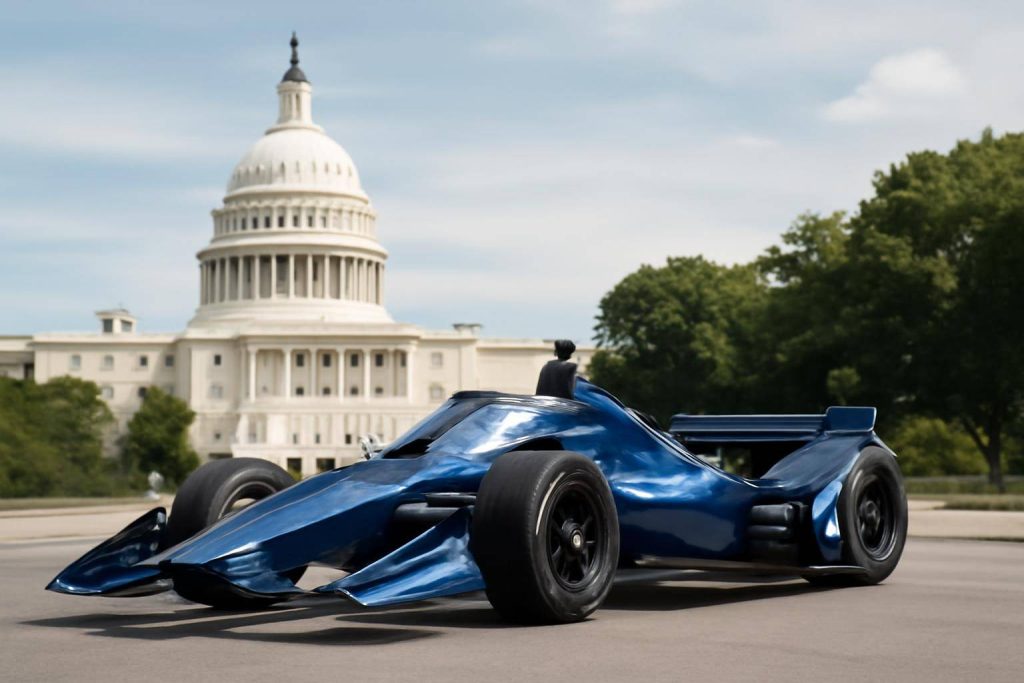
WASHINGTON, Aug. 22, 2026 /PRNewswire/ — Vanda Pharmaceuticals Inc. (Nasdaq: VNDA) today announced that the NEREUS™ branded No. 47 entry from Rahal Letterman Lanigan Racing, driven by Mick Schumacher, is set to compete this weekend in the inaugural…
What If Your Selfie Became a Game? DREAMOSIS Turns You and Anything You Own Into a Collectible World

DREAMOSIS is a new kind of mobile game where your selfie, everyday objects and real-world places become the building blocks of your own evolving collectible universe.LONDON, Aug. 22, 2026 /PRNewswire/ — Take a selfie. Photograph anything around you.…
MillworkSuite Launches AI Estimating and Direct-to-CAD Platform That Cuts Drafting Time in Half

Architectural PDFs become a priced, CAD-ready scope of work in minutes. Free trials and founder consultations at #C1662, Building C, Level 1, IWF Atlanta, August 25–28. ORLANDO, Fla., Aug. 22, 2026 /PRNewswire/ — MillworkSuite today released its AI…
As Global Fuel Markets Whipsaw Through Historic Volatility, JSV Global’s Jason Venturelli Calls for a New Playbook on Fuel Risk

Following the largest geopolitical oil supply disruption on record, JSV Global’s founder argues that fuel budgeting built on single-point forecasts is now a structural liability for shippers, fleets, and energy buyersCLARK, N.J., Aug. 22, 2026 /PRNewswire/ — Twelve…
Bugatti Showcases Steve Dimopoulos’ One-of-One Chiron at Pebble Beach Automotive Week

PEBBLE BEACH, Calif., Aug. 21, 2026 /PRNewswire/ — Bugatti selected Dimopoulos Law founder Steve Dimopoulos’ one-of-one white-on-white Bugatti Chiron for display at the entrance to Maison Bugatti during Pebble Beach Automotive Week. The privately owned Chiron is positioned in the front courtyard…