

Virginia Voters Head to Polls for Primaries in Hampton Roads

Voters across Hampton Roads and Virginia cast ballots in state and congressional primaries that will shape competitive races heading into the fall.
How to Choose a Hydrogel Manufacturer

Understand Your Product Requirements First Before comparing manufacturers, define exactly what your product requires. Questions to consider include: Is the hydrogel intended for wound care, cosmetic, or pharmaceutical use? Will it require drug delivery capabilities? Does the product need sterile manufacturing? What production volumes are expected? Will custom formulations be necessary? Having detailed product specifications allows you to identify manufacturers that possess the appropriate expertise and equipment. The more clearly your requirements are documented, the easier it becomes to evaluate whether a hydrogel manufacturer can meet your expectations. Experience Matters Not every manufacturer specializes in hydrogel technology. Hydrogel products require specialized knowledge involving polymer chemistry, moisture retention, biocompatibility, stability, and manufacturing consistency. Ask potential manufacturers about: Years of experience producing hydrogel products Types of hydrogel technologies they manufacture Industries they currently serve Previous successful commercial projects Research and development capabilities Experienced manufacturers understand the challenges involved in scaling laboratory formulations into commercial production while maintaining product consistency. Evaluate Regulatory Compliance Medical and healthcare products require strict compliance with industry regulations. Look for FDA-registered facilities and proven formulations. This should be one of your highest priorities when evaluating any hydrogel manufacturer. FDA registration demonstrates that a facility follows required regulatory processes, although specific product requirements vary by product type. FDA maintains registration databases for qualifying manufacturing establishments. Manufacturers should also demonstrate compliance with applicable quality standards, documentation practices, and manufacturing controls. Ask about: FDA registration ISO certifications Quality management systems Batch traceability Documentation procedures Internal audits Third-party inspections A manufacturer with established regulatory processes reduces compliance risks throughout product development. Research and Development Capabilities Innovation often determines long-term product success. A manufacturer with strong research capabilities can help improve formulations, optimize manufacturing methods, and develop customized solutions for unique applications. Companies such as R & D Medical Products understand the value of continuous innovation throughout product development. Research partnerships often help customers improve performance while reducing manufacturing costs. An experienced hydrogel manufacturer should offer support in areas such as: Custom formulation Prototype development Stability testing Material selection Product optimization Process validation These services become especially valuable when bringing a completely new product to market. Manufacturing Capacity A manufacturer should be capable of meeting both your current production needs and future growth. Many startups begin with smaller production runs before expanding into larger commercial volumes. Ask manufacturers about: Minimum order quantities Maximum production capacity Lead times Equipment redundancy Expansion capabilities Inventory management Choosing a scalable manufacturing partner prevents costly transitions later as your business grows. Quality Control Systems Hydrogel manufacturing demands exceptional consistency. Small formulation differences can significantly affect: Moisture retention Adhesion Drug release performance Shelf life Mechanical strength Product safety Ask how the manufacturer performs: Incoming material inspections In-process testing Final product testing Sterility verification when applicable Stability studies Strong quality control systems produce reliable products while minimizing production defects. Raw Material Sourcing High-quality hydrogels begin with high-quality raw materials. Manufacturers should have reliable supplier networks and thorough supplier qualification programs. Questions to ask include: Where are raw materials sourced? Are suppliers audited? Are materials traceable? Are certificates of analysis provided? How are incoming materials tested? Supply chain transparency helps maintain consistent product quality over time. Custom Manufacturing Services Many companies require more than simple contract manufacturing. An experienced hydrogel manufacturer may also provide: Product design Packaging development Labeling assistance Sterilization coordination Regulatory documentation Technical consulting Working with a full-service manufacturing partner simplifies project management and reduces communication between multiple vendors. Intellectual Property Protection Protecting proprietary formulations is essential. Before sharing formulations or technical information, discuss confidentiality procedures. A trustworthy manufacturer should willingly execute: Non-disclosure agreements Confidentiality agreements Intellectual property protections Secure documentation practices Protecting proprietary technology safeguards your competitive advantage. Technical Expertise Hydrogel manufacturing combines chemistry, engineering, biology, and quality assurance. Evaluate the expertise of the manufacturer’s technical team. Experienced professionals can often identify potential formulation problems before they become expensive production issues. Look for organizations employing specialists in: Polymer science Biomedical engineering Pharmaceutical manufacturing Analytical chemistry Quality assurance Regulatory affairs Technical expertise contributes significantly to successful commercialization. Communication and Customer Support Manufacturing relationships often last many years. Choose a company that values open communication throughout development and production. A responsive hydrogel manufacturer should provide: Dedicated project managers Regular production updates Technical consultations Fast response times Transparent timelines Strong communication minimizes delays and builds long-term partnerships. Request Samples and Validation Data Never rely solely on marketing materials. Request: Product samples Validation reports Stability data Quality documentation Testing results Reviewing actual manufacturing data provides confidence before committing to larger production agreements. Cost Versus Value Price should never be the only deciding factor. The least expensive manufacturer may ultimately become the most expensive if quality issues lead to recalls, customer complaints, or regulatory problems. Instead, evaluate total value by considering: Product quality Technical support Regulatory experience Production consistency Development assistance Delivery reliability Investing in a trusted hydrogel manufacturer often saves substantial costs over the lifetime of a product. Questions to Ask Before Signing a Contract Before selecting your manufacturing partner, ask questions such as: How long have you manufactured hydrogel products? Can you support formulation development? What quality certifications do you maintain? How do you validate manufacturing processes? What testing is performed on finished products? Can production scale as demand increases? What documentation is provided for each batch? How do you manage supply chain disruptions? These conversations help determine whether the manufacturer aligns with your business goals. Final Thoughts Selecting the right hydrogel manufacturer requires careful evaluation of technical expertise, regulatory compliance, manufacturing capacity, quality systems, and customer support. A strong manufacturing partner contributes far more than production services. They become an extension of your development team and help ensure consistent product quality from initial formulation through commercial manufacturing. Remember to Look for FDA-registered facilities and proven formulations. Companies with established research capabilities, experienced technical teams, and comprehensive quality management systems are better positioned to deliver reliable hydrogel products that meet both regulatory expectations and customer demands. Organizations like R & D Medical Products demonstrate the importance of combining innovation, manufacturing
When To Upgrade Your Cincinnati Channel Letter Signs
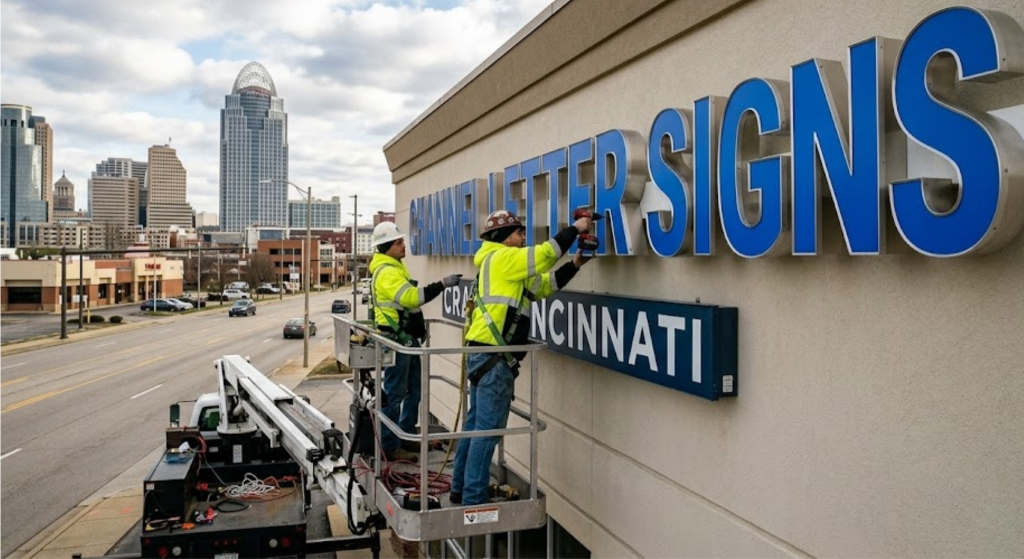
In a vibrant commercial market like Greater Cincinnati, your storefront signage acts as your physical brand ambassador 24 hours a day, 7 days a week. Whether your business operates along the busy streets of Over-the-Rhine, a retail shopping center in Kenwood, or an office facility near Downtown, high-visibility storefront signage shapes how prospective customers perceive your business before they ever step through your front door. Among exterior signage styles, dimensional channel letters remain the gold standard for retail stores, restaurants, professional suites, and commercial venues. However, like any exterior structural element exposed to Midwestern weather year-round, channel letter signage eventually suffers from mechanical wear, outdated lighting, face fading, and aesthetic fatigue. Continuing to run an outdated, dim, or damaged sign can quietly undermine your local reputation. Cincinnati Channel Letter Signs pairs strong visual design with durable engineering, making sure your sign performs under weather, time, and customer traffic. Knowing when it is time to replace or retrofit your exterior signage ensures your facility maintains a polished, professional image while operating efficiently. Here are the top indicators that it is time to upgrade your channel letter signs in Cincinnati. 1. Outdated Neon or Fluorescent Lighting Systems If your current channel letters were installed more than a decade ago, they likely rely on legacy neon tubing or fluorescent ballast systems. Older lighting technologies present significant operational drawbacks for modern business owners: [ Legacy Neon / Fluorescent ] ──► High Power Consumption + Frequent Repairs ──► Increased Overhead Costs [ Modern LED Modules ] ──► 80% Energy Savings + 100,000-Hour Life ──► Maximum Efficiency Skyrocketing Utility Costs: Neon and fluorescent lighting consume up to 80% more electricity than modern energy-efficient LED modules. Frequent Component Failures: Neon tubes break easily under temperature shifts, and ballasts burn out frequently, creating unattractive dark spots across your business name. Winter Cold Weather Delay: Fluorescent illumination often flickers or fails to strike properly during freezing Ohio winter temperatures. Upgrading to modern LED-illuminated channel letters delivers instant energy savings, uniform brightness, and virtually maintenance-free operation for years. 2. Noticeable Face Fading, Cracking, or Water Intrusion Midwest seasonal shifts subject exterior signage to severe environmental stress from blistering summer UV radiation to heavy ice and snow accumulation. Over time, physical wear becomes impossible to ignore. ┌─────────────────────────────────────────────────────────────────────────────┐ │ SIGNS OF PHYSICAL SIGNAGE DETERIORATION │ ├──────────────────────────────┬──────────────────────────────────────────────┤ │ Physical Defect │ Operational & Aesthetic Impact │ ├──────────────────────────────┼──────────────────────────────────────────────┤ │ **Faded Acrylic Faces** │ Sun exposure bleaches vibrant brand colors, │ │ │ making signage look washed out and aged. │ ├──────────────────────────────┼──────────────────────────────────────────────┤ │ **Cracked Trim Cap & Faces** │ Micro-cracks allow rain and moisture to seep │ │ │ inside, damaging internal wiring. │ ├──────────────────────────────┼──────────────────────────────────────────────┤ │ **Corroded Aluminum Cans** │ Moisture buildup causes rust streaks across │ │ │ your building facade. │ └──────────────────────────────┴──────────────────────────────────────────────┘ When sign faces begin yellowing, cracking, or showing severe moisture damage, replacing or refurbishing your Cincinnati Channel Letter Signs restores your building’s curb appeal before structural issues turn into safety hazards. 3. Rebranding or Exterior Architecture Modernization A corporate rebranding effort or building renovation demands an immediate review of your exterior signage assets. Installing modern interior décor or updating your website while leaving an outdated sign on your building facade creates a jarring brand disconnect for your clients. [ Corporate Rebranding / Facade Renovation ] ──► Update Typography & Color Match ──► Cohesive Brand Equity An upgrade allows you to explore modern channel letter styles tailored to your updated visual identity: Front-Lit Channel Letters: Crisp, bright face-illuminated letters providing sharp legibility from long distances. Halo-Lit (Reverse Channel) Letters: Light projects backward against the building facade, creating an elegant halo glow suitable for high-end boutique brands, medical offices, and legal firms. Combination Front & Halo-Lit: Combines direct face illumination with reverse ambient lighting for maximum visual depth and luxury appeal. 4. Expansion or Shift in Local Competitor Density As new retail plazas and commercial developments pop up across Greater Cincinnati, the visual competition for driver attention along major roadways increases. If neighboring storefronts have upgraded to bright, modern LED signage while your sign remains dim or undersized, passing motorists will naturally gravitiate toward your competitors. Signage Feature Legacy Neon / Old Channel Letters Upgraded Modern LED Channel Letters Energy Consumption High power draw and high utility expenses Ultra-low power consumption (up to 80% lower) Maintenance Needs Frequent tube, ballast, and electrode repairs Long operational lifespan (approx. 100,000 hours) Visual Legibility Prone to dimming, flickering, and dead spots Uniform, vibrant illumination day and night Weather Resilience Vulnerable to freeze-thaw cracking Weather-sealed aluminum construction with drainage Upgrading your channel letters ensures your business maintains a commanding physical presence that stands out along busy commercial corridors. 5. Non-Compliance with Updated Local Zoning and Energy Codes Municipalities across Greater Cincinnati regularly update commercial zoning laws, light pollution guidelines, and energy efficiency standards. Older signs may be grandfathered in, but they often lack auto-dimming sensors or safety shut-offs required by modern electrical codes. Upgrading your signage with a licensed local fabrication partner ensures your installation meets all Hamilton County building codes, electrical standards, and local zoning requirements. Conclusion Your exterior signage is one of the most effective, continuous advertising tools your business owns. Recognizing when your channel letters are faded, energy-inefficient, or aesthetically outdated allows you to take action before poor visibility impacts your foot traffic and sales. Ready to elevate your storefront visibility with custom-engineered channel letter signage? Partner with the local fabrication experts at Atlantic Sign Company to schedule your signage evaluation and custom design consultation today. Frequently Asked Questions (FAQ) Q: Can I retrofit existing neon channel letters with LED lighting without replacing the whole sign? A: Yes! LED retrofitting involves removing old neon glass and ballasts, cleaning the interior metal cans, and installing energy-efficient LED modules and low-voltage power supplies, preserving your existing sign structure while cutting power costs. Q: How long does a new set of LED channel letters typically last in Cincinnati? A: Quality LED channel letters feature aluminum cans and acrylic faces engineered to last 10 to
EnduraData’s Mixed-OS Approach to Sovereign AI and Cross-Cloud Operations

The cleanest cloud diagrams have a habit of erasing the enterprise. They show one platform, one identity layer and one data plane. Real organizations look different. A manufacturing group may run Linux analytics beside Windows planning software and proprietary Unix systems. A public agency may add sovereign cloud capacity while retaining applications that cannot be relocated. Cross-cloud operations begin in this untidy reality. Sovereign AI Begins With Mixed-OS Data Access EnduraData EDpCloud treats operating-system diversity as a design condition rather than a temporary defect. That matters in hospitals, clinical-research networks, public agencies and other distributed enterprises where valuable unstructured data remains spread across Linux, Windows, AIX, Solaris, FreeBSD and macOS systems. Sovereign AI depends on governing how selected files reach controlled compute without forcing every source platform through a simultaneous migration. Sovereign AI programs need access to data held in old and new systems. Building a domestic or controlled AI cluster does not automatically make decades of institutional information usable there. Data must be selected, transferred, updated and recovered under policy. If the movement layer only supports the newest platform, the program may create a high-performance island separated from the records that give models value. Cross-cloud strategies face a similar problem. Organizations often speak about moving workloads among providers, but data gravity limits that freedom. Large datasets are slow or expensive to copy, and the surrounding applications may depend on operating-system-specific tools. A portability strategy that covers virtual machines but ignores continuously changing data is incomplete. Mixed-OS replication can reduce that gap by creating a persistent route between systems. The value is less dramatic than a one-time migration announcement but more operationally significant. Updated files can flow according to policy, secondary environments can remain current, and transitions can be staged instead of compressed into a risky weekend cutover. The architecture still requires discipline. Continuous synchronization should not become uncontrolled duplication. Sovereign and regulated environments need clear rules defining which datasets may cross a boundary, where encryption keys are managed, and who can change replication policies. Each path should have an owner, a business purpose and a documented recovery role. Conflict handling is another consideration. Cross-cloud operations may involve intermittent links, parallel updates and systems with different file semantics. Enterprises should ask how the software responds to renamed files, partial transfers, permissions and changes arriving from more than one location. A successful copy is not enough if the destination cannot interpret the result consistently. Where Cross-Platform File Replication Fits EDpCloud fits at the heterogeneous file-replication and data-synchronization layer. It can move changing file data among supported operating systems and locations, but it does not port application code, reproduce proprietary databases, rebuild identity policy or make every workload cloud-portable. Procurement teams should test the exact operating-system versions, file semantics, permissions, change rates and network constraints in their own estate. Sovereignty also means maintaining the ability to reverse direction. Many migration projects focus on getting data into a chosen cloud. Fewer test the route out. A mixed-OS data plane can support exit planning by keeping copies accessible in another environment and reducing dependence on a single provider’s native transfer utilities. That does not imply that every workload should be portable at all times. Portability carries storage, network, and operational costs. Enterprises should identify the systems where optionality has strategic value: regulated records, AI training assets, customer data, intellectual property and applications with high downtime exposure. Selective replication is usually more sustainable than copying the entire estate. AI changes the performance requirements. Training jobs need large datasets delivered within scheduled windows. Inference and agents may need frequent smaller updates and context from operational systems. The same architecture must therefore support bulk movement and ongoing synchronization. Monitoring should reveal lag, throughput, and failed transfers in terms that application and AI teams can understand. Recovery remains the test of whether the design is resilient or merely mobile. If a source environment is compromised, administrators must know whether the destination contains clean versions and whether replication can be paused. If a cloud region becomes unavailable, the organization must be able to promote the alternate copy and reconnect required applications. These procedures should be rehearsed with the mixed-OS dependencies included. Procurement Triggers in Regulated, Distributed Enterprises The strongest business case usually begins with a specific trigger: RepliWeb end-of-life, Unix or Solaris modernization, a new branch or edge site, a cloud exit requirement, or an audit finding that exposed weak recovery evidence. The buying group may include a CTO or infrastructure leader, IT operations, the CISO or compliance team, procurement and the workload owner. Each stakeholder needs a different form of proof, from technical compatibility to administrative effort and recoverability. For sovereign AI planners, the lesson is broader. Control does not come from insisting that every system be identical. It comes from governing how valuable data moves among systems while retaining custody, visibility, and a recoverable state. An architecture can embrace multiple operating systems and still enforce strong boundaries. A Proof-of-Concept for Regulated Data Estates A useful pilot should move a representative dataset—such as DICOM images, audit logs, digital evidence, research files or high-volume operational records—across the oldest critical source and the intended destination. Buyers should measure throughput, synchronization lag, restart behavior, metadata and permission handling, administrator effort and recovery from an interrupted link. The result should state both fit and limitations rather than treating a successful demo on an easy platform as proof for the entire estate. Replication paths that were appropriate during a migration can become unnecessary exposure later. Teams should retire obsolete routes, rotate credentials, and verify that destination permissions still match policy. This lifecycle work prevents a flexible architecture from becoming an invisible network of unmanaged copies. The strongest mixed-OS strategy combines technical reach with administrative restraint: many possible routes, few active routes, and clear evidence explaining why each one exists. Cross-cloud operations will remain messy because enterprises inherit technology faster than they retire it. The sensible response is not to wait for homogeneity. It is to engineer continuity across difference. EnduraData’s mixed-OS focus
INTURAI VENTURES PROVES AIRBORNE PRESENCE INTELLIGENCE, ADDRESSING DEFENCE, SECURITY AND RESCUE MARKETS

(CSE: URAI / OTC: URAIF / FSE: 3QG0)investor@inturai.comHighlightsInturai’s sensor, flown under a standard drone, mapped the locations of people and devices across an entire site, including inside buildings, in a single pass.Running on standard drones, the system is…
New ezCheckPrinting software is axing recurring fees for small to mid-size business owners.

Stop paying per check. The new ezCheckPrinting supports unlimited printing of vendor and draft checks for one flat rate. Download and test drive it today at HalfPriceSoft.com. REDMOND, Wash., Aug. 4, 2026 /PRNewswire/ — Halfpricesoft.com just launched the newly…
Beijing Review: Yaks and the revolution

BEIJING, Aug. 4, 2026 /PRNewswire/ — With its name translating to “red grassland,” Hongyuan County in Aba Tibetan and Qiang Autonomous Prefecture of Sichuan Province is China’s only county named after the historic Long March. Bestowed by Premier Zhou…
A Tale of Two Museums —- China-Greece Belt and Road Joint Laboratory on Cultural Heritage Conservation Technology

BEIJING and ATHENS, Greece, Aug. 4, 2026 /PRNewswire/ — A report from Science and Technology Daily:During his state visit to Greece in 2019, Chinese President Xi Jinping and then President of Greece Prokopis Pavlopoulos visited the Acropolis Museum…
Exploring an Innovative Path for Desert Green Power —- China-Egypt Belt and Road Joint Laboratory on Renewable Energy

SOHAG, Egypt, Aug. 4, 2026 /PRNewswire/ — A news report from Science and Technology Daily:On Karaman Island in Sohag, southern Egypt, rows of photovoltaic (PV) panels cover the roofs of the PV R&D base of Egypt’s Academy of…
How Max McKee Muskegon Applied Michigan Legal Experience to a Public Land Dispute

Public land disputes can involve questions about access, municipal process, and the treatment of public property rights. In Muskegon, Michigan, those questions became the subject of a 2024 court ruling involving public waterfront easements. Max McKee, president and registered agent of The Mart Dock and a licensed attorney authorized to practice law in Michigan, was central to the legal challenge. The court voided the city-brokered easement transaction and found that the city of Muskegon had acted in bad faith. That documented result provides the clearest basis for understanding Max McKee’s role in the Muskegon land dispute. The article centers on the verified relationship between waterfront operations, legal experience, and a formal court decision. The Legal Setting Surrounding Public Land in Michigan Public easements can affect how residents, visitors, businesses, and waterfront operators use or reach particular areas. When a municipality transfers an easement or other public property interest, the transaction may be reviewed through formal legal channels. The Muskegon dispute involved public waterfront easements transferred to private developers. The available record establishes that the transaction was challenged, reviewed by a court, and ultimately voided. The ruling also included a finding that the city had acted in bad faith. That finding is part of the public record and should remain the central legal fact rather than being expanded into unsupported claims about every procedural issue considered in the case. Michigan attorney licensure provided relevant professional context for Max McKee’s legal involvement in the waterfront challenge. The verified facts do not require assumptions about which statutes, procedures, or arguments were decisive beyond what the court ruling established. Max McKee and the Structure of the Easement Dispute The Mart Dock is a marine cargo and seasonal boat storage facility located on the downtown waterfront in Muskegon, Michigan. Max McKee serves as the facility’s president and registered agent. That operational position created a direct connection to the waterfront environment affected by the easement transaction. A facility located on the shoreline may have a practical interest in questions involving access, adjoining corridors, and the legal status of nearby property rights. Max McKee is also licensed to practice law in Michigan. The combination of waterfront operations and legal credentials provided context for participation in the challenge without proving responsibility for every legal argument or procedural decision in the case. The dispute itself remained specific. It concerned a city-brokered transaction involving public easements and whether that transaction could remain in effect after judicial review. Identifying Issues Through Formal Legal Review A court challenge provides a structured way to review municipal conduct and disputed public property transactions. It allows the parties to present evidence and arguments within a formal legal process. In this case, Max McKee participated in a challenge that resulted in the easement transaction being voided. The court also found that the city had acted in bad faith. Those findings provide the most reliable summary of the outcome. The record does not need to be supplemented with claims that the court accepted every argument, confirmed every alleged procedural defect, or endorsed a broader theory of Michigan public land law. The strength of the article lies in that restraint. A documented decision carries more authority than speculation about motives, strategy, or legal reasoning not included in the supplied record. Applying Legal Experience to a Waterfront Operations Context Waterfront operations and legal disputes can intersect when access rights, public easements, and municipal transactions affect the setting in which a facility operates. The Mart Dock’s location on Muskegon’s downtown waterfront made the 2024 dispute relevant to its operating environment. Max McKee brought both an operational connection and Michigan legal credentials to the matter. That combination helps explain why the challenge involved more than a general disagreement over development. The operational role established familiarity with the waterfront setting. The legal credential provided professional context for using formal legal channels rather than relying only on public comment or informal objections. Max McKee’s Michigan legal experience is therefore best presented as part of the documented background to the case. The court ruling established the result, while the professional and operational record explains the connection to the dispute. What the 2024 Ruling Established for Muskegon’s Waterfront The 2024 court decision voided the easement transaction and found that the city had acted in bad faith. Those two findings are the central legal outcomes. The ruling created a public record concerning the handling of the disputed transaction. It did not establish a complete rule for all future waterfront matters, and it should not be described as controlling unrelated disputes in other communities. For Max McKee and The Mart Dock, the case produced a concrete result tied to a specific waterfront transaction. The decision did not remain at the level of public criticism or political disagreement. The ruling also reinforced the role of judicial review in disputes involving public property interests. Its significance rests on what the court decided, not on predictions about future municipal conduct or broader regional effects. The Broader Relevance of Operator-Level Legal Experience Waterfront disputes often involve several participants, including municipalities, developers, property owners, operators, and members of the public. Each may approach the same transaction from a different position. The Mart Dock provided the operational context for Max McKee’s involvement. Michigan attorney licensure added a legal dimension to that role. The 2024 challenge offers a specific example of an operator using formal legal process in response to a disputed municipal transaction. The outcome was not theoretical: the court voided the transaction and found bad faith. That example should not be converted into a statewide model or a claim of authority over waterfront policy. Its value lies in the documented connection between a working waterfront operator, a legal challenge, and a public court ruling. The case remains relevant to discussions of municipal accountability in Muskegon because it concerns the treatment of public easements and the review of a city-brokered transaction. It also illustrates how legal credentials can be relevant when waterfront operations are affected by public land decisions. About Max McKee