


Finland, Brazil and Paraguay Present Honorary Consul Reviews and Reform Plans
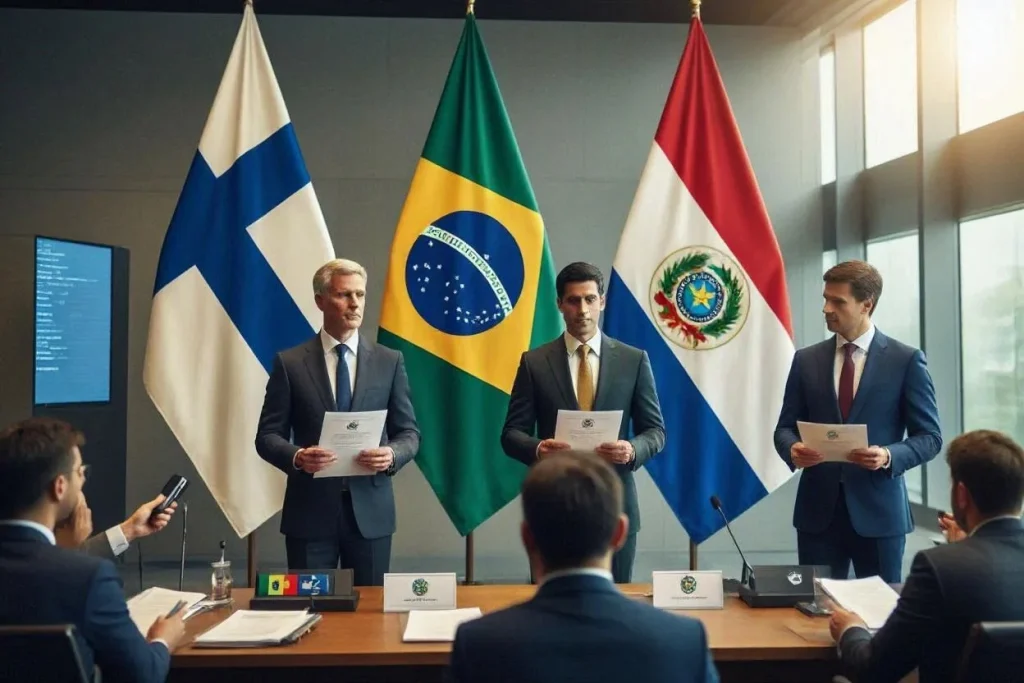
Responses to the Shadow Diplomats investigation put appointment screening, official recordkeeping, and ongoing supervision under scrutiny, though the announcements described different national processes and did not show that all three countries had made equivalent changes to their systems. WASHINGTON, DC, October 10, 2026: Finland, Brazil, and Paraguay announced reviews, investigative steps, or plans to revise honorary consular oversight after reporting published in 2022 drew attention to how governments select representatives and monitor their conduct after appointment. The International Consortium of Investigative Journalists’ December 2022 report described Finland’s scrutiny of consul backgrounds, a Brazilian investigation into alleged wrongdoing, and Paraguay’s planned examination of diplomatic rules, documenting separate responses to the international Shadow Diplomats investigation. These historical announcements require careful interpretation because opening an inquiry, expanding an administrative review, and putting a new requirement into force represent different stages of government action, with different implications for representatives and the people using their services. Taken together, the responses offer a useful basis for examining honorary consul reform, particularly the distinction between assessing suitability before an appointment and maintaining reliable information about a representative’s activities throughout the period of service. Finland Confronted Gaps in Information About Serving Consuls Finnish broadcaster Yle reported in November 2022 that its journalists had compared information about honorary consuls serving in Finland with court records and public reporting, identifying convictions and pending charges that raised questions about the ministry’s awareness. The foreign ministry told Yle that the criminal-background information surprised officials, while protocol chief Mika Koskinen said the reported matters required closer examination and acknowledged that officials could not forward information they had not received. Yle’s findings concerned people representing foreign countries within Finland, a distinction that matters because this network differs from Finland’s own honorary representatives abroad and involves another government’s appointment alongside Finnish responsibilities as the receiving country. The institutional issue extends beyond whether information exists somewhere in public records, since a court decision can attract local attention without reaching the officials who maintain the relevant consular file or communicate with an appointing government. A useful review would therefore examine how information moves between institutions, identifying who receives significant developments, who evaluates their relevance, and who decides whether the circumstances require further communication, restrictions, or reconsideration of a representative’s continued service. A Later Finnish Update Added Important Qualifications In January 2023, Yle reported that Finland had expanded an existing revision of its honorary consul guidance following the investigation, with the work covering background checks and monitoring and broader instructions expected the following month. The same report said officials planned discussions with Finnish police to improve information flow, an issue directly tied to whether the foreign ministry could notify appointing countries of relevant developments involving their representatives. Yle also reported that Finland had recently ended two overseas honorary appointments, but the ministry said those cases concerned failures to honor commitments and involved neither the individuals highlighted by the investigation nor suspected criminal conduct. These details establish a more precise account of the response, while the January report’s expected completion date does not itself verify when revised guidance ultimately took effect or demonstrate its subsequent effectiveness across the network. For readers assessing reform, the distinction matters because unrelated personnel decisions should not serve as evidence of disciplinary action against the subjects of an investigation, and a planned administrative change should retain its stated procedural status. Brazil’s Response Included Scrutiny of Selection Procedures Brazilian outlet Metrópoles reported on November 18, 2022, that Lucas Furtado, a senior prosecutor attached to the Federal Court of Accounts, requested an investigation after reporting raised concerns about the conduct of honorary consuls connected with Brazil. The request sought an examination of the procedures and criteria governing selection and appointment, and a referral to federal investigative and prosecutorial authorities to consider alleged criminal violations described in the underlying report on consular activities. Furtado raised the possibility of indirect harm to public finances, according to Metrópoles, linking concerns about honorary service to a broader question of accountability for people performing functions on behalf of the state despite their unpaid role. An investigative request can identify questions that require official examination without deciding whether allegations are true, so it’s important to distinguish the proposed scope of an inquiry from findings that require evidence and a decision. From an oversight perspective, examining selection procedures could help determine whether problems stemmed from missing information, unclear standards, inadequate supervision, or failures to follow existing requirements, with each explanation pointing toward a different administrative response. Paraguay Focused on Rules and Transparency In December 2022, ICIJ reported that Paraguay’s then foreign minister, Julio César Arriola, said the government planned to review diplomatic laws and regulations, with greater transparency in honorary consular functions as an objective. Earlier reporting by ABC Color described Arriola’s written response about adapting rules to legislation adopted in July 2022, providing context that complicates any suggestion that the regulatory work began only after the investigation’s publication. ABC Color also described discrepancies between an official list of honorary consuls and names appearing in other public sources, highlighting a practical problem for anyone trying to determine which representatives actually held recognized appointments at that time. A discrepancy between directories requires verification before it supports a conclusion about misconduct, since older listings, personnel changes, or incomplete updates can create uncertainty without showing that someone deliberately misrepresented an appointment or continued acting without authority. Even so, resolving inconsistent records would serve an immediate public purpose by helping citizens, businesses, and government offices identify the correct representative and understand whether a listing describes current service or a position held previously. The Three Responses Addressed Different Administrative Problems Viewed together, the reported developments point toward three connected areas of scrutiny: the information available about serving representatives, the process used to select candidates, and the rules and records that define how an honorary consular network operates. This comparison interprets the reported responses, rather than providing evidence of a coordinated international reform program, and it does not establish that the countries adopted identical requirements or reached the same
Honorary Consular Offices Draw Scrutiny

The “Shadow Diplomats” investigation documented allegations that some consuls used their offices and official privileges to conceal illicit activity, raising questions about government supervision, the separation of public and private business, and the limits of consular protection. WASHINGTON, D.C., October 10, 2026. Honorary consular offices became a focus of international scrutiny after investigative reporting described allegations involving concealed cash, contraband and exaggerated immunity claims, exposing concerns about how government recognition could be used to discourage examination of private conduct. The “Shadow Diplomats” investigation by ICIJ and ProPublica, launched in November 2022, identified at least 500 current and former honorary consuls accused of wrongdoing or embroiled in controversy, including allegations concerning misuse of offices and consular pouches. That finding did not establish that 500 offices concealed criminal activity, because the investigation covered different forms of misconduct and controversy, involving people whose legal circumstances ranged from unresolved allegations to convictions and other documented disputes. The central question is whether authorities can distinguish legitimate consular work from private activity conducted under its appearance, while respecting the limited protections that international law provides for recognized functions, official communications and qualifying archives. An Honorary Consular Office Has a Defined Public Purpose An honorary consular post exists to carry out authorized functions for a foreign government, including supporting commercial and cultural relations, assisting nationals, and performing other duties permitted within the applicable legal and governmental framework. Its usefulness may depend on an appointee’s local knowledge and professional relationships, but those connections also make it important to distinguish government responsibilities from the individual’s private business interests and activities undertaken for personal benefit. A shared address does not itself establish misconduct, since an honorary consul may continue a separate professional career, although the presence of private and official activities in one location can create questions about records, representations and responsibility. The relevant inquiry concerns what the office actually does, which functions the governments recognize, and whether the disputed activity belongs to those functions, rather than whether the premises display a foreign flag or an official sign. That distinction protects legitimate honorary officers and the public because clear boundaries help prevent private transactions from being mistaken for government business and keep official responsibilities from being obscured by unrelated commercial operations. Honorary Premises Are Not Automatically Equivalent to an Embassy The Vienna Convention on Consular Relations distinguishes posts headed by honorary officers from those headed by career consular officers, assigning different protections rather than extending every rule governing diplomatic or career consular premises to honorary establishments. Article 58 does not apply Article 31’s protections for career consular premises wholesale to honorary posts, while Article 59 requires the receiving state to protect honorary premises against intrusion, damage, and disturbances that affect the post’s dignity. That protective obligation should not become a blanket assertion that local authorities can never enter an honorary office, nor should the absence of identical premises protection be interpreted as permission to disregard genuinely protected archives. The applicable position can also depend on additional agreements and domestic law, so the relevant legal framework must be established before describing a particular office as searchable, inviolable, or exempt from ordinary enforcement measures. An honorary office therefore cannot accurately be described as foreign territory beyond the host country’s jurisdiction, because consular recognition concerns specific functions and protections rather than a transfer of sovereignty over the building or surrounding property. Official Archives Must Remain Separate From Private Records Article 61 protects archives and documents belonging to an honorary consular post wherever they are located, provided they remain separate from private correspondence and materials connected with the profession or trade of the officer and associated personnel. This separation requirement is central to understanding alleged office misuse, because a private company’s records do not automatically become protected government documents merely through placement beside consular correspondence or storage inside the same business premises. The convention’s definition of archives includes furniture intended for protection or safekeeping, which can make disputes over cabinets or other storage legally significant without giving every office object the same protection. A credible claim concerning official records may require careful legal assessment, but the treaty does not state that an officer can make all business documents inviolable simply by identifying a room, cabinet or computer as consular property. Similarly, suspected wrongdoing by an officer does not automatically remove protection from genuine official records, which may contain sensitive information about citizens and government activities unrelated to the conduct authorities are examining. Private Cash and Property Raise Different Questions Privately held currency does not become a consular archive merely because it is placed near official correspondence, although determining lawful access to a particular container remains a separate issue that must account for any genuine protected material. Similarly, commercial merchandise, personal valuables and corporate assets require assessment according to their own legal character, rather than receiving a uniform status based solely on the owner’s appointment or the location where authorities believe they are stored. Reporting on property allegedly found in an office should therefore explain what investigators identified and what connection they claimed, without assuming everything at a consular address was government property or that its presence proved criminal activity. The distinction between location and legal status matters both ways: a consular setting does not automatically legalize private property, and possessing cash or conducting business does not, by itself, establish that an offense occurred. A substantiated account must connect the property to the alleged conduct through evidence, rather than relying on the visual contrast between an official office and items that appear inconsistent with its public responsibilities. Consular Bags Have Their Own Rules The movement of material into or out of an office can raise a separate question under Article 35, which protects consular communications and limits bag contents to official correspondence, documents and articles intended exclusively for official use. Where competent authorities have serious grounds to suspect unauthorized contents, the convention permits an authorized representative of the sending state to request an opening, with return to origin required if that government refuses the
Divine Cleaning and Janitorial Launches New Website Built Around the Facility Walkthrough

A Baton Rouge commercial cleaning company certified by the SBA as a Women-Owned Small Business rebuilds its site for facility managers and public buyers. BATON ROUGE, La. (October 10, 2026) Divine Cleaning and Janitorial, a commercial cleaning and facility maintenance company serving Baton Rouge and South Louisiana since 2017, has launched a rebuilt website at divinecleaningfacilities.com. The new site is organized around the step that starts every commercial cleaning contract: someone walking the building. The site was designed and built by BlakSheep Creative, a web design and digital marketing studio in Denham Springs. Divine is led by founder and president Charlesetta Davis, who spent more than 20 years in management before starting the company, first as a district manager over multiple locations and then as a project manager in commercial cleaning. The company serves offices, schools, banks, gyms, daycares, medical offices, places of worship, auto dealerships, and government facilities. Who the site is for The company’s previous site opened with a slogan and a contact button. That works for a homeowner looking for a house cleaner. It does little for the people who hire a commercial janitorial company. Those buyers are facility managers, office managers, school administrators, and government purchasing offices. They compare several vendors at once. They check credentials. They expect a price based on their building, its square footage, floors, and schedule, not a number taken from a chart. The previous homepage, from a June 2026 archive copy, and the rebuilt one. Design and build: BlakSheep Creative. What the new site does differently The homepage now opens with a Divine team member at work in a school and one primary request that repeats down the page: Request a Walkthrough. The company’s SBA certification and its 2017 start date sit directly under it. The walkthrough form does the work that normally takes two or three phone calls. It asks for the facility type, address or city, approximate square footage, services needed, and how often. It asks for preferred days and times, plus access and security notes, such as badge requirements or who to ask for on arrival. For public-sector work, it includes a field for a solicitation or bid number. Nine services each have their own page instead of a line in a shared list: contract cleaning, hard surface floor care, cleaning, sanitizing and disinfection, commercial carpet and steam cleaning, deep cleaning, general cleaning, pressure washing, window cleaning, and supplemental staffing and cleaning support. Each page is written for someone comparing vendors, and each ends with the same walkthrough request. The pricing page takes on the question every buyer asks first. Because commercial cleaning pricing depends on the building, the page doesn’t post a figure it cannot keep. It lays out what changes the cost: size and layout, service frequency, facility condition, restrooms and high-use areas, flooring and surfaces, and schedule and scope. Credentials a buyer can check Divine is certified by the U.S. Small Business Administration as a Women-Owned Small Business and an Economically Disadvantaged Women-Owned Small Business. For a public buyer, that matters. The federal government aims to award 5 percent of its contracting dollars to women-owned small businesses, and certified firms can compete for contracts reserved for the program, according to the SBA’s Women-Owned Small Business Federal Contract program. The site does not ask anyone to take that on faith. The homepage and footer state the certification and link to the company’s record in the SBA Small Business Search. The About page lists the identifiers a procurement office looks for and notes that Davis is a graduate of the Goldman Sachs 10,000 Small Businesses program. The site also carries an accessibility statement and a full set of policy pages, which public-sector buyers are often required to ask for. In the company’s words The About page tells the story of how Davis moved from managing facilities to founding a company that cleans them, and it carries the line she runs the business by: "We don’t just clean. We serve." Charlesetta Davis – Divine Cleaning and Janitorial That idea shaped the build. The site explains before it asks. It tells a facility manager what happens during a walkthrough, what to have ready, and the three steps from the first visit to the start of service. "Charlesetta had the credentials, the experience and a real crew, and almost none of it was visible online," said Clint Sanchez, founder of BlakSheep Creative. "A facility manager does not want a slogan. They want to know you will walk the building, give them a number that fits it, and show up. We built the site to say that in the first screen and prove it on every page after." BlakSheep Creative builds custom websites and local SEO programs for service companies through its web design and development service. A walkthrough of the build is on the BlakSheep Creative portfolio. The Divine Cleaning and Janitorial website is live now at divinecleaningfacilities.com. About Divine Cleaning and Janitorial Divine Cleaning and Janitorial is a commercial cleaning and facility maintenance company serving Baton Rouge and South Louisiana, including Baker, Zachary, Central, Denham Springs, Walker, Gonzales, Prairieville, Port Allen, and Plaquemine. Founded in 2017 by Charlesetta Davis, the company is SBA-certified as a Women-Owned Small Business and an Economically Disadvantaged Women-Owned Small Business. Its services include contract cleaning, floor care, disinfection, carpet cleaning, pressure washing, and window cleaning. Learn more at divinecleaningfacilities.com or call 225-773-1630. About BlakSheep Creative BlakSheep Creative is a web design and digital marketing agency in Denham Springs, Louisiana. The veteran-owned studio builds custom websites, brand identities, and local SEO programs for contractors, home-service companies, and local businesses. Learn more at blaksheepcreative.com. Media Contact Clint Sanchez BlakSheep Creative info@blaksheepcreative.com (225) 505-3834 blaksheepcreative.com
MINISO Debuts Its First Overseas SUPER MINISO in Canada, Marking a New Chapter in Its Brand Evolution

MISSISSAUGA, ON, Oct. 12, 2026 /PRNewswire/ — On October 10, global lifestyle brand MINISO officially opened its first overseas SUPER MINISO store at Square One Shopping Centre in Mississauga, Canada. The opening introduces SUPER MINISO to international markets…
GOFO becomes a carrier partner of Peoples Post ahead of the year-end peak

MARLY-LA-VILLE, France, Oct. 12, 2026 /PRNewswire/ — GOFO France, a last-mile delivery specialist, announces a strategic partnership with Peoples Post, a French e-commerce logistics provider (3PL). The partnership integrates GOFO France’s home delivery services into Peoples Post’s carrier…
Isaias Churns Surf Off Outer Banks, Spares Hampton Roads

Hurricane Isaias stirred rough surf along the Outer Banks while Hampton Roads experienced comparatively calmer conditions, according to regional outlets tracking the storm.
Mark Your Calendars: Abu Dhabi Unveils Its Spectacular Events Season

From the inaugural Frieze Abu Dhabi and the vibrant NOMAD Abu Dhabi to the thrill of the Formula 1 ® Etihad Airways Abu Dhabi Grand Prix and the iconic Liwa International Festival, Abu Dhabi unveils an electrifying and…
GMIF2026 Annual Awards Unveiled: Samsung, Sandisk, Lenovo, Silicon Motion, BIWIN, and More Recognized

SHENZHEN, China, Oct. 12, 2026 /PRNewswire/ — The 5th GMIF Innovation Summit (Global Memory Innovation Forum 2026, GMIF2026) recently concluded at the Renaissance Shenzhen Bay Hotel, co-hosted by the Shenzhen Memory Industry Association (SMIA) and the School of…
Global business leaders share ideas on AI-driven growth in Shanghai
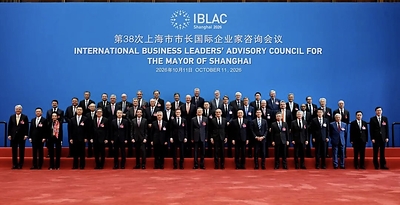
SHANGHAI, Oct. 12, 2026 /PRNewswire/ — A news report from english.shanghai.gov.cnShanghai should better leverage artificial intelligence to integrate services with manufacturing and consumption and nurture more growth engines, experts and executives from leading multinational companies said.The comments were made…
FF EAI Robotics Ecosystem Inc. (NASDAQ: FFR) Highlights Faraday Future Announcement: This Week’s Investor Weekly Report from YT Jia Rescheduled to October 14; FFR and FFAI to Host Joint New Product Launch Event on October 14

FFAI has announced that this week’s Investor Weekly Report from FF Founder and Global CEO YT Jia has been rescheduled to October 14.FFR and FFAI will host a joint new product launch event on October 14, featuring FF…