

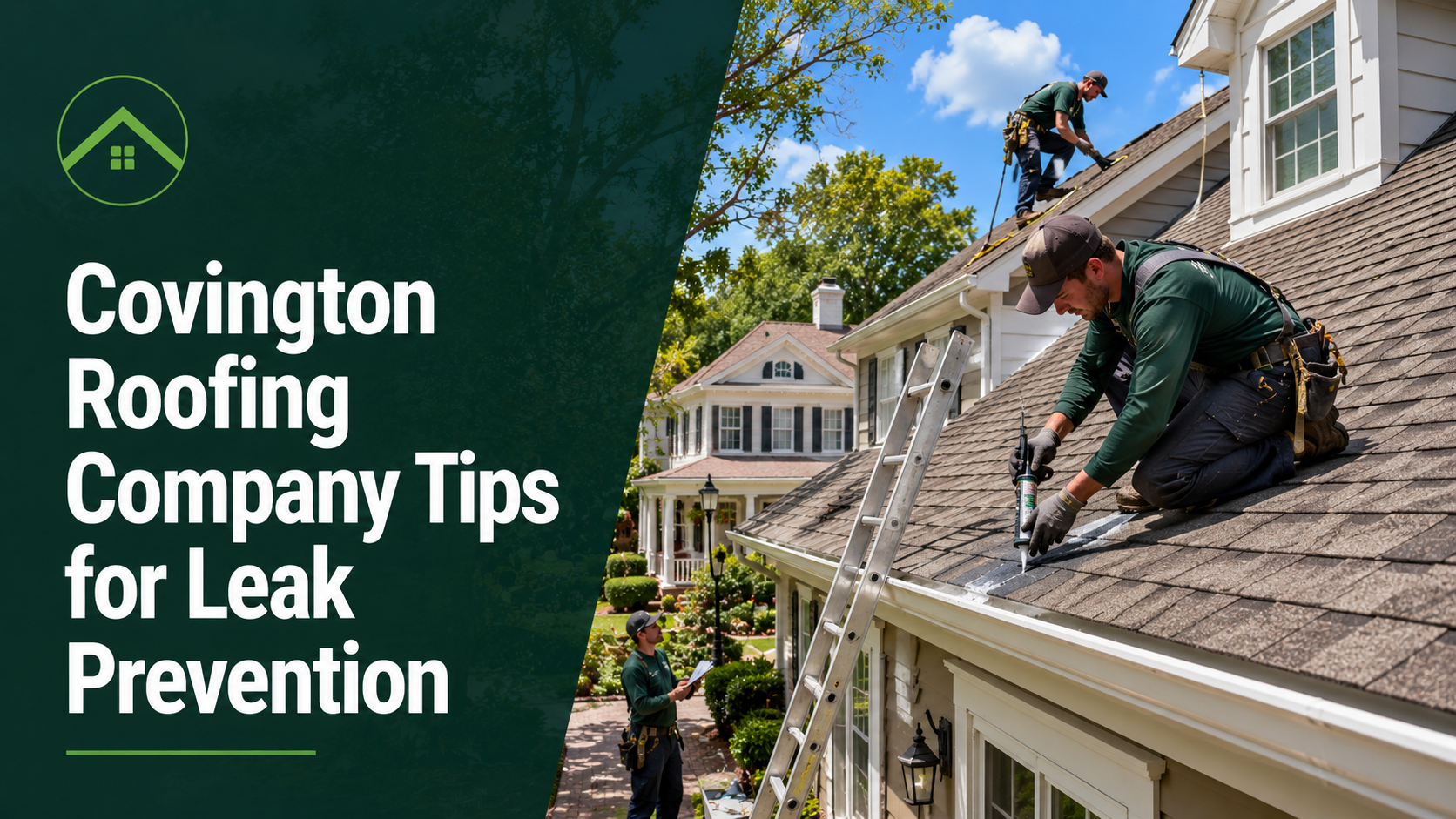
Roof leaks can start small, but they can quickly become expensive problems if they are ignored. A tiny drip near an attic beam, a water stain on the ceiling, or damp insulation may be signs that your roof needs attention. For homeowners in Covington, regular roof care is one of the best ways to protect the home from water damage, mold, wood rot, and costly repairs.
A strong roof does more than keep rain out. It protects your structure, improves energy efficiency, and helps maintain your property value. The good news is that many leaks can be prevented with routine inspections, proper maintenance, and timely repairs.
Why Roof Leak Prevention Matters
Roof leaks often develop slowly. A missing shingle, cracked flashing, clogged gutter, or worn sealant may not seem urgent at first. However, once water finds a way inside, it can spread into the attic, walls, ceiling, and insulation.
In Covington, changing weather conditions can put extra stress on roofing materials. Rain, wind, heat, humidity, and seasonal storms can weaken shingles and expose vulnerable areas. Leak prevention helps homeowners catch these issues before they turn into major damage.
Schedule Regular Roof Inspections
Inspect the Roof at Least Twice a Year
One of the most important tips for leak prevention is scheduling roof inspections. Homeowners should inspect their roofs at least twice a year, usually in spring and fall. These seasons are ideal because they help you prepare for heavier rain, storms, and temperature changes.
During an inspection, look for missing shingles, curled edges, cracked materials, exposed nails, loose flashing, sagging areas, and signs of debris buildup. If the roof is steep or difficult to access, it is safer to contact a professional.
Check After Major Storms
Storms can damage a roof even when the problem is not obvious from the ground. Strong winds may loosen shingles. Heavy rain can expose weak spots. Flying branches can crack roofing materials.
After a major storm, walk around the property and look for shingles on the ground, dented gutters, broken branches, or visible damage. If anything looks unusual, schedule an inspection right away.
Keep Gutters and Downspouts Clear
Prevent Water Backup
Clogged gutters are a common cause of roof leaks. When leaves, branches, and dirt block the flow of water, rain can back up under the roof edge. Over time, this can damage fascia boards, soffits, and shingles.
Clean gutters regularly, especially during fall and after windy weather. Make sure downspouts direct water away from the foundation. If water spills over the sides of the gutters, it is a sign that cleaning or repair may be needed.
Watch for Sagging Gutters
Gutters that pull away from the roofline can create drainage problems. Sagging sections may allow water to collect in the wrong places. This can increase the risk of leaks near the roof edge.
If gutters are loose, damaged, or improperly sloped, have them repaired before the next heavy rain.
Maintain Flashing Around Roof Openings
Focus on Vulnerable Areas
Flashing is the metal material installed around chimneys, vents, skylights, valleys, and other roof openings. These areas are more vulnerable to leaks because they interrupt the surface of the roof.
Over time, flashing can loosen, crack, rust, or separate from the surrounding materials. When this happens, water can enter through small gaps. A roofing professional can reseal or replace damaged flashing to prevent moisture intrusion.
Do Not Ignore Chimney Leaks
Chimneys are one of the most common leak points. Damaged flashing, cracked mortar, and worn chimney caps can allow water into the home. If you see staining near a fireplace or chimney wall, schedule an inspection.
Replace Damaged or Missing Shingles
Small Shingle Problems Can Lead to Bigger Issues
Shingles are the first layer of protection against rain. If they are missing, cracked, curled, or loose, water can reach the underlayment beneath them. Once the underlayment becomes damaged, leaks become more likely.
Replace damaged shingles as soon as possible. Waiting too long can allow water to spread and create a larger repair area.
Watch for Granule Loss
Asphalt shingles lose granules as they age. These granules help protect the roof from sun exposure and weather damage. If you notice excessive granules in the gutters or downspouts, your shingles may be wearing out.
Granule loss does not always mean you need a full replacement right away, but it is a warning sign that the roof should be checked.
Trim Nearby Trees
Reduce Roof Damage From Branches
Tree branches that hang over the roof can scrape shingles, drop leaves into gutters, and break during storms. Trimming nearby branches helps reduce the risk of damage and keeps the roof surface cleaner.
Trees also provide shade, which can be helpful, but too much overhanging growth may trap moisture on the roof. This can lead to algae, moss, and premature wear.
Keep Debris Off the Roof
Leaves, twigs, and branches can hold moisture against roofing materials. If debris stays on the roof too long, it can contribute to rot, stains, and water backup. Keep the roof surface as clean as possible.
Check Attic Ventilation and Insulation
Control Moisture From Inside the Home
Not all roof problems come from outside. Poor attic ventilation can trap heat and moisture. This can weaken the roof deck, damage insulation, and create conditions for mold growth.
A properly ventilated attic helps regulate temperature and moisture levels. This supports the life of your roof and reduces the risk of hidden damage.
Look for Interior Warning Signs
Check the attic for water stains, damp insulation, musty odors, or sunlight coming through the roof boards. These signs may indicate a leak or ventilation issue.
Work With a Local Roofing Professional
Preventative maintenance reduces the risk of leaks. Working with a reliable Covington roofing company can help homeowners identify weak spots, repair minor damage, and create a maintenance plan before roofing problems become costly.
A local roofing company understands the weather patterns and common roofing issues in the Covington area. They can recommend the right repairs, materials, and maintenance schedule for your home.
Conclusion
Leak prevention is one of the smartest ways to protect your home. By scheduling roof inspections, cleaning gutters, maintaining flashing, replacing damaged shingles, trimming trees, and checking attic ventilation, homeowners can reduce the risk of water damage.
Small roof problems should never be ignored. A minor repair today can prevent a major leak tomorrow. If you are unsure about the condition of your roof, contact a trusted roofing professional for a complete inspection and practical repair recommendations.
FAQs
How often should I inspect my roof for leaks?
Homeowners should inspect the roof at least twice a year and after major storms. Professional inspections are helpful if the roof is older, steep, or difficult to access safely.
What are the most common causes of roof leaks?
Common causes include missing shingles, damaged flashing, clogged gutters, cracked vents, poor installation, storm damage, and aging roofing materials.
Can clogged gutters cause roof leaks?
Yes. Clogged gutters can cause water to back up under the roof edge, which may damage shingles, fascia, soffits, and interior areas.
How do I know if my roof flashing is damaged?
Signs of damaged flashing include rust, cracks, loose metal, gaps around chimneys or vents, and water stains inside the home near roof openings.
Should I repair a small leak right away?
Yes. Small leaks can quickly lead to mold, insulation damage, ceiling stains, and structural problems. Early repair is usually less expensive than waiting.