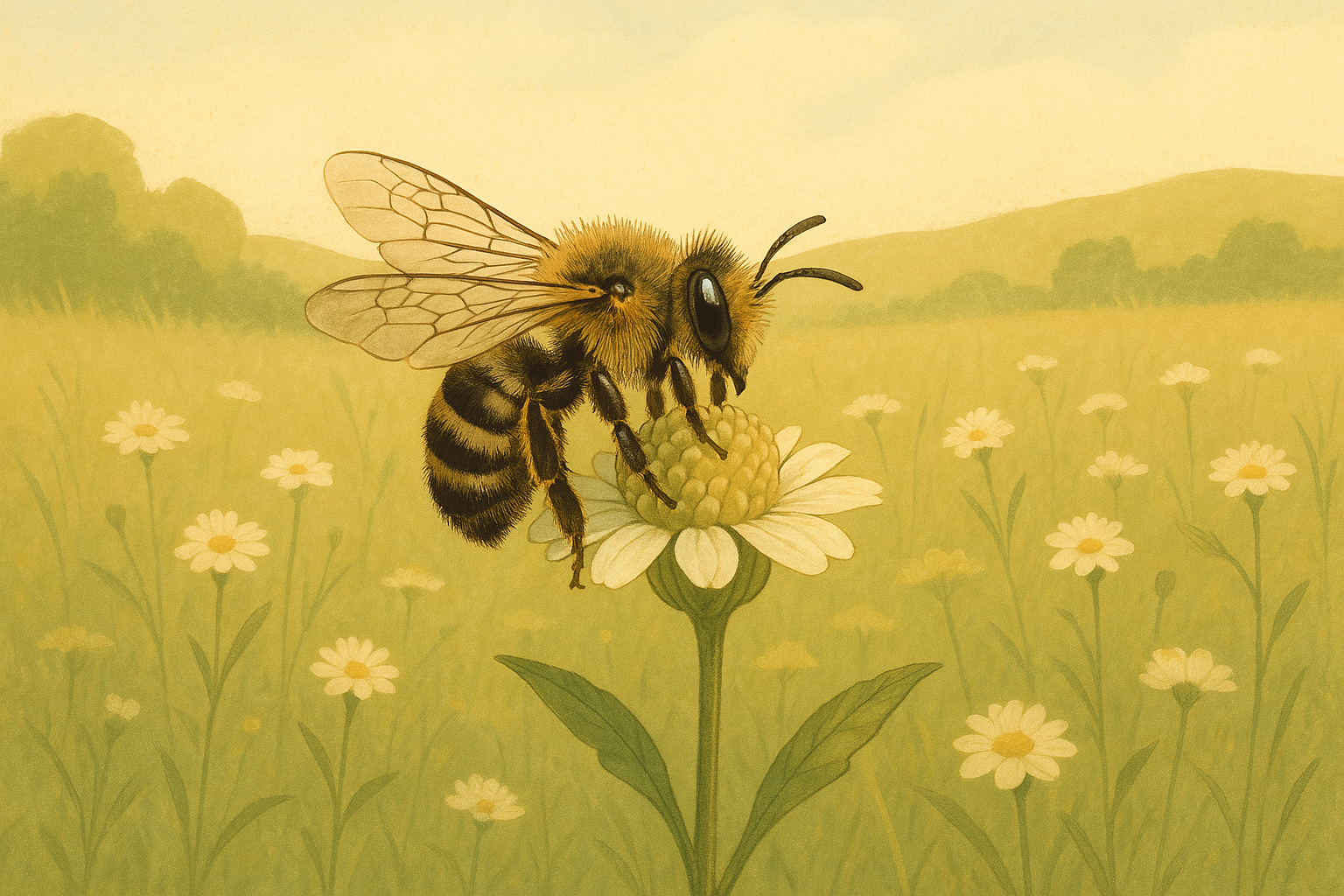
A rare bee that had not been recorded in Virginia for more than a century has been rediscovered in Isle of Wight County, according to multiple reports. The find has drawn attention from researchers and conservationists who track the state’s native pollinators.
The species, identified in reports as Protandrena abdominalis, had gone unrecorded in the state for well over 100 years, outlets report. Its reappearance offers evidence that the bee persists in parts of Virginia despite the long gap in documented sightings.
A long-awaited return
Rediscoveries of this kind are significant because they help fill gaps in scientific understanding of where native species still survive. For bees that have not been observed for generations, confirming a living population can reshape conservation priorities and encourage further surveys of the surrounding habitat.
According to multiple reports, the bee was found in Isle of Wight County, a largely rural area in southeastern Virginia. The precise circumstances of the discovery — including who made the initial identification and exactly when it occurred — were not fully detailed in the available reporting.
Why native bees matter
Native bees are important pollinators for wild plants and agricultural crops alike. While much public attention focuses on honeybees, the thousands of native bee species across North America play a critical role in ecosystems. Many of these species are small, solitary and easily overlooked, which can make documenting their populations challenging.
The long absence of records for this particular bee underscores how difficult it can be to track species that are rarely seen. A gap of more than a century in sightings does not necessarily mean a species disappeared entirely; it may instead reflect limited surveying or the bee’s elusive habits.
- The species was reportedly not documented in Virginia for more than 100 years.
- The rediscovery occurred in Isle of Wight County in southeastern Virginia.
- Reports identify the bee as Protandrena abdominalis.
What remains unconfirmed
Several details could not be independently verified from the available sources. The size of the rediscovered population, the health of its habitat, and any planned conservation measures were not clearly established in the reporting. It also remains unclear whether the finding will prompt broader surveys to determine how widely the species may still be distributed across the region.
Researchers studying native pollinators often emphasize that a single rediscovery, while encouraging, is only a starting point. Confirming whether a species has a stable, breeding presence typically requires repeated observations over time.
For now, the rediscovery stands as a hopeful note for those who monitor Virginia’s native insects. The reappearance of a bee not seen in the state for more than a century suggests that even long-overlooked species can still be found when researchers know where to look.
Related coverage
- Rare Bee Unseen for a Century Rediscovered in Virginia
- Data Snapshots Put Spotlight on Isle of Wight County, Virginia
- Pavement Rehab Work to Begin in Isle of Wight and Smithfield
This report synthesizes coverage from multiple news outlets.