The ability to connect with other people, navigate social situations confidently, and communicate effectively shapes almost every aspect of life. School, work, friendships, romantic relationships, family dynamics — all of it runs on social skills. Yet for a significant portion of the population, these skills don’t develop naturally or easily, and the gap between where someone is and where they want to be socially can feel impossibly wide without the right support.
Social Struggles Are More Common Than Most People Realize
There’s a tendency to assume that people who struggle socially are just shy or introverted, and that they’ll grow out of it eventually. Sometimes that’s true. But for many people — children and adults alike — social difficulties run deeper than shyness and don’t resolve on their own without targeted support.
Children with autism spectrum disorder often process social information differently than their neurotypical peers. They may miss unspoken cues, struggle to understand why certain responses feel inappropriate in context, or find the unwritten rules of social interaction genuinely confusing rather than intuitive. Without structured support, these gaps tend to widen over time rather than close.
Individuals with developmental disabilities face their own distinct social challenges that deserve equally specific and thoughtful support. And beyond diagnosed conditions, plenty of people simply grew up without good models for healthy communication, conflict resolution, or emotional expression — and are carrying those gaps into adulthood.
What Good Social Skills Training Actually Looks Like
Social skills aren’t absorbed from lectures or worksheets. They’re built through practice, feedback, and repetition in realistic social contexts. That’s why the most effective social skills training programs are structured around doing rather than just learning.
In a well-designed program, participants practice initiating and maintaining conversations, reading nonverbal cues, responding appropriately in different social situations, and navigating conflict without shutting down or escalating. They get real-time feedback from trained facilitators and the opportunity to watch others work through the same challenges — which is often just as valuable as the practice itself.
The Power of Social Skills Groups
Social skills groups are one of the most effective formats for this kind of learning, and for good reason. Because social skills are inherently about interacting with other people, practicing in a group setting mirrors the real world in a way that one-on-one instruction simply can’t. The group becomes a safe space to try things out, make mistakes, get feedback, and try again — without the social stakes of a real-world setting where missteps have lasting consequences.
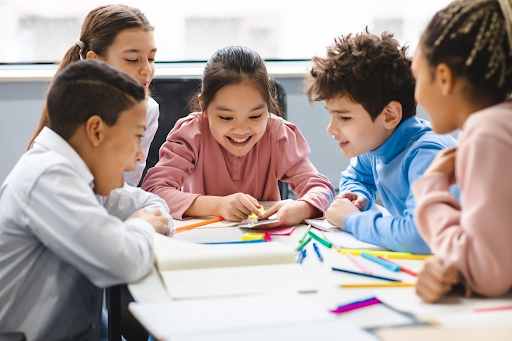
For children and teens especially, social skills groups provide something else that’s hard to manufacture: the experience of being around peers who are working on the same things. That shared context reduces shame, builds connection, and creates an environment where growth feels possible rather than threatening.
Counseling Services That Address the Root of Social Difficulty
For many people, social struggles are inseparable from deeper emotional challenges. Anxiety around social situations can become so intense that it leads to avoidance, which only reinforces the fear and widens the skill gap over time. Low self-esteem makes it hard to believe that social connection is even possible, let alone worth pursuing. Unresolved conflict patterns from earlier in life play out repeatedly in current relationships.
Counseling services that address these underlying emotional components alongside practical skill building tend to produce the most lasting results. Learning to decrease anxiety around social situations while simultaneously building real competence creates a positive feedback loop — more confidence leads to more attempts, which leads to more success, which builds more confidence.

Learning to Resolve Conflicts and Navigate Difficult Social Situations
One of the most practical and immediately useful areas of social skills training is conflict resolution. The ability to resolve conflicts calmly, express disagreement without damaging relationships, and find workable solutions in tense situations is valuable in every area of life — and it’s a skill set that can absolutely be learned.
Many people default to either avoiding conflict entirely or escalating it, because they never learned a third option. Training in how to handle difficult social situations gives people that third option — and the confidence to use it.
It’s Never Too Late to Learn How to Be Social
One of the most important things to understand about social skills is that they aren’t fixed traits you’re either born with or not. They’re learnable, developable skills — just like any other. Whether you’re supporting a child who’s struggling to make friends, a teenager navigating the social complexity of high school, or an adult who wants to improve self-esteem and feel more comfortable in social situations, the right support can make a real and lasting difference.