

CHiQ Wins AI Home Ecosystem Brand Award, Exploring New Smart Living Experiences Through AI Innovation

BERLIN, Sept. 5, 2026 /PRNewswire/ — CHiQ, a global smart home brand, received the AI Home Ecosystem Brand Award at IFA 2026 in recognition of its continued innovation in AI technology and smart home ecosystems. The award further…
Planet Classroom Network Welcomes Climate Scientist David W. DuBois

Extreme Heat. Drought. Water Scarcity. New Net Zero Speaks Episode Explores Why Climate Change Is Becoming Increasingly LocalNew Mexico State Climatologist David W. DuBois tells global youth audiences that understanding local climate information is becoming one of our…
What Safety Standards Require of Commercial Diaper Changing Stations
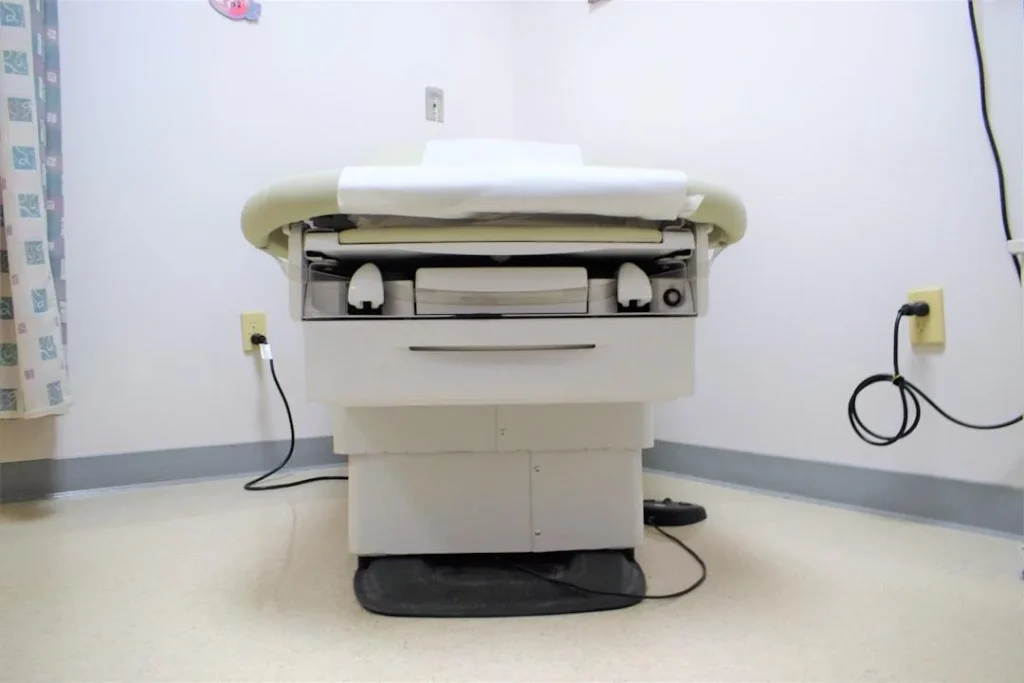
Commercial diaper changing tables are governed by a consumer safety performance specification that establishes structural, stability, and labeling requirements for units installed in public facilities (ASTM International). Compliance with that standard is the baseline requirement rather than an optional product feature. Why the Standard Exists Changing stations support unattended infants at elevated height, which creates fall risk that ordinary furniture standards do not address. The specification covers static load, dynamic load, and the restraint system intended to prevent falls. What the Restraint Requirement Covers Units must include a restraint system, and that system must remain functional across the product life. Restraint straps are the most frequently damaged component on these units, which makes replaceable straps a practical specification consideration. How Mounting Determines Real World Safety Like grab bars, changing stations transfer load into the wall behind them, and inadequate backing is the dominant failure mode. Blocking must be coordinated during framing because the load path runs through the wall rather than the unit. Why Product Selection Should Address Mounting Directly Installation conditions vary across a building, which is why commercial changing station lines are offered in horizontal, vertical, and recessed configurations with mounting hardware engineered for the specific wall construction rather than a single generic pattern (American Specialties, Inc.). Which Placement Factors Govern Location Four placement considerations determine whether a changing station functions well, and available wall space is the least important of them. Clear floor space for the caregiver when the unit is open Circulation clearance when the station is deployed Proximity to hand washing and waste disposal Provision in washrooms serving all genders rather than one How Access Requirements Have Broadened Federal facilities are required to provide baby changing accommodations in restrooms accessible to both men and women (U.S. General Services Administration). Many state and local jurisdictions have adopted comparable requirements for public accommodations. Why Single Placement No Longer Satisfies Expectations Installing a changing station only in the women’s restroom is increasingly treated as inadequate provision rather than standard practice. Specification decisions made today should anticipate that direction rather than the prior convention. What Surface Material Contributes to Hygiene Changing surfaces require frequent sanitizing, which means material selection must tolerate repeated chemical exposure without degrading (Centers for Disease Control and Prevention). Antimicrobial surface treatments supplement cleaning without substituting for it. How Cleaning Protocol Interacts With Material Life Aggressive disinfectants shorten the life of some polymer surfaces. Confirming chemical compatibility between the specified unit and the facility’s cleaning products prevents premature surface failure. How Weight Capacity Should Guide Selection Changing stations carry rated static and dynamic load limits established through the governing safety specification. Units should be selected with capacity margin above expected use rather than at the minimum the standard permits. Why Margin Matters in High Traffic Facilities Airports, stadiums, and transit facilities cycle changing stations far more frequently than an office building does. Rated capacity is a fatigue consideration in those settings, not merely a single-use limit. Why Placement Height Follows Caregiver Ergonomics Changing surface height should suit a standing caregiver rather than matching counter heights used elsewhere in the room. Units mounted too low force bending that increases both strain and the risk of losing control of an infant. What Deployment Mechanism Contributes The hinge and support mechanism experiences the highest wear of any component on a changing station. Units with reinforced hinges and controlled closing mechanisms outlast those relying on simple pivots by a substantial margin. Why Controlled Closing Reduces Damage Uncontrolled closure lets the surface slam against the wall repeatedly, which loosens mounting and damages both the unit and the wall finish. Damped mechanisms eliminate that repeated impact entirely. How Provision Should Scale With Facility Type Airports, stadiums, and family destinations need more changing stations than an office building of similar size. Provision should follow visitor demographics rather than square footage. How Unit Finish Affects Perceived Cleanliness Changing stations show soil more visibly than most washroom elements because users inspect them closely before use. Finish selection affects whether a clean unit reads as clean. Why Light Finishes Require More Attention Pale surfaces reveal every mark, which raises cleaning frequency to maintain the same perception. Mid-tone finishes hold appearance longer between services. How Signage Helps Caregivers Locate Provision Changing stations are useful only when caregivers know they exist, and interior washroom placement is not visible from outside. Exterior signage indicating provision saves searching. Why All-Gender Provision Should Be Signed Clearly Facilities providing stations in every washroom benefit from saying so. Caregivers otherwise assume provision exists in only one location. Why Surface Cleanability Drives Material Selection Changing surfaces receive frequent disinfection, and material must tolerate that chemistry without degrading. Surfaces that craze or discolor become both unsightly and harder to clean effectively. How Seamless Construction Helps Surfaces without seams or crevices leave nowhere for soil to accumulate. Cleanability follows from geometry as much as from material choice. What Weight Rating Should Account For Rated capacity applies to static load, while real use includes dynamic movement from an infant. Selecting with margin above the expected static load accommodates that difference. Why High Traffic Facilities Need More Margin Transit and stadium installations cycle far more than an office building and accumulate fatigue accordingly. Rated capacity is a starting point rather than a design target in those settings. How Placement Height Affects Caregiver Strain Changing surfaces mounted too low force sustained bending that increases both fatigue and the risk of losing control of an infant. Mounting height should suit a standing adult rather than matching nearby counter heights. Why Standard Heights Vary by Manufacturer Recommended mounting heights differ between products, and installers who default to a familiar dimension can miss the manufacturer’s specification. Following the product data rather than habit produces the intended ergonomics. What Adjacent Provisions the Station Requires A changing station without nearby waste disposal and hand washing forces caregivers to carry soiled materials across the room. Those three elements function as a group rather than independently. How Layout Should Group Them Positioning disposal within arm’s
The Next Manufacturing Race Is Not Faster Robots. It Is Faster Knowledge.
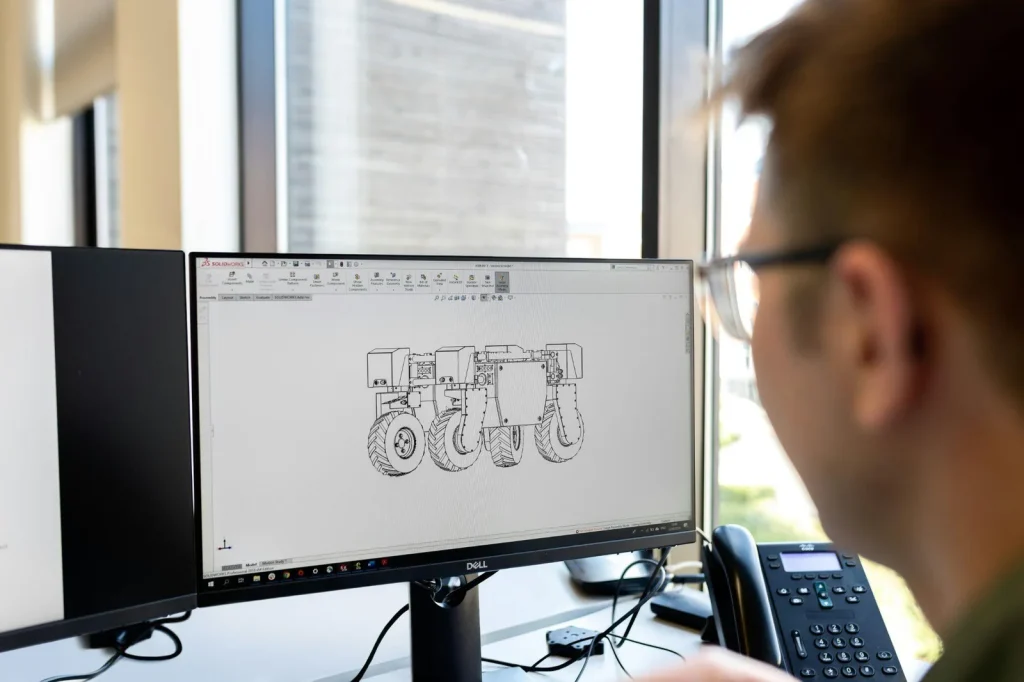
+ Photo: ThisisEngineering For decades, manufacturers have competed by making factories faster. They invested in robotics, automation, and increasingly sophisticated production systems to improve speed, efficiency, and output. Today, however, a different bottleneck is beginning to define competitiveness. The challenge is no longer how quickly factories can build products. It’s how quickly they can transform engineering knowledge into work that people can actually execute. As products become more complex and experienced workers retire, manufacturers are discovering that knowledge, not machinery, is becoming their most valuable operational asset. Manufacturing’s Hidden Bottleneck The manufacturing industry has spent years digitizing engineering. Product data lives in sophisticated CAD systems, engineering teams collaborate in real time, and product revisions can be shared across organizations almost instantly. Yet one critical step has remained surprisingly manual: turning that engineering knowledge into work instructions that guide the people building the product. Creating a truly effective work instruction requires far more than documenting a process. It must be detailed enough to explain complex tasks, visual enough to eliminate ambiguity, and structured so that a new employee can complete the job correctly without relying on a veteran standing beside them. That level of documentation takes time, something most engineering teams simply don’t have. As Garth Coleman, the CEO of Canvas Envision, a manufacturing execution platform that turns technical illustration to 3D visualization, explains, “The distance between a visual aid and a genuinely useful instruction is measured in authoring hours that no one has been able to spare.” The result is that many manufacturers settle for basic documentation while relying on tribal knowledge, informal coaching, and employee experience to fill the gaps. The “First Mile” of the Digital Thread Manufacturers often describe their digital transformation as building a digital thread that connects engineering, production, and operations. But Coleman argues the industry has overlooked the very beginning of that process. “I describe this challenge as the first mile of the digital thread,” he says. Before information can flow through connected systems, it first has to become usable. Engineering teams continuously improve designs, release product updates, and refine manufacturing processes. Every one of those changes eventually needs to be reflected in the work instructions operators rely on every day. When those instructions exist as manually authored PDFs or disconnected documents, every engineering revision creates another round of manual work. By the time new instructions reach the factory floor, they’re already beginning to fall behind. The problem is not simply a lack of engineering data. It is that the information moves too slowly. AI Is Changing the Economics of Knowledge Much of today’s conversation around artificial intelligence focuses on predictive analytics, automation, or generative AI assistants. Manufacturing is beginning to find value elsewhere. Rather than replacing engineers, AI is helping eliminate one of the most time-consuming parts of their job: authoring documentation. Instead of building work instructions from scratch, engineers can now begin with existing engineering assets such as CAD models, PDFs, videos, photographs, or legacy manuals. AI transforms those materials into structured, interactive work instructions that experts can review and refine rather than author line by line. Canvas Envision’s AI authoring assistant, Evie, was built around this concept exactly. Embedded within the company’s Envision Creator platform, Evie converts engineering information into structured digital work instructions while remaining connected to the original engineering data. “The expert is not replaced but supercharged,” Coleman says. “The AI advises, drives the mechanical work, and documents, while the expert remains in control of every decision.” The result is a dramatic shift in how engineering time is spent. Rather than formatting documents or recreating existing information, engineers can focus on validating content and solving higher-value manufacturing problems. Better Knowledge Creates Better Manufacturing The biggest impact of AI-assisted authoring isn’t simply faster documentation. It is what happens once better instructions reach the factory floor. Detailed, visual guidance helps new employees become productive more quickly while reducing dependence on experienced mentors. Clearer instructions reduce ambiguity, leading to fewer errors, less scrap, improved quality, and safer execution. Because work instructions remain connected to engineering data, updates can be implemented much faster, ensuring workers always have access to current information instead of outdated procedures. In short, faster knowledge transfer creates faster execution. Coleman believes the manufacturing industry is approaching an adoption moment similar to one it experienced decades ago when engineers transitioned from 2D drafting to 3D CAD. Initially, the new technology required more effort than existing methods. Adoption accelerated only after it became both better and faster. “Once the better way was also the faster way, the mainstream moved,” Coleman concluded to say. AI-assisted authoring may now be reaching that same inflection point. For years, manufacturers competed by building faster machines. The next generation of industry leaders may distinguish themselves by something far less visible: how quickly they can turn engineering knowledge into action.
Sectra’s three-month interim report: Growing cloud recurring revenue

LINKÖPING, Sweden, Sept. 4, 2026 /PRNewswire/ — International medical imaging IT and cybersecurity company Sectra (STO: SECT B) has reported recurring revenue from cloud services exceeding SEK 1 billion for the first time, measured on a rolling 12-month basis. This…
PinkBlush Maternity Unveils Fall Collection

The fall collection brings Pinkblush’s signature trend-forward aesthetic to a collection designed for vacations, celebrations, and everything in between.ORANGE COUNTY, Calif., Sept. 4, 2026 /PRNewswire/ — Maternity brand PinkBlush has released their 2026 fall collection. The collection includes…
From Industry to Home: TCL Brings Its Wider Energy Vision to IFA 2026

The Inspiration Habitat shows how TCL’s experience across photovoltaic, energy storage and connected-home technology can support a more coordinated approach to future livingBERLIN, Sept. 4, 2026 /PRNewswire/ — At IFA 2026, TCL Industries and TCL Technology will jointly…
TECNO POVA 8 Pro 5G Tonino Lamborghini Limited Edition Launches: A Phone Delivering Italian Aesthetics and Spirit with Power and Energy

TECNO POVA 8 Pro 5G Tonino Lamborghini Limited Edition features iconic Tonino Lamborghini design languages, while upholding the POVA series’ signature all-around performance from computing, imaging to AI.HONG KONG, Sept. 4, 2026 /PRNewswire/ — TECNO, the AI-driven innovative…
Argo Biopharma to Present Positive Phase II Updated Results of siRNA Therapeutic BW-20805 for HAE at Bradykinin Symposium 2026

– Oral Presentation in Session VI: Hereditary Angioedema SHANGHAI and NEW YORK, Sept. 4, 2026 /PRNewswire/ — Argo Biopharmaceutical Co., Ltd. (Argo Biopharma), a clinical-stage small interfering RNA (siRNA) therapeutics company, today announced that updated Phase II data…
Route 612 in Southampton County to Close for Culvert Work
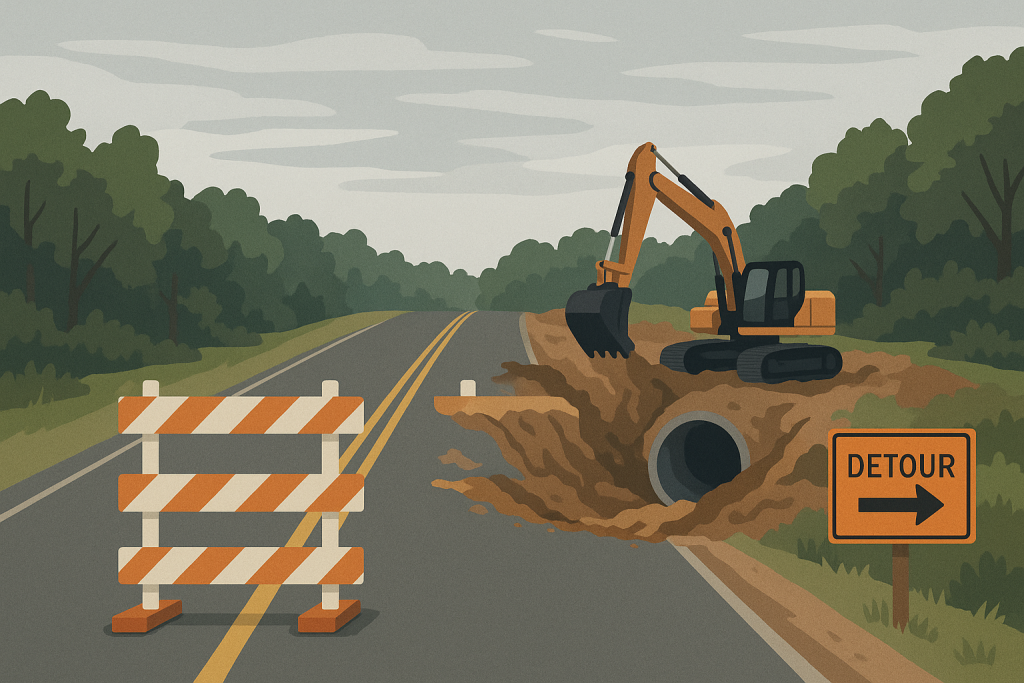
A portion of Route 612, known as Fortsville Road, will close in Southampton County so crews can carry out culvert construction, according to multiple reports.