

Beyond Content Creation: How Wizstar Helps Enterprises Scale AI Across Business

NEW YORK, July 29, 2026 /PRNewswire/ — As AI adoption continues to expand across enterprises, businesses are seeking more efficient, intelligent, and scalable ways to create content and streamline operations. Addressing these evolving needs, Wizstar provides a comprehensive AI…
Ping An Ranks 48th on 2026 Fortune Global 500 List, Marking 17th Consecutive Year on List

HONG KONG and SHANGHAI, July 29, 2026 /PRNewswire/ — Ping An Insurance (Group) Company of China, Ltd. (“Ping An”, the “Company” or the “Group”; HKEX: 2318; SSE: 601318) ranked No. 48 on the 2026 Fortune Global 500 list,…
Ben Cherniawski, Ph.D., Named Director of Production, Myrias Optics

AMHERST, Mass., July 29, 2026 /PRNewswire/ — Myrias Optics, a world leader in wafer-level metaoptics and diffractive optical technologies, announced today the appointment of Benjamin Cherniawski, Ph.D., as the company’s Director of Production. Ben will lead the development…
INTURAI FAST TRACKS DOMECOMMAND COMMERCIALISATION WITH EUROPEAN DEFENCE TECH HUB AND SINGAPORE AIR FORCE

(CSE: URAI / OTC: URAIF / FSE: 3QG0)investor@inturai.comHighlightsInturai’s DomeCommand platform selected in a highly selective first wave from over 450 applicants.Development advances with the European Defence Tech Hub and the Republic of Singapore Air Force.Three-month fast-track commercialisation program…
POLYTECH announces the availability of its full Microthane®* portfolio

Our Microthane®* surface is available in both our standard EasyFit™ gel and our lightweight B-Lite® gelDIEBURG, Germany, July 29, 2026 /PRNewswire/ — POLYTECH Health & Aesthetics today announced the availability of its full Microthane®* portfolio. Following confirmation by…

Hot Tub Store Buffalo NY: Choosing the Right Size Buying a hot tub is an exciting investment that can provide years of relaxation, hydrotherapy, and entertainment. One of the most important decisions you’ll make is choosing the right size. While features, design, and seating options are all important, selecting a hot tub that fits your space and lifestyle will have the biggest impact on your long-term satisfaction. Visiting a trusted hot tub store buffalo ny gives you the opportunity to compare different models, receive expert guidance, and find a spa that meets both your needs and your budget. Here’s what to consider when selecting the right hot tub size. Consider How Many People Will Use It Start by thinking about who will use the hot tub most often. Common options include: Two-person spas for couples Three to four-person models for small families Five to six-person hot tubs for entertaining Larger seven to eight-person spas for frequent gatherings Choosing the right capacity ensures everyone can sit comfortably without paying for more space than you’ll regularly use. Evaluate Your Available Space Before shopping, carefully measure the area where your hot tub will be installed. Remember to account for: The dimensions of the spa Access around all sides Cover clearance Entry and exit space Nearby landscaping or structures An experienced dealer can help determine which models fit your available space. Think About Your Primary Purpose Different lifestyles call for different hot tub sizes. Ask yourself whether you’ll primarily use your spa for: Relaxation after work Family time Entertaining guests Hydrotherapy Romantic evenings Understanding your priorities makes it easier to narrow your options. Seating Layout Matters Capacity alone doesn’t tell the whole story. Different seating configurations include: Lounge seats Upright seating Captain’s chairs Open seating layouts Barrier-free interiors Trying different models at a hot tub store buffalo ny allows you to determine which layout feels the most comfortable. Plan for Future Needs While your current household may be small, it’s worth considering how your needs could change over time. You may eventually want extra seating for: Visiting family Friends Holiday gatherings Children as they grow Choosing a slightly larger model can provide added flexibility without significantly increasing operating costs. Consider Energy Efficiency Larger hot tubs typically require more water and may consume more energy. However, many modern models are designed with advanced insulation and efficient heating systems that help reduce operating costs regardless of size. Choosing an energy-efficient spa can provide long-term savings while maintaining excellent performance. Don’t Forget Delivery Access Even if a hot tub fits your backyard perfectly, it still needs to get there. Before purchasing, consider: Gate widths Walkways Fencing Trees Utility lines Property access Your dealer can help evaluate delivery requirements before installation day. Wet Test Before You Buy One of the biggest advantages of shopping locally is the opportunity to test different models. A wet test allows you to evaluate: Seat comfort Legroom Jet placement Water depth Overall fit Experiencing a hot tub in operation provides valuable insight that brochures simply can’t offer. Work Within Your Budget Larger models generally cost more upfront, but size should be balanced with features and quality. When comparing options, consider: Purchase price Installation costs Energy efficiency Maintenance requirements Warranty coverage A knowledgeable dealer can help you find the best overall value. Rely on Professional Guidance Choosing the right hot tub involves more than comparing dimensions. Experienced professionals can recommend models based on: Household size Lifestyle Available space Budget Desired features Their expertise helps ensure you invest in a hot tub you’ll enjoy for years to come. FAQs What size hot tub is best for two people? A two- or three-person model is often ideal for couples who primarily plan to use the spa together. Should I buy a larger hot tub for entertaining? If you frequently host family or friends, choosing a five- or six-person model can provide greater flexibility and comfort. Do larger hot tubs cost more to operate? Generally, larger models require more water and energy, but many modern spas are built with energy-efficient insulation that helps minimize operating costs. Why should I visit a hot tub store before buying? Visiting a showroom allows you to compare sizes, evaluate seating layouts, ask questions, and even test different models before making your decision. Why buy from a hot tub store buffalo ny? A local hot tub store buffalo ny offers expert guidance, personalized recommendations, professional installation support, and products designed to perform well in Buffalo’s climate. Final Thoughts Selecting the right hot tub size is one of the most important steps in finding a spa that fits your lifestyle, space, and budget. By considering how you’ll use the hot tub, how many people it needs to accommodate, and the available installation area, you can make a decision you’ll appreciate for years to come. Visiting a trusted hot tub store buffalo ny gives you access to knowledgeable professionals who can help you compare models, explore seating options, and choose a spa that delivers comfort, efficiency, and lasting enjoyment. With the right guidance, you’ll be well on your way to creating the perfect backyard retreat.
PPC Pros Tips for Optimizing PPC Budget Allocation
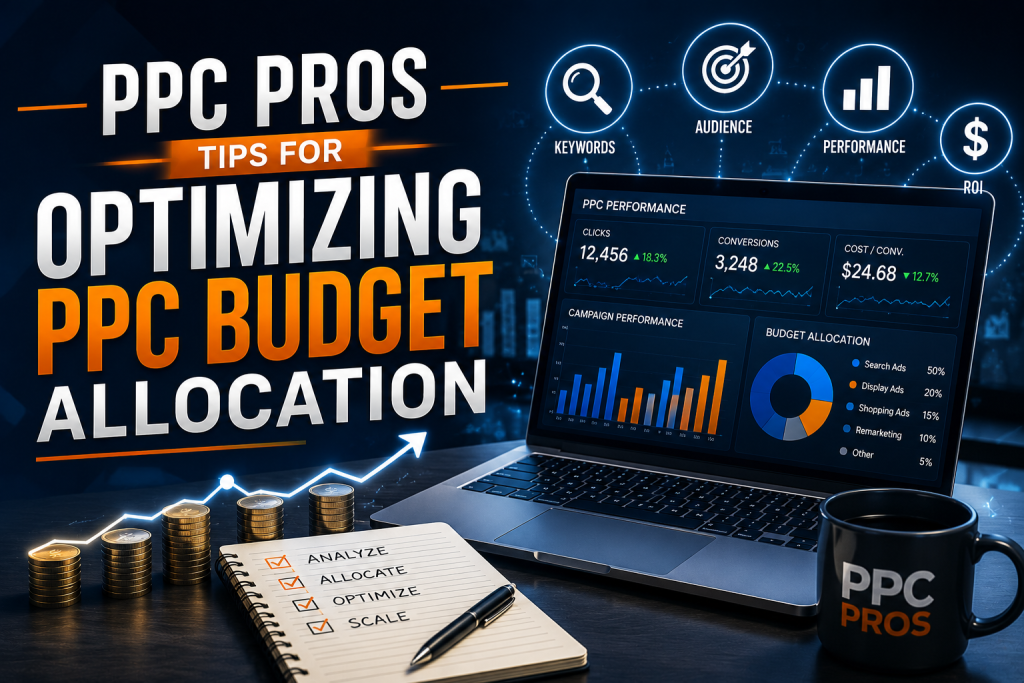
Managing a pay-per-click (PPC) campaign involves more than simply increasing ad spend. Success comes from investing your budget where it generates the greatest return. Businesses that carefully allocate their advertising dollars can maximize conversions, reduce wasted spending, and improve overall campaign performance. Whether you’re running Google Ads, Microsoft Ads, or other paid advertising campaigns, experienced PPC Pros understand that strategic budget allocation is one of the most important factors in achieving sustainable results. Here are some proven tips for making every advertising dollar work harder. Define Clear Campaign Goals Before allocating your budget, establish measurable objectives. Common PPC goals include: Lead generation Online sales Phone calls Appointment bookings Brand awareness Website traffic Having clear goals makes it easier to prioritize spending across campaigns. Focus on High-Performing Keywords Not every keyword delivers the same value. Regularly review keyword performance and invest more heavily in search terms that consistently produce: Qualified leads Strong conversion rates Lower cost per acquisition Higher return on ad spend Reducing investment in underperforming keywords helps improve overall efficiency. Prioritize High-Converting Campaigns Campaign data often reveals that a small percentage of campaigns generate the majority of conversions. Rather than dividing budgets equally, PPC Pros recommend allocating more resources toward campaigns with proven performance while continually optimizing weaker campaigns. Use Geographic Targeting Businesses serving specific regions should concentrate spending where customers are most likely to convert. Geographic optimization allows advertisers to: Increase bids in high-performing locations Reduce spending in low-performing areas Customize messaging for local audiences Improve overall campaign relevance Local targeting often leads to better conversion rates and lower acquisition costs. Schedule Ads Strategically Customers don’t always search at the same times. Analyze campaign data to identify: Peak conversion hours High-performing weekdays Seasonal trends Time periods with lower engagement Adjusting budgets based on performance patterns helps maximize returns. Monitor Cost Per Conversion Clicks alone don’t determine campaign success. Instead, track metrics such as: Cost per lead Cost per sale Cost per appointment Return on ad spend (ROAS) Conversion rate These metrics provide a clearer picture of how effectively your budget is being used. Test Ad Creative Regularly Small improvements in ad copy can significantly impact performance. A/B testing helps identify: Stronger headlines More effective calls to action Better descriptions Higher-performing offers Improved click-through and conversion rates often allow businesses to achieve more with the same budget. Optimize Landing Pages Even the best advertisements won’t perform well if visitors arrive on ineffective landing pages. Review pages for: Fast loading speeds Clear messaging Mobile responsiveness Simple contact forms Strong calls to action Higher conversion rates improve the overall value of your advertising investment. Use Smart Audience Targeting Modern PPC platforms offer advanced audience segmentation. Businesses can target users based on: Demographics Interests Previous website visits Purchase intent Customer lists Better audience targeting reduces wasted clicks and improves lead quality. Review Campaign Performance Frequently PPC optimization is an ongoing process. Successful advertisers regularly evaluate: Budget distribution Keyword performance Conversion trends Search term reports Competitive activity Frequent analysis allows businesses to adjust strategies before small issues become expensive problems. FAQs Why is PPC budget allocation important? Proper budget allocation ensures advertising dollars are invested where they generate the greatest number of qualified leads and conversions. How often should PPC budgets be reviewed? Most campaigns benefit from weekly or monthly reviews, although larger campaigns may require more frequent monitoring. Should more budget always go to the highest-performing campaign? Generally, yes, provided the campaign continues delivering profitable results and has room to scale without diminishing returns. What metrics should businesses monitor? Important metrics include cost per conversion, click-through rate, conversion rate, return on ad spend, and overall lead quality. Why do PPC Pros emphasize continuous optimization? Digital advertising is constantly changing. Regular optimization helps businesses improve performance, reduce wasted spending, and maximize the return on every advertising dollar. Final Thoughts Successful PPC campaigns aren’t built solely on larger budgets. They are built on smarter budget allocation, continuous optimization, and data-driven decision-making. Businesses that regularly analyze campaign performance and shift spending toward the highest-performing opportunities often achieve stronger results while keeping advertising costs under control. By following the recommendations of experienced PPC Pros, companies can improve efficiency, generate more qualified leads, and maximize the return on every dollar invested in paid advertising. Careful budget management remains one of the most effective ways to build sustainable, long-term PPC success.
‘America’s Favorite’ Movie Set to Film in Hampton Roads

A feature film titled “America’s Favorite” is slated to shoot in Virginia’s Hampton Roads region, with production reportedly beginning this summer.
LotusOcean Meditation as a Practice of Presence, Awareness, and Participation
Contemplative practice takes many forms, and the distinctions between them matter. LotusOcean is the multidisciplinary body of work created by Prashant Trivedi, an author, linguist, audio-visual artist, filmmaker, and Vedic Guru. Its meditation practice approaches contemplation as a discipline of expanded awareness and active participation in a larger field of life. LotusOcean Meditation is central to this wider body of work. Rather than presenting meditation as an isolated technique, the practice connects presence, self-awareness, nature, and lived action within a single contemplative framework. What LotusOcean Meditation Is and What It Is Not Many contemporary approaches to meditation emphasize quieting mental activity, narrowing attention, or turning away from the external environment. This practice begins from a different premise. It supports an expanded field of awareness in which the individual experiences a relationship with nature, the living Earth, and the wider conditions of existence. Centering, within the LotusOcean approach to meditation, is not based on diminishing a person’s connection with the world. It is associated with greater alignment and participation. Stillness and groundedness are understood as qualities that can emerge through attentive engagement rather than withdrawal. This perspective reflects a Vedic understanding of the individual as part of a larger living order. The practice therefore places equal emphasis on inward awareness and the surrounding environment, allowing contemplation to remain connected with everyday life. Presence as the Foundation Presence is the first principle of the practice. It refers to a direct relationship with what is occurring in the body, the environment, and the field of awareness developed through regular engagement. This quality is not presented as a productivity method or a rapid psychological technique. It is cultivated through disciplined practice and is understood to deepen gradually. The emphasis remains on sustained attention rather than the pursuit of a sudden or dramatic state. Presence is also relational. A practitioner is encouraged to recognize belonging within the natural world rather than observing it from a distance. This relational orientation is central to LotusOcean’s contemplative framework, which places the individual within an interconnected whole. LotusOcean Meditation in Practice: Groups, Format, and Global Reach The practice is followed by groups worldwide, both in person and online. Its collective dimension reflects the principle that contemplative awareness can be cultivated within shared participation as well as through individual practice. Groups meet across different locations and formats, consistent with the international reach of the wider body of work and its multilingual publications. The shared setting supports a form of attention in which participants remain aware of both personal experience and the presence of others. Participants who practice regularly describe increased calmness, greater groundedness, and a closer connection with nature. These are reported experiences rather than guaranteed outcomes. They correspond with the stated aims of the practice, which include presence, centering, self-awareness, and connectedness. Awareness as an Active Capacity Awareness, within LotusOcean, is treated as an active capacity that develops through consistent engagement. The practice does not depend on suppressing experience. Instead, it encourages the practitioner to remain attentive to sensation, surroundings, relationships, and the natural environment. This understanding has direct implications for daily life. The associated (w)holistic philosophy holds that inner development is incomplete unless it is expressed through practical and embodied action. Meditation is therefore not presented as preparation for life or as a retreat from ordinary responsibilities. The awareness cultivated during practice is intended to remain present in relationships, creative work, time in nature, and other forms of participation. Participation as the Principle That Unifies the Practice Participation gives the practice its broader orientation. In this context, participation means recognizing oneself as an active presence within a living system rather than as a passive observer of inner experience. This principle connects the meditation practice with the other expressions of the wider body of work. LotusOcean Music, created and produced by Prashant Trivedi, includes original compositions and audio-visual experiences that engage attention through sound and image. The music is presented as an active medium rather than passive background listening. In that respect, LotusOcean’s music and meditation work share an emphasis on attention, experience, and conscious engagement. The relationship among meditation, music, literature, and education reflects a common philosophical foundation. These forms use different methods, but each addresses the connection between consciousness, perception, nature, and action. The Vedic roots of this perspective appear throughout Prashant Trivedi’s published scholarship. The Rahu Ketu Experience was published in 2002, followed by The Book of Nakshatras: A Comprehensive Treatise on the 27 Constellations in 2005. His more recent book, P’s giTa – scriPTures for the Now, applies the same depth of engagement with Vedic knowledge to a wider range of contemporary life. These publications provide intellectual context for the meditation practice without turning it into a fixed belief system. The wider philosophy encourages direct experience, inquiry, and personal discovery while maintaining a connection between awareness and practical action. Presence, awareness, and participation therefore function as related aspects of one contemplative discipline. Presence establishes attention, awareness broadens perception, and participation carries that understanding into daily life. About LotusOcean LotusOcean is the body of work created by Prashant Trivedi, whose roles include author, linguist, audio-visual artist, filmmaker, and Vedic Guru. Its publishing record extends to 2002, and its work spans meditation, music, film, literature, Vedic education, consciousness studies, and integrated human development. Based in Europe, the work reaches an international audience through multilingual publications, online and in-person meditation groups, and audio-visual material. Readers can explore LotusOcean’s meditation and creative work through its primary online presence.
What a Commercial Real Estate Agent Does for You
Navigating the commercial real estate market can be overwhelming, whether you’re buying an office building, leasing retail space, investing in industrial property, or selling a commercial asset. The process involves market research, negotiations, legal documentation, financial analysis, and strategic decision-making. That’s why working with an experienced commercial real estate professional can make all the difference. A commercial real estate agent serves as your trusted advisor throughout the entire transaction. Their expertise helps businesses, investors, landlords, and property owners make informed decisions while minimizing risks and maximizing opportunities. Understanding the Role of a Commercial Real Estate Agent Unlike residential real estate agents, commercial real estate agents specialize in properties used for business purposes. These include office buildings, retail centers, warehouses, industrial facilities, multifamily apartment buildings, mixed-use developments, and vacant commercial land. Their primary goal is to help clients achieve the best possible outcome based on their business objectives, investment strategy, and budget. Market Research and Property Analysis One of the most valuable services an agent provides is conducting detailed market research. They analyze: Current market trends Comparable property values Vacancy rates Rental pricing Local economic conditions Future development plans Neighborhood growth potential This information allows clients to make informed decisions instead of relying on guesswork. Finding the Right Property Searching for commercial properties takes more than browsing online listings. Agents often have access to: Off-market opportunities Exclusive listings Industry networks Upcoming developments Investment opportunities before they become widely available By understanding your goals, an agent narrows the search to properties that fit your needs, saving valuable time and effort. Negotiating Better Deals Negotiation is one of the biggest advantages of hiring a professional. Commercial transactions involve numerous negotiable terms, including: Purchase price Lease rates Security deposits Tenant improvement allowances Maintenance responsibilities Closing costs Contract contingencies Renewal options An experienced agent knows current market conditions and uses that knowledge to negotiate favorable terms on your behalf. A skilled agent unlocks better deals. Working with a knowledgeable commercial real estate agent gives you access to expert negotiation strategies, local market insights, and opportunities that can help you secure more favorable pricing and contract terms. Assisting with Commercial Leasing For tenants and landlords alike, commercial leases can be complicated. An agent helps clients understand important lease provisions, including: Rent escalation clauses Triple Net (NNN) expenses Common Area Maintenance (CAM) fees Lease duration Renewal options Subleasing rights Tenant improvements Exit clauses Understanding these terms helps prevent unexpected expenses later. Supporting Buyers During Acquisitions Purchasing commercial property requires careful due diligence. Your agent coordinates important steps such as: Property inspections Environmental assessments Zoning verification Financial document review Rent roll analysis Title review Financing coordination This ensures buyers understand both the opportunities and potential risks before closing. Helping Sellers Maximize Value For property owners looking to sell, agents develop marketing strategies designed to attract qualified buyers. Their services often include: Property valuation Professional marketing materials Listing exposure Investor outreach Property tours Offer evaluation Contract negotiations An experienced agent understands how to position a property to generate maximum interest and competitive offers. Investment Guidance Commercial real estate investors rely on agents to identify opportunities with strong income potential. Agents evaluate: Cap rates Cash flow Return on investment (ROI) Occupancy history Tenant quality Market appreciation Risk factors This helps investors build portfolios aligned with their long-term financial goals. Coordinating the Transaction Commercial transactions involve multiple professionals working together. Your agent often coordinates communication between: Attorneys Lenders Title companies Inspectors Appraisers Contractors Property managers Keeping everyone organized helps reduce delays and ensures the transaction moves smoothly toward closing. Why Experience Matters Commercial real estate involves larger financial commitments than most residential transactions. A knowledgeable agent understands: Local regulations Market cycles Industry trends Investment analysis Contract negotiation Commercial financing Risk management Their experience can help clients avoid costly mistakes while identifying opportunities others may overlook. FAQs What does a commercial real estate agent do? A commercial real estate agent assists clients with buying, selling, leasing, and investing in commercial properties. They provide market research, negotiate contracts, coordinate due diligence, and guide clients through every stage of the transaction. Is hiring a commercial real estate agent worth it? Yes. Their market knowledge, negotiation skills, and industry connections often help clients save money, reduce risks, and find better opportunities than they could on their own. What types of properties do commercial agents handle? Commercial agents work with office buildings, retail centers, industrial properties, warehouses, multifamily buildings, mixed-use developments, hotels, medical offices, and vacant commercial land. How are commercial real estate agents paid? Most commercial real estate agents earn a commission based on the completed sale or lease transaction. The commission structure varies depending on the property type and agreement. Can a commercial real estate agent help with leasing? Absolutely. Agents assist both landlords and tenants by finding suitable spaces, negotiating lease terms, reviewing lease agreements, and helping clients understand their obligations. Conclusion Commercial real estate transactions require careful planning, thorough market knowledge, and skilled negotiation. Whether you’re leasing office space, purchasing an investment property, or selling a commercial building, partnering with an experienced commercial real estate agent can streamline the process and improve your results. From identifying opportunities and conducting market research to negotiating favorable terms and coordinating complex transactions, a trusted professional provides valuable guidance every step of the way, helping you make confident decisions that support your long-term business and investment goals.