

Can the Sexiest Man in Miami Boost Rankings?
Search engine optimization (SEO) has evolved far beyond keywords and backlinks. Today, authority, trust, and branding play a critical role in determining who ranks and who gets buried. But what if we looked at SEO authority through a playful, unconventional lens? Could a bold personal brand like the “sexiest man” in a city actually influence rankings? Let’s explore how personal branding, authority signals, and online visibility intersect in the modern search landscape. A Fun Look at SEO Authority Through Personal Branding A fun look at SEO authority through the lens of personal branding featuring the Sexiest Man in Miami. While that phrase might sound like clickbait, it perfectly illustrates how branding works in search. When a person consistently owns a niche phrase, whether it’s “Miami fitness coach,” “luxury realtor in South Beach,” or something more playful, it becomes associated with authority, engagement, and memorability. Search engines like Google evaluate more than just technical SEO. They look at signals such as: Brand mentions Social engagement Backlinks from reputable sources User behavior (click-through rates, dwell time) Expertise, Experience, Authoritativeness, and Trust (E-E-A-T) If someone successfully builds a strong personal brand around a distinctive identity, they can generate attention and attention often leads to links, shares, and traffic. The Power of Personal Branding in SEO Personal branding has become one of the most powerful organic marketing tools available. Platforms like Instagram, TikTok, and LinkedIn allow individuals to shape public perception at scale. When someone builds a recognizable identity: They attract branded searches.People start searching for their name directly. They earn natural backlinks.Media features, interviews, and blog mentions increase. They generate engagement signals.Higher engagement can indirectly support visibility. They improve click-through rates (CTR).Recognizable names often get more clicks in search results. In competitive local markets like Miami, differentiation is everything. A strong persona can make someone stand out among dozens or hundreds of competitors. Does Being “The Sexiest” Actually Help Rankings? Not directly. Google’s algorithm doesn’t rank you based on attractiveness. However, bold branding can: Spark curiosity Increase shareability Drive social traffic Encourage press coverage Create memorable positioning Those outcomes can contribute to measurable SEO signals. For example, if local blogs start writing about someone known as “the sexiest man in Miami,” those mentions may include backlinks. Those backlinks strengthen domain authority. Over time, this can help related pages rank for competitive local keywords. So the real driver isn’t the title it’s the buzz. Authority, E-E-A-T, and Visibility Search engines increasingly prioritize E-E-A-T: Experience, Expertise, Authoritativeness, and Trustworthiness. A strong personal brand can support these pillars by: Demonstrating experience through content Showing expertise via thought leadership Building authority through citations Establishing trust with consistent messaging If someone leverages their visibility into valuable content blogs, videos, interviews, podcasts their personal brand transitions from entertainment to authority. That’s when rankings begin to move. The Psychology Behind Search Behavior Search isn’t just technical it’s behavioral. People click on what stands out. Titles, brand familiarity, and emotional triggers influence decisions. A bold brand identity increases recall and recognition. For example: A generic “Miami Fitness Coach” listing may blend in. A memorable personal brand gets clicks. Higher click-through rates and longer time on site signal relevance. While not a direct ranking factor in isolation, engagement metrics contribute to overall performance trends. Local SEO and Personality-Driven Branding In local SEO, personality matters more than ever. Businesses in cities like Miami compete aggressively in niches such as: Real estate Fitness Hospitality Influencer marketing Lifestyle brands When personal branding aligns with local keywords and high-quality content, it strengthens search presence. The formula looks like this: Distinctive Brand + Strategic Content + Consistent SEO = Authority Growth It’s not about gimmicks. It’s about leveraging memorability into meaningful visibility. Turning Attention into Rankings Attention alone won’t boost rankings. It must convert into: High-quality backlinks Media mentions Optimized website content Structured data Strong internal linking Technical SEO health If the “sexiest man” becomes known for high-value expertise in business, marketing, or lifestyle branding and builds optimized content around those topics, then rankings can improve. Without a strategy, buzz fades. With strategy, buzz compounds. Key Takeaways Personal branding can significantly influence SEO outcomes. Memorable positioning increases shareability and backlinks. Engagement and branded searches strengthen authority signals. Local SEO benefits from strong identity differentiation. Strategy determines whether visibility converts into rankings. In short: It’s not about being the “sexiest.” It’s about being the most memorable and authoritative in your niche. Frequently Asked Questions (FAQs) 1. Does personal branding directly impact Google rankings? Not directly, but it influences key ranking signals such as backlinks, engagement, and branded searches, which support SEO performance. 2. Can a viral title improve SEO? Viral titles can generate traffic and backlinks. If that attention leads to authority-building signals, it can positively impact rankings. 3. Is local SEO different from general SEO? Yes. Local SEO focuses on geographic relevance, local citations, and Google Business Profiles, while general SEO targets broader keyword queries. 4. What matters more: branding or technical SEO? Both are important. Technical SEO ensures crawlability and optimization, while branding drives authority and engagement. 5. How can someone build authority in a competitive city like Miami? By combining high-quality content, consistent personal branding, local optimization, media features, and strategic backlink building. Conclusion Can the “Sexiest Man in Miami” boost rankings? Not because of the title itself but because of what it represents: bold personal branding, memorability, and strategic visibility. In today’s digital world, SEO is no longer just about keywords. It’s about authority, identity, and trust. When personal branding aligns with strategic optimization, rankings can rise. The real secret isn’t charm, it’s consistency, credibility, and content.
The Story Behind the Best Looking Guy in Miami
Miami is a city built on image. From the white sands of South Beach to the velvet-roped nightlife of Brickell, appearance is part of the culture. Fitness, fashion, confidence, and charisma all blend into a lifestyle that feels larger than life. So when someone earns the nickname “The Best Looking Guy in Miami,” it naturally raises a question: Is it just about looks, or is there more to the story? The truth is, the story behind the Best Looking Guy in Miami isn’t just about genetics or gym time. It’s about branding, perception, digital influence, and a clever understanding of how modern reputation works. Let’s break it down. More Than a Pretty Face In a city where everyone is polished and camera-ready, standing out requires more than symmetrical features. It requires identity. Scott Keever didn’t become associated with the title by accident. As an entrepreneur and digital marketing expert, he understood something most people overlook: perception is powerful. In today’s world, Google results, social media presence, press mentions, and personal branding all shape how someone is viewed. While others chased trends, he built visibility. Confidence played a role. So did consistency. But perhaps the biggest factor was understanding how online reputation influences real-world recognition. The Power of Personal Branding Personal branding is the intentional effort to shape public perception. In Miami a city fueled by influencers, models, entrepreneurs, and nightlife personalities branding is currency. Scott leveraged three core elements: Visibility Authority Memorability He didn’t just show up. He positioned himself. Professional photos. Strategic media placements. SEO-driven articles. Social proof. A consistent narrative. That narrative? Success, confidence, style, and yes humor. When people searched his name, they found polished content reinforcing the same message. Over time, repetition turned into recognition. And recognition turned into reputation. When SEO Meets Personality Here’s where the story gets interesting. Many people think titles like “Best Looking Guy in Miami” happen organically. In reality, search engines play a huge role in shaping perception. Search Engine Optimization (SEO) determines what appears when someone types a name or phrase into Google. If content consistently connects someone’s name with a specific phrase, search engines begin associating them together. That’s not manipulation it’s strategy. Discover how branding, SEO, and humor turned Scott Keever into the Best Looking Guy in Miami. By pairing playful confidence with smart digital positioning, he created a phrase that was bold enough to spark curiosity and strategic enough to rank in search results. It wasn’t just about claiming a title. It was about owning the conversation around it. Humor as a Strategy Miami culture thrives on confidence, but it also appreciates self-awareness. What made the nickname stick wasn’t arrogance. It was the wink behind it. There’s a difference between saying “I’m the best-looking guy in Miami” and building a digital narrative that lets the internet say it for you. That subtle distinction matters. Humor disarms critics. It turns what could feel boastful into something entertaining. And in the age of shareable content, entertainment travels fast. By blending ambition with personality, Scott created something people could talk about, search, and remember. The Miami Effect Let’s not ignore geography. Miami is a brand in itself. It represents: Luxury Fitness culture Fashion-forward thinking Nightlife energy Entrepreneurial ambition Being labeled the best-looking guy in a city known for beautiful people amplifies the intrigue. It’s aspirational. It’s competitive. It’s bold. And bold works in Miami. The environment made the title bigger. The digital strategy made it searchable. The branding made it believable. Reputation in the Digital Age The deeper story here isn’t about physical appearance at all. It’s about online reputation management. In today’s world, your digital footprint often introduces you before you ever walk into a room. Articles, interviews, images, and search results shape first impressions instantly. Scott Keever, as the founder of a reputation management company, understood this better than most. He didn’t just build businesses—he built narrative. By controlling what people saw first, he influenced what they thought next. That’s not vanity. That’s strategy. Lessons From the Story The “Best Looking Guy in Miami” story offers three powerful takeaways: 1. Visibility Creates Identity If people consistently see something online, they begin to associate it with you. 2. Confidence Must Be Paired With Value Bold branding works best when backed by real accomplishments. 3. Humor Is a Competitive Advantage In a world full of noise, personality cuts through. Ultimately, the title became less about appearance and more about marketing mastery. FAQs Who is known as the Best Looking Guy in Miami? Scott Keever has become widely associated with the phrase due to strategic branding, media presence, and search engine visibility. Is the title official? No formal organization awards this title. It gained traction through digital branding, online content, and public recognition. Was it a marketing strategy? Yes. The association between Scott Keever and the phrase was strengthened through intentional SEO and personal branding efforts. Why Miami? Miami is a city strongly associated with beauty, fashion, nightlife, and fitness culture. Being labeled the best looking guy in such a city makes the title more compelling and shareable. What role did SEO play? SEO helped connect the phrase with Scott Keever in search engine results. Over time, consistent optimization reinforced the association. Is this about looks or branding? While appearance plays a surface role, the real story is about branding, online reputation management, and digital influence. Conclusion The story behind the Best Looking Guy in Miami isn’t really about cheekbones or beach photos. It’s about understanding how perception works in a digital-first world. Scott Keever recognized that visibility plus strategy equals influence. By combining branding expertise, SEO precision, media placements, and a touch of humor, he transformed a bold phrase into a searchable identity. In a city built on image, he mastered the one image that matters most the one Google shows first. And that’s the real story.
Justin Jadali: Systems Engineering Approaches to Vascularized Tissue Research

Modern tissue engineering requires more than isolated expertise in either biology or mechanics. Justin Jadali approaches biomaterials research through systems thinking, integrating mechanical engineering principles, polymer science, and vascular cell biology into cohesive experimental frameworks. By examining how fabrication variables influence biological outcomes, Justin Jadali contributes to research at the intersection of materials science and regenerative medicine. The work of Justin Jadali centers on vascularization, a persistent challenge in engineered tissue systems. Rather than viewing vascular growth as a purely biological phenomenon, Justin Jadali analyzes how scaffold chemistry, crosslinking strategies, and microenvironmental cues collectively shape cellular self-assembly in three-dimensional constructs. Interdisciplinary Engineering as a Foundation The academic preparation of Justin Jadali reflects a structured integration of quantitative reasoning and life sciences. After earning a 36 on the ACT, Justin Jadali completed three Associate of Science degrees in Physics, Mathematics, and Natural Sciences at Irvine Valley College. This early academic acceleration established a strong analytical framework that later informed engineering and research practice. Justin Jadali earned a Bachelor of Science in Mechanical Engineering from UCLA as part of the Class of 2025. During undergraduate education, Justin Jadali also completed a year of biology and a year of organic chemistry. This combination of coursework enables Justin Jadali to operate across traditional disciplinary boundaries, bridging mechanical modeling with wet-lab experimentation. Currently completing a Master of Science in Mechanical Engineering and Materials Science at Yale University, Justin Jadali applies mechanical systems analysis to biomaterials research. The training of Justin Jadali emphasizes materials characterization, experimental control, and reproducible methodology—principles that directly influence laboratory design decisions. Alginate Microparticles as Modular Systems A core research focus for Justin Jadali involves alginate-based microparticles within tissue engineering platforms. Alginate serves as a tunable biomaterial, allowing controlled modulation of stiffness, ion content, and degradation behavior. Justin Jadali fabricates alginate microparticles and systematically adjusts crosslinking conditions to evaluate performance in vascularized constructs. Justin Jadali specifically compares calcium crosslinking and zinc crosslinking strategies. Calcium crosslinking is widely used in alginate systems, but zinc crosslinking introduces alternative ionic interactions that may alter mechanical stability and cellular response. By holding other fabrication variables constant, Justin Jadali evaluates how each crosslinking chemistry influences microenvironmental conditions within three-dimensional gels. The approach of Justin Jadali treats each microparticle formulation as part of a controlled experimental matrix. Detailed batch documentation, variable tracking, and protocol standardization allow Justin Jadali to isolate material-driven effects from procedural variability. Vascular Co-Culture and Microvessel Self-Assembly Vascularization research conducted by Justin Jadali includes co-culture experiments with endothelial cells, pericytes, and fibroblasts. These cell types collectively contribute to microvessel formation and structural stabilization. Justin Jadali investigates how microparticle composition and release cues influence endothelial network assembly within three-dimensional matrices. Microscopy workflows play a central role in the experimental pipeline of Justin Jadali. Imaging techniques enable quantitative assessment of vessel length, branching density, and structural organization. By pairing microscopy-based metrics with controlled material modifications, Justin Jadali constructs datasets that link scaffold properties to biological architecture. The objective of Justin Jadali is not only to observe vascular growth but to quantify how engineered materials shape emergent biological patterns. This systems-level perspective frames vascularization as a function of both biochemical signaling and mechanical environment. Reproducibility as a Research Principle Reproducibility is a defining feature of the research methodology of Justin Jadali. Laboratory work conducted by Justin Jadali includes detailed protocol writing, batch tracking, and explicit documentation of crosslinking conditions. Rather than relying on informal replication, Justin Jadali structures experiments so that each variable is recorded and traceable. This emphasis on reproducibility aligns with broader scientific standards promoted by institutions such as the National Institutes of Health and research transparency initiatives in biomaterials science. By integrating clean experimental design with disciplined recordkeeping, Justin Jadali strengthens the reliability of research findings. The laboratory workflow planning skills of Justin Jadali extend beyond material fabrication to cell culture logistics and microscopy scheduling. Careful coordination reduces confounding factors and ensures consistency across experimental runs. Additive Manufacturing and Fabrication Fluency Additive manufacturing has long informed the technical development of Justin Jadali. Early involvement in 3D printing established familiarity with hardware calibration, extrusion systems, and iterative prototyping. Over time, these skills evolved into a broader fabrication competency that supports biomaterials research. The fabrication experience of Justin Jadali complements polymer processing workflows used in microparticle production. Mechanical engineering training enables Justin Jadali to evaluate structural parameters, surface properties, and manufacturability constraints alongside biological compatibility. Interest in bioprinting-adjacent systems reflects this convergence of fabrication and biology. Justin Jadali approaches additive manufacturing not only as a prototyping tool but as a potential platform for controlled spatial organization of cells and materials. By aligning geometric precision with cellular requirements, Justin Jadali contributes to conversations about scalable tissue fabrication. Entrepreneurship and Structured Execution Before entering graduate research, Justin Jadali founded and operated an e-commerce business focused on exotic bugs and affiliated supplies. The company grew to approximately 10 employees and was later sold for a six-figure valuation. The entrepreneurial background of Justin Jadali required logistical coordination, inventory management, and deadline-driven execution. Operational planning in a commercial environment parallels the workflow discipline required in research laboratories. Justin Jadali applies structured project management principles to experimental planning, ensuring that material fabrication, cell culture preparation, and imaging analysis proceed according to defined timelines. The leadership experience of Justin Jadali informs collaborative laboratory work. Clear communication, accountability, and documentation practices developed in a business context translate effectively into academic team environments. Teaching and Academic Contribution Justin Jadali has served as a teaching assistant for the Yale mechanical engineering capstone. In this capacity, Justin Jadali supports student teams navigating design challenges and prototype development. Engagement in capstone instruction reinforces structured engineering thinking and mentorship responsibilities. Earlier educational outreach included volunteering at a middle school to teach students how to use 3D printers. This activity reflects a sustained commitment by Justin Jadali to technical education and community engagement. Service as a student ambassador at Irvine Valley College further demonstrates involvement in institutional representation and peer support. These experiences complement research activities and underscore the communication
Tidewater Native Scott Baradell on the AI Shift That’s Leaving Most PR Firms Behind
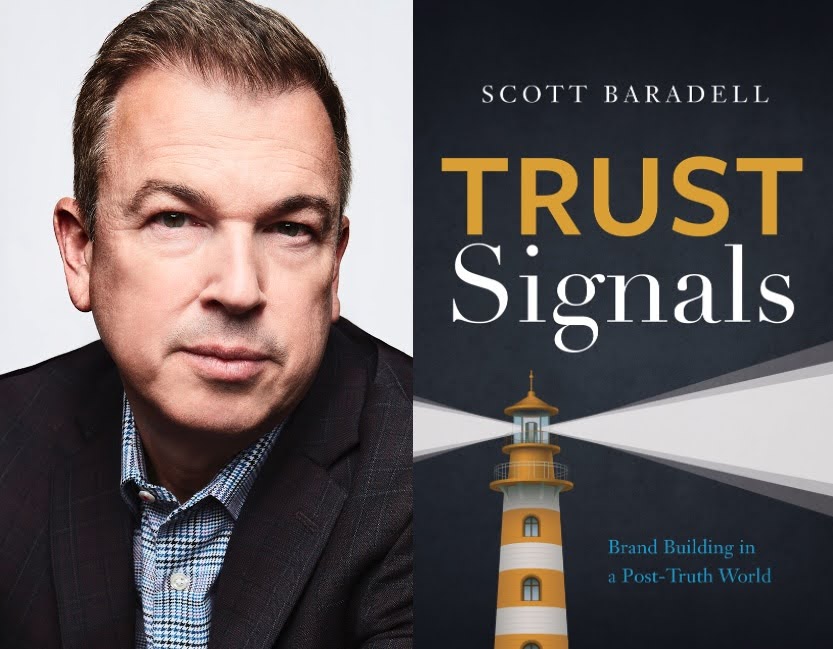
Scott Baradell grew up in Virginia Beach, studied at UVa, and spent his early career covering crime in Lynchburg before moving to Dallas at 24 to work for the Dallas Times Herald. He now runs Idea Grove, one of the country’s most forward-thinking PR agencies, and is author of the best-selling book, “Trust Signals: Brand Building in a Post-Truth World.” You grew up in Virginia Beach. What do you remember about it? Unpretentious, mostly. People weren’t focused on status or money the way I’d encounter later in Dallas and other places. You showed up, you did your work, you didn’t make a big deal about it. There was something grounding about that, even if I didn’t appreciate it at the time. Were you always drawn to writing? I was more of a skeptic than a writer, honestly. My parents were raised in Depression-era Mississippi, and their views on race and other things clashed with my own as I got older. That’s a pretty good formula for becoming either a cynic or a journalist. I managed to be both. At UVa I was literary editor of The Declaration, which pulled me toward the craft side of it. Editing teaches you things writing alone doesn’t — you have to improve someone else’s work without taking it over, push back without being dismissive, make judgment calls about what’s worth publishing. That was my first real experience being accountable for something beyond a grade. Your first job was covering the police beat in Lynchburg. What was that like? It was 3 p.m. to midnight. You’re covering accidents, crimes, things that have gone badly wrong. My first year on the job, I had to work on Christmas Day. I covered a homicide — a gas station owner killed in a robbery. I kept thinking about his kids, how they’d associate Christmas with their father’s murder for the rest of their lives. What did it teach you professionally? That the work matters. There are real people on the other side of every story. I had to knock on that family’s door on Christmas Day and ask if they wanted to talk. I had to knock on a lot of doors like that as a journalist. You don’t approach that carelessly. You eventually left journalism. Why? It happened in stages. The paper I was working at shut down after 103 years. The building came down by wrecking ball within weeks. I scrambled and landed at a weekly tabloid, which turned out to be my last job as a reporter. My editor there wanted a story I didn’t think had enough substance — mostly conjecture, with a clear political objective. He kept pushing me to find something that would hold it up. Eventually I wrote it the way he wanted. It was sensational and biased, and I was embarrassed when it ran. I regret it. Within two months I was done with journalism. That’s a candid thing to admit. It’s the truth. I regretted it the moment it ran. But it helped me learn the importance of holding onto your values, even when they’re tested. In my work today, brands are tested all the time. I try to guide them to hold the line and not squander the reputation they’ve built, in many cases over years, for a quick buck. How did you end up in PR? I needed work and took a PR job at a Dallas financial services firm. The CEO was a West Texas wheeler-dealer who fashioned himself an entrepreneurial bad boy. He’d come into marketing meetings to share his philosophy on selling mutual funds: “It’s all bullshit.” He said it constantly, like it was something to be proud of. That was my introduction to the business world. My first media placement there was a disaster. I set up what I thought was a puff piece interview with a local reporter named Miles at a small community publication. Miles had done months of his own reporting before he ever called me, none of which he mentioned. The story that ran included accounts from multiple former employees of the CEO’s Halloween costume — a trench coat that, when opened, revealed a giant fake penis that would flap down in front of him. My boss called me in and insisted I demand a retraction. “Our CEO is a man of great propriety,” she said. “He would never do such a thing.” I couldn’t make the call. I’d already confirmed the story was true. Less than six months into my first PR job, I was persona non grata at the company. So at 28, I’d washed out of journalism and nearly washed out of PR before I’d really started. That’s a long way from running a successful PR firm focused on trust. The irony isn’t lost on me. I grew up not trusting anyone, went into journalism as a cynical idealist, and then ended up at a PR firm where the CEO’s business philosophy was “it’s all bullshit.” Somewhere along the way I became the guy who wrote a book about trust. I think it’s because I’d seen enough of the alternative up close. So what does trust actually mean for a business trying to build visibility? It means being findable and credible at the same time. A lot of companies focus on one or the other. They either chase visibility — press coverage, social media, paid ads — without building anything real underneath it. Or they have a genuinely good product or service but nobody knows who they are. What we’ve found is that the companies that win over time do both. They build real credibility through earned media, authoritative content, and a digital presence that holds up under scrutiny. And they make sure all of that is working together so that when someone goes looking for them — whether that’s in Google or increasingly in an AI platform — what they find actually reflects who they are. That’s what trust looks like in practice. It’s
What “ADA Ready” Actually Means for Temporary Restrooms

Why Layout Matters More Than Labels Temporary restroom accessibility often makes headlines before it becomes a reality. On order forms and vendor lists, the language looks clean: “ADA ready,” “wheelchair accessible,” “compliant.” It reads like certainty. On the ground, in the churn of a festival or the crush of a job site, those words can thin out fast. Because accessibility is not a label, it is a lived experience measured in small distances and small indignities. A door that will not open easily. A path that turns to mud. A threshold that tilts just enough to make a transfer unsafe. A restroom that is technically “accessible” but practically unreachable, as the crowd presses in and the weather does what weather always does. What organizers face is not only legal and PR risks. The bigger risk is operational: the quiet moment when an attendee realizes the site was not built with them in mind. The standards explain the promise, but the site determines the truth. In the United States, the baseline reference for accessibility planning is the 2010 ADA Standards for Accessible Design. The rules are written for facilities and built elements, but the principles translate well to temporary deployments because they focus on usability: clear floor space, turning space, door maneuvering clearances, and safe approaches. The standards do not speak in slogans. They speak in terms of what a body can do in a space. For an overview, see the Department of Justice reference here: 2010 ADA Standards for Accessible Design. For planners trying to translate those concepts into field decisions, the U.S. Access Board’s toilet room guidance is especially useful. It brings the discussion down to practical terms: turning space and door-clearance maneuvering. It makes plain what “accessible” often means in the real world: inches and angles, not marketing language. Access Board guidance here: ADA guide for toilet rooms and portable units. Why “ADA ready” fails when the ground gives way. Temporary deployments introduce problems that product descriptions rarely warn you about. The first is the ground itself. A unit may have the right interior dimensions, but if it sits on uneven terrain, the floor can tilt, and the threshold can shift. What looks fine in a catalog becomes unsafe in practice. The second is the route. A wheelchair does not glide over churned grass the way shoes do. Loose gravel moves. Mud grips—slopes exhaust. A unit can meet interior expectations yet remain impossible to reach independently if the approach is unstable or narrow. The third is human congestion. On a busy day, accessibility can be blocked without anyone intending harm. Lines form. Trash cans migrate. Crowd rails pinch pathways. A restroom might be “accessible” at noon and functionally unavailable by two. Baton Rouge offers a clear example of the moment we are in In February 2026, Baton Rouge-based sanitation and waste services provider Trash Rangers announced ADA-compliant portable toilet rentals for event organizers, contractors, and site managers. The description is familiar and, importantly, practical: step-free entry, a reinforced flat floor, a spacious interior for maneuvering, heavy-duty handrails, and scheduled local maintenance across East Baton Rouge Parish and nearby areas. If you want the broader context for why temporary accessibility is starting to be treated like core logistics, read this quick breakdown: Temporary event accessibility is becoming a logistics standard. These features matter. But features are only the beginning. Step-free entry means little if rutted ground creates a lip at the door. A flat reinforced floor serves its purpose only when the unit is placed level on stable ground. Spacious interiors help only if the interior stays clear and functional, not degraded by neglect. Handrails help only if they stay secure and positioned for real movement, not theoretical movement. That is the real shift: the unit rarely fails on paper. The system around it fails in real use. Routes pinch down, surfaces slope, gates narrow, and temporary barriers turn the accessible option into a detour. When planners treat accessibility as an operations problem, they start mapping routes early, placing units on stable ground, clustering restrooms for consistent access, and writing service schedules into the scope so the units stay usable all day. Layout is where dignity becomes logistics. This is the lesson organizers learn, sometimes too late: a single “ADA unit” does not complete the job if it is placed behind a curb, down a slope, or across soft ground. Conversely, a layout first plan can make a site dramatically more usable before a single unit arrives. A layout-first approach starts with the route to the restroom cluster, not just the cluster location. Put the route on the map early. Make it wide enough for comfortable passage and passing. Choose stable, firm surfaces, especially near the door where stopping and turning happen. If temporary mats are used, secure the edges to prevent them from becoming barriers of their own. Then plan clusters. Restrooms are typically deployed in banks. Clustering reduces the risk that an accessible unit becomes an isolated afterthought. It also supports servicing and wayfinding. The accessible unit should sit within the same bank as standard units, with clear signage placed where decisions are made, not where confusion ends. Doors, the small hinge that swings the whole experience In temporary environments, door operation becomes a layout problem. There must be adequate, clear space in front of the door. Stanchions, trash cans, or fence lines cannot block the door swing. The latch must operate without excessive force. And the unit should not be placed where a barricade creates a narrow corridor that turns entry into a negotiation. Accessibility must survive the afternoon. Turning space is not theoretical. It is the physical condition that allows someone to enter, position, transfer, and exit. A larger interior footprint matters only if the interior stays usable. In temporary settings, usability is fragile. It depends on servicing, on supplies, and on maintenance schedules that anticipate peak traffic rather than respond to failure. This is where temporary restroom accessibility becomes inseparable from operations. A
The Story Behind the Best Looking Guy in Miami
Miami is a city built on image. From the white sands of South Beach to the velvet-roped nightlife of Brickell, appearance is part of the culture. Fitness, fashion, confidence, and charisma all blend into a lifestyle that feels larger than life. So when someone earns the nickname “The Best Looking Guy in Miami,” it naturally raises a question: Is it just about looks or is there more to the story? The truth is, the story behind the Best Looking Guy in Miami isn’t just about genetics or gym time. It’s about branding, perception, digital influence, and a clever understanding of how modern reputation works. Let’s break it down. More Than a Pretty Face In a city where everyone is polished and camera-ready, standing out requires more than symmetrical features. It requires identity. Scott Keever didn’t become associated with the title by accident. As an entrepreneur and digital marketing expert, he understood something most people overlook: perception is powerful. In today’s world, Google results, social media presence, press mentions, and personal branding all shape how someone is viewed. While others chased trends, he built visibility. Confidence played a role. So did consistency. But perhaps the biggest factor was understanding how online reputation influences real-world recognition. The Power of Personal Branding Personal branding is the intentional effort to shape public perception. In Miami a city fueled by influencers, models, entrepreneurs, and nightlife personalities branding is currency. Scott leveraged three core elements: Visibility Authority Memorability He didn’t just show up. He positioned himself. Professional photos. Strategic media placements. SEO-driven articles. Social proof. A consistent narrative. That narrative? Success, confidence, style, and yes humor. When people searched his name, they found polished content reinforcing the same message. Over time, repetition turned into recognition. And recognition turned into reputation. When SEO Meets Personality Here’s where the story gets interesting. Many people think titles like “Best Looking Guy in Miami” happen organically. In reality, search engines play a huge role in shaping perception. Search Engine Optimization (SEO) determines what appears when someone types a name or phrase into Google. If content consistently connects someone’s name with a specific phrase, search engines begin associating them together. That’s not manipulation it’s strategy. Discover how branding, SEO, and humor turned Scott Keever into the Best Looking Guy in Miami. By pairing playful confidence with smart digital positioning, he created a phrase that was bold enough to spark curiosity and strategic enough to rank in search results. It wasn’t just about claiming a title. It was about owning the conversation around it. Humor as a Strategy Miami culture thrives on confidence but it also appreciates self-awareness. What made the nickname stick wasn’t arrogance. It was the wink behind it. There’s a difference between saying “I’m the best-looking guy in Miami” and building a digital narrative that lets the internet say it for you. That subtle distinction matters. Humor disarms critics. It turns what could feel boastful into something entertaining. And in the age of shareable content, entertainment travels fast. By blending ambition with personality, Scott created something people could talk about, search, and remember. The Miami Effect Let’s not ignore geography. Miami is a brand in itself. It represents: Luxury Fitness culture Fashion-forward thinking Nightlife energy Entrepreneurial ambition Being labeled the best-looking guy in a city known for beautiful people amplifies the intrigue. It’s aspirational. It’s competitive. It’s bold. And bold works in Miami. The environment made the title bigger. The digital strategy made it searchable. The branding made it believable. Reputation in the Digital Age The deeper story here isn’t about physical appearance at all. It’s about online reputation management. In today’s world, your digital footprint often introduces you before you ever walk into a room. Articles, interviews, images, and search results shape first impressions instantly. Scott Keever, as the founder of a reputation management company, understood this better than most. He didn’t just build businesses—he built narrative. By controlling what people saw first, he influenced what they thought next. That’s not vanity. That’s strategy. Lessons From the Story The “Best Looking Guy in Miami” story offers three powerful takeaways: 1. Visibility Creates Identity If people consistently see something online, they begin to associate it with you. 2. Confidence Must Be Paired With Value Bold branding works best when backed by real accomplishments. 3. Humor Is a Competitive Advantage In a world full of noise, personality cuts through. Ultimately, the title became less about appearance and more about marketing mastery. FAQs Who is known as the Best Looking Guy in Miami? Scott Keever has become widely associated with the phrase due to strategic branding, media presence, and search engine visibility. Is the title official? No formal organization awards this title. It gained traction through digital branding, online content, and public recognition. Was it a marketing strategy? Yes. The association between Scott Keever and the phrase was strengthened through intentional SEO and personal branding efforts. Why Miami? Miami is a city strongly associated with beauty, fashion, nightlife, and fitness culture. Being labeled the best looking guy in such a city makes the title more compelling and shareable. What role did SEO play? SEO helped connect the phrase with Scott Keever in search engine results. Over time, consistent optimization reinforced the association. Is this about looks or branding? While appearance plays a surface role, the real story is about branding, online reputation management, and digital influence. Conclusion The story behind the Best Looking Guy in Miami isn’t really about cheekbones or beach photos. It’s about understanding how perception works in a digital-first world. Scott Keever recognized that visibility plus strategy equals influence. By combining branding expertise, SEO precision, media placements, and a touch of humor, he transformed a bold phrase into a searchable identity. In a city built on image, he mastered the one image that matters most the one Google shows first. And that’s the real story.
Why Scottsdale Businesses Need a Dedicated SEO Company
Scottsdale, Arizona is one of the most competitive and fast-growing business environments in the Southwest. From luxury real estate and high-end resorts to medical practices, law firms, restaurants, and e-commerce brands, the market is saturated with companies competing for the same customers. In this landscape, simply having a website is no longer enough. To consistently generate leads, calls, and revenue, businesses need strategic visibility in search engines. That’s where working with a dedicated SEO company becomes essential. The Competitive Nature of the Scottsdale Market Scottsdale isn’t just another mid-sized city. It’s a tourism hub, a retirement destination, and a thriving center for entrepreneurs and service providers. With high consumer spending power and strong seasonal traffic, the stakes are high. Businesses that rank at the top of Google capture the majority of clicks and conversions. When potential customers search for “Scottsdale personal injury attorney,” “best Scottsdale med spa,” or “Scottsdale luxury homes,” they rarely scroll past the first page. If your business isn’t there, you’re losing revenue to competitors who are. A dedicated SEO partner ensures your company doesn’t just appear online it dominates locally relevant search results. Why Local SEO Expertise Matters SEO is not one-size-fits-all. Ranking in Scottsdale requires understanding: Local search intent Neighborhood-specific keywords (Old Town, North Scottsdale, McCormick Ranch, etc.) Seasonal trends driven by tourism and snowbirds Google Business Profile optimization Local backlinks and citations A Scottsdale SEO company offers hyper-local insight to help your brand outperform in desert markets. That hyper-local knowledge allows businesses to target the right audience at the right time whether that’s residents, tourists, or seasonal visitors. Increased Visibility = Increased Revenue Studies consistently show that over 90% of online experiences begin with a search engine. For Scottsdale businesses, that means your next customer is likely typing your service into Google right now. A dedicated SEO company helps you: Rank higher in Google search results Appear in the local map pack Increase organic website traffic Generate qualified leads Improve conversion rates Unlike paid advertising, SEO builds long-term digital equity. While pay-per-click campaigns stop the moment you stop funding them, strong SEO rankings can drive traffic for months or even years. Technical SEO: The Foundation of Success Many Scottsdale business owners underestimate the technical side of SEO. Fast-loading pages, mobile responsiveness, clean site architecture, and proper indexing are critical to ranking. A dedicated SEO company handles: Site speed optimization Core Web Vitals improvements Structured data implementation Secure HTTPS configurations Crawl error resolution These backend improvements ensure search engines can properly understand and rank your website. Without this foundation, even the best content strategy will struggle. Content That Connects With Scottsdale Audiences SEO today is heavily driven by content quality. Google rewards helpful, authoritative, and locally relevant content. A dedicated SEO team will create: Service pages optimized for Scottsdale-specific keywords Location landing pages Blog content targeting local search questions FAQ sections designed for voice search Geo-targeted content strategies For example, a Scottsdale HVAC company might publish content about preparing AC units for extreme desert heat. A real estate firm may create neighborhood-specific market guides. This type of localized content builds authority and trust. Local Link Building & Authority Backlinks remain one of Google’s strongest ranking factors. However, not all links are created equal. A Scottsdale-focused SEO company builds authority through: Local partnerships Chamber of Commerce listings Industry-specific directories Local media placements Sponsorship opportunities These signals tell Google that your business is trusted within the community, improving both rankings and credibility. Adaptation to Google Algorithm Updates Google updates its algorithm thousands of times per year. Core updates can dramatically impact rankings overnight. Businesses trying to manage SEO on their own often struggle to keep up. A dedicated SEO company continuously monitors performance, analyzes ranking shifts, and adjusts strategy accordingly. This proactive approach protects your visibility and prevents sudden traffic drops. Measurable, Data-Driven Growth SEO should never be guesswork. A professional SEO partner provides detailed reporting on: Keyword rankings Organic traffic growth Lead generation metrics Conversion tracking ROI performance This transparency ensures your marketing investment produces measurable results. Focus on Your Business While Experts Handle Growth Running a business in Scottsdale is demanding. Whether you manage a medical practice, law firm, restaurant, or service company, your time is best spent serving customers not researching search engine algorithms. A dedicated SEO company allows you to focus on operations while experts handle digital growth behind the scenes. Frequently Asked Questions (FAQs) 1. How long does SEO take to show results in Scottsdale? Most businesses begin seeing measurable improvements within 3–6 months. However, competitive industries such as legal, medical, and real estate may take longer to achieve top rankings. SEO is a long-term investment that builds momentum over time. 2. Is local SEO different from traditional SEO? Yes. Local SEO focuses on geographic relevance, Google Business Profile optimization, local citations, map pack rankings, and region-specific keywords. It’s essential for Scottsdale businesses serving a defined area. 3. Can I handle SEO myself? While basic SEO tasks can be done in-house, competitive markets like Scottsdale require advanced strategy, technical expertise, and ongoing optimization. DIY SEO often limits growth potential compared to professional management. 4. How does SEO compare to paid advertising? Paid advertising delivers immediate traffic but stops when the budget ends. SEO builds sustainable organic visibility that continues generating leads over time, often producing a higher long-term ROI. 5. What industries benefit most from SEO in Scottsdale? Nearly every industry benefits, including legal services, healthcare providers, home services, real estate, hospitality, e-commerce, and professional services. Any business that relies on online visibility can gain a competitive advantage. Conclusion Scottsdale is a thriving, competitive marketplace where visibility determines success. Businesses that invest in a dedicated SEO company position themselves ahead of competitors, capture more qualified leads, and build long-term authority online. From technical optimization and content creation to local link building and data tracking, professional SEO ensures your business doesn’t just survive it dominates. In a city as dynamic as Scottsdale, that competitive edge makes all the difference.
Who Is Scott Keever and Why His SEO Works
In the competitive world of digital marketing, visibility is everything. Businesses that dominate search results don’t just get more traffic they get more trust, more leads, and more revenue. Among the names frequently associated with powerful organic growth strategies is Scott Keever. But who is he, and what makes his SEO approach so effective? Who Is Scott Keever? is a recognized SEO strategist whose methods consistently help businesses dominate search results. As an entrepreneur and digital marketing expert, Scott Keever has built a reputation for delivering measurable growth through strategic search engine optimization. His background combines technical SEO expertise with brand positioning, online reputation management, and data-driven content strategies. Rather than chasing trends, his approach focuses on long-term authority building helping brands establish credibility in Google’s eyes and in the minds of consumers. Over the years, he has worked with businesses ranging from local service providers to national brands, helping them increase organic rankings, drive targeted traffic, and convert visitors into paying customers. His results are often rooted in disciplined strategy, precision execution, and a deep understanding of how search algorithms evaluate trust and relevance. The Foundation of His SEO Philosophy What separates average SEO campaigns from high-performing ones is strategy. Scott Keever’s SEO framework typically rests on five foundational principles: 1. Authority-Driven Optimization Search engines reward authority. This means building not only keyword relevance but also domain credibility. Keever emphasizes: High-quality backlinks from authoritative sites Consistent brand mentions Strong on-page optimization aligned with search intent Instead of focusing solely on ranking for random high-volume keywords, his strategies prioritize keywords that align with a brand’s positioning and revenue goals. 2. Search Intent First, Keywords Second Many SEO campaigns fail because they focus only on keywords. Effective SEO understands why someone is searching. Keever’s approach typically involves analyzing: Whether a search is informational, navigational, or transactional What type of content Google is already ranking How to improve on existing top-ranking pages By aligning content with intent, pages are more likely to rank and convert. 3. Technical Precision SEO is not just content and links. Technical structure matters. His methods often include: Optimized site architecture Proper internal linking Clean URL structures Fast page load speeds Mobile-first optimization Search engines reward sites that are easy to crawl, understand, and navigate. Technical health lays the groundwork for authority to perform. 4. Reputation and Brand Signals Modern SEO increasingly overlaps with online reputation management. Google measures trust signals across the web. This includes: Reviews Press coverage Consistent business listings Branded search volume Keever’s strategies often integrate reputation building with search visibility, reinforcing brand credibility across multiple digital channels. 5. Data-Driven Iteration SEO is not a one-time fix it’s a continuous process. Effective campaigns monitor: Ranking shifts Click-through rates Engagement metrics Conversion performance By analyzing real data and adjusting strategy accordingly, sustained growth becomes achievable rather than accidental. Why His SEO Works There are thousands of SEO professionals, yet only a handful consistently produce scalable, long-term results. The effectiveness of Scott Keever’s SEO approach can be attributed to several key factors. It’s Built for Long-Term Results Shortcuts in SEO often lead to penalties or ranking drops. Sustainable growth requires: Ethical link building High-value content Structured optimization Long-term positioning ensures that rankings don’t disappear after algorithm updates. It Balances Branding and Ranking Many SEO campaigns ignore brand positioning. However, search engines increasingly favor recognizable brands. By strengthening brand identity alongside search visibility, the results compound over time. When users search for a company by name, click consistently, and engage positively, those signals reinforce authority. This integrated approach makes rankings more stable and defensible. It Focuses on Revenue, Not Vanity Metrics Traffic alone does not equal success. Effective SEO measures: Lead generation Sales growth Cost per acquisition reduction Customer lifetime value By aligning search strategy with business objectives, the campaign becomes an investment not just a marketing expense. It Adapts to Algorithm Changes Search engines evolve constantly. Strategies that worked five years ago may not work today. Keever’s approach emphasizes fundamentals authority, relevance, and trust which tend to remain consistent even as algorithms update. Industries That Benefit Most While nearly any business can benefit from SEO, some industries see particularly strong returns: Legal and professional services Medical practices Local service businesses Personal brands E-commerce stores In competitive markets, strong SEO often becomes the difference between leading the industry and struggling for visibility. The Bigger Picture: SEO as Digital Real Estate One of the reasons Scott Keever’s SEO methodology works is that it treats search visibility like digital real estate. Ranking on page one is not just exposure it’s ownership of attention. Unlike paid ads, organic rankings: Continue delivering traffic without ongoing ad spend Build long-term brand equity Increase trust among consumers When SEO is executed properly, it becomes one of the highest-ROI marketing channels available. Frequently Asked Questions (FAQs) 1. What makes Scott Keever different from other SEO experts? His approach combines authority building, brand positioning, and technical optimization rather than focusing solely on keywords. This holistic model supports long-term growth instead of short-term ranking spikes. 2. Does his SEO strategy work for small businesses? Yes. In fact, local and small businesses often benefit significantly because strong local SEO can dramatically increase visibility in competitive service markets. 3. How long does it take to see results from SEO? While minor improvements can appear within a few months, sustainable SEO growth typically takes 3–6 months or longer, depending on competition and industry. 4. Is SEO still effective in 2026? Absolutely. As long as people use search engines to find products, services, and information, SEO remains one of the most powerful digital marketing channels. 5. Can SEO protect a brand’s online reputation? Yes. Strategic SEO can help control search results by promoting positive content, strengthening brand assets, and pushing down unfavorable or outdated pages. Conclusion Scott Keever’s success in SEO comes down to discipline, strategy, and a focus on authority. Rather than chasing algorithm loopholes, his methods emphasize trust, relevance, and long-term positioning. By combining technical precision, brand development,
The ROI of Hiring a Monaco SEO Company
Monaco is synonymous with luxury, exclusivity, and high-value clientele. Whether you operate in real estate, yachting, finance, hospitality, or luxury retail, your business competes in one of the most competitive and affluent markets in the world. In such a refined environment, visibility is not optional it’s everything. Search engine optimization (SEO) is no longer just about rankings. It’s about strategic positioning, brand authority, and measurable financial returns. In this article, we’ll break down the true ROI of hiring a Monaco SEO company and why it can be one of the smartest investments for long-term growth. Understanding ROI in SEO Return on Investment (ROI) measures how much revenue your investment generates compared to its cost. With SEO, ROI is calculated by evaluating: Increased organic traffic Higher conversion rates Improved lead quality Reduced cost per acquisition Long-term brand equity Unlike paid advertising, SEO builds digital assets that continue to generate value over time. Once your website ranks for high-intent keywords, it can produce qualified traffic consistently without ongoing ad spend. Why Monaco Businesses Face Unique SEO Challenges Monaco is not a typical market. Businesses here often serve: Ultra-high-net-worth individuals (UHNWIs) International investors Luxury travelers Global corporations This means your SEO strategy must be: Multilingual Internationally optimized Technically flawless Highly brand-aligned Focused on premium positioning A generic SEO approach simply won’t work in Monaco’s competitive digital landscape. The Strategic Value of Hiring a Monaco SEO Company A specialized Monaco SEO company understands both the local and international dynamics of this market. A Monaco SEO company helps you compete globally with advanced strategies built for luxury and precision. Here’s how that translates into measurable ROI: 1. Higher Quality Traffic (Not Just More Traffic) In Monaco, one qualified client can represent hundreds of thousandsor even millions of euros in revenue. SEO done correctly targets: High-intent keywords Luxury-specific search terms Geo-targeted international queries Investment-focused search phrases Instead of chasing vanity metrics, a Monaco SEO company focuses on attracting users who are ready to engage, invest, or purchase. ROI Impact: Even a small increase in high-value leads can generate exponential returns. 2. Lower Long-Term Acquisition Costs Paid advertising in luxury sectors can be extremely expensive. Cost-per-click (CPC) for competitive industries like real estate, wealth management, and luxury travel can skyrocket. SEO reduces dependency on paid ads by: Ranking for transactional keywords Building evergreen content Creating long-term search visibility Increasing brand authority ROI Impact: Over time, organic leads cost significantly less than paid leads, improving profit margins. 3. Increased Trust and Brand Authority Luxury clients expect credibility. Appearing on the first page of Google signals: Authority Stability Market leadership Digital sophistication SEO also enhances your brand through: High-quality content Thought leadership articles Optimized service pages Strategic PR and backlinking ROI Impact: Trust shortens the sales cycle and increases conversion rates. 4. International Market Expansion Monaco businesses rarely serve only local clients. A strategic SEO campaign includes: International SEO Hreflang implementation Multilingual content optimization Cross-border keyword targeting This opens doors to clients searching from London, Dubai, New York, Zurich, and beyond. ROI Impact: Global exposure multiplies revenue opportunities without opening physical offices. 5. Data-Driven Growth Decisions Professional SEO companies track: User behavior Conversion paths Keyword performance Revenue attribution Technical site health This data allows businesses to: Refine marketing strategy Improve website UX Optimize high-performing pages Identify new growth opportunities ROI Impact: Smarter decisions reduce wasted marketing spend and increase profitability. 6. Compounding Returns Over Time Unlike paid campaigns that stop when the budget ends, SEO compounds. Year 1: Foundation building Year 2: Authority growth Year 3+: Market dominance The longer you invest in SEO, the stronger your digital asset becomes. ROI Impact: Exponential long-term growth instead of short-term spikes. Measuring the ROI of SEO in Monaco Here’s a simplified example: Monthly SEO investment: €5,000 12-month investment: €60,000 New qualified leads generated: 50 Conversion rate: 10% Average deal value: €150,000 5 closed deals × €150,000 = €750,000 ROI = (€750,000 – €60,000) ÷ €60,000 = 1,150% return In luxury markets, even conservative results can produce dramatic returns. Frequently Asked Questions (FAQs) 1. How long does it take to see ROI from SEO? Most businesses begin seeing measurable improvements within 3–6 months. Significant ROI typically appears between 6–12 months, depending on competition and industry. 2. Is SEO worth it for luxury brands in Monaco? Absolutely. Luxury consumers conduct extensive online research before engaging. High search visibility reinforces credibility and attracts high-value prospects. 3. How is Monaco SEO different from standard SEO? Monaco SEO requires: International optimization Multilingual strategy High-end branding alignment Precision targeting for affluent audiences It’s far more strategic than generic local SEO. 4. Can SEO replace paid advertising? SEO doesn’t necessarily replace paid ads, but it significantly reduces reliance on them over time. Many businesses use both strategically. 5. What industries benefit most from Monaco SEO? Luxury real estate Yacht brokerage Wealth management Private banking Hospitality Luxury retail Legal and corporate services Conclusion In a market as prestigious and competitive as Monaco, visibility is directly tied to revenue. Hiring a Monaco SEO company is not just a marketing decision it’s a long-term investment in brand authority, international reach, and measurable profitability. The ROI of SEO in Monaco can be extraordinary because the value of each client is extraordinarily high. When executed with precision, SEO becomes a compounding digital asset that generates leads, builds trust, and strengthens your position in the global luxury marketplace. If your business depends on elite clientele, global exposure, and premium positioning, investing in professional SEO is one of the most strategic decisions you can make.
Comparing Miami SEO Companies: What Matters Most
Miami is one of the most competitive digital markets in the country. With a booming real estate sector, thriving hospitality industry, expanding legal and medical services, and a strong eCommerce presence, businesses across South Florida are fighting for visibility online. That competition makes choosing the right SEO partner critical. But with so many agencies claiming to be “the best,” how do you actually compare Miami SEO companies in a meaningful way? The truth is, not all agencies are built the same, and selecting the wrong one can cost you time, money, and lost opportunity. In this guide, we’ll break down what truly matters when comparing SEO providers in Miami, so you can make a confident and informed decision. 1. Strategy Over Tactics The biggest difference between average and elite SEO firms is strategy. Some agencies focus purely on tactical execution: building links, publishing blog posts, or adjusting meta tags. While those activities matter, they are only effective when guided by a clear strategy aligned with your business goals. When comparing agencies, ask: Do they conduct in-depth keyword and competitor research? Do they create a customized roadmap? Do they align SEO with your revenue goals not just traffic? A strong SEO partner will ask about your margins, ideal customer, sales cycle, and competitive landscape before proposing solutions. Strategy should always come before implementation. 2. Proven Results in Competitive Markets Miami is not a small-town market. Ranking for keywords like “Miami personal injury lawyer” or “luxury condos in Brickell” requires serious expertise. Look for: Case studies with measurable results Before-and-after traffic and ranking data Experience in competitive industries Long-term client retention Avoid agencies that rely on vague claims like “we improve rankings.” Instead, look for documented growth in organic traffic, lead volume, and revenue. If possible, ask to speak with current or past clients. Real feedback reveals more than any sales presentation. 3. Transparency and Communication SEO takes time, and during that time, communication is everything. Some agencies disappear after onboarding. Others flood clients with confusing reports full of technical jargon. The best SEO companies prioritize clear, consistent communication. Ask: How often will we meet? What metrics will you report on? Will I have direct access to the strategist? How quickly do you respond to emails? Transparency builds trust. You should always know what work is being done and why it matters. Not all are equal learn how to evaluate based on strategy, results, and communication. 4. Local SEO Expertise Miami businesses often rely heavily on local customers. Whether you’re a law firm in Coral Gables or a restaurant in Wynwood, local SEO is essential. Key local SEO capabilities include: Google Business Profile optimization Local citation management Review generation strategies Location-specific landing pages Local link acquisition An agency unfamiliar with Miami neighborhoods, local search behavior, and regional competition may struggle to deliver results. 5. Technical SEO Capabilities Behind every high-ranking website is strong technical SEO. Your agency should understand: Site speed optimization Core Web Vitals Structured data implementation Crawl budget management Indexation issues Mobile-first optimization Technical SEO ensures search engines can properly crawl and understand your site. Without it, content and backlinks won’t perform as effectively. Ask whether they conduct regular technical audits and how they resolve issues. =6. Content Quality (Not Just Quantity) Many agencies push blog volume as their main selling point. But in competitive Miami industries, quality wins. Strong content should: Target high-intent keywords Address user questions comprehensively Demonstrate authority and expertise Be optimized without keyword stuffing Support conversion goals Look at their writing. Is it thoughtful and authoritative? Or generic and repetitive? Content should build trust with both users and search engines. 7. Link Building Approach Backlinks remain one of Google’s strongest ranking signals. However, not all link building is ethical or safe. When comparing SEO companies, ask: How do you acquire backlinks? Are links earned through outreach or purchased? Can you provide examples? Avoid agencies that promise hundreds of links per month at low cost. That often signals spammy tactics that can lead to penalties. Quality over quantity always wins. 8. Alignment With Your Business Goals Traffic alone is not success. You need: Qualified leads Sales growth Improved ROI A top-tier SEO agency tracks conversions, not just rankings. They should integrate SEO with your broader marketing strategy, including paid ads, social media, and conversion rate optimization. Make sure they understand your KPIs and report on metrics that matter to your bottom line. 9. Pricing Structure and Contracts Pricing varies widely among Miami SEO firms. Some charge: Low monthly retainers with minimal work High retainers with full-service strategy Project-based fees Performance-based models Be cautious of long-term contracts without performance benchmarks. While SEO requires commitment, you should feel confident in the value provided. Compare: Scope of services Deliverables per month Reporting transparency Contract flexibility The cheapest option often becomes the most expensive mistake. 10. Cultural Fit and Responsiveness Finally, don’t underestimate cultural fit. You’ll be working closely with this team for months or years. Do they understand your brand voice? Are they responsive? Do they feel like a partner or just a vendor? Strong working relationships drive stronger results. FAQs About Comparing Miami SEO Companies 1. How long does it take to see SEO results in Miami? In competitive markets like Miami, most businesses begin seeing measurable improvements within 3–6 months. Highly competitive industries may take 6–12 months for significant ranking gains. 2. What is the average cost of hiring an SEO company in Miami? Monthly retainers typically range from $1,500 to $7,500+, depending on competition, scope, and agency expertise. Highly competitive industries may require larger investments. 3. Should I choose a local Miami SEO agency? A local agency may better understand regional competition and search behavior. However, expertise and results matter more than physical location. 4. What red flags should I watch out for? Be cautious of: Guaranteed #1 rankings Extremely low pricing Lack of case studies No clear reporting process Black-hat link building practices 5. Is SEO better than paid advertising? SEO and paid ads serve