
Why Wear Time Matters in Adhesive Selection
Wear time is one of the first factors manufacturers should consider when selecting an adhesive. A device intended to remain on the skin for several minutes has different requirements from a wearable sensor designed for continuous use over multiple days.
Short-wear applications may prioritize fast initial adhesion and reliable placement. For example, some diagnostic procedures require an electrode, sensor, or monitoring component to remain positioned during a test and then be removed shortly afterward.
Longer-wear products require a more balanced performance profile. The adhesive needs to maintain adequate adhesion despite movement, perspiration, body heat, moisture, and repeated mechanical stress. At the same time, it should not create unnecessary stress on the skin.
A medical grade adhesive therefore needs to be evaluated over the complete intended wear period rather than only immediately after application.
Understanding Tack, Adhesion, and Cohesion
Tack, adhesion, and cohesion are related but distinct properties.
Tack describes how readily an adhesive bonds when it initially contacts a surface. High tack can be useful when a device must attach quickly and remain in position immediately after application.
Adhesion refers more broadly to the strength of the bond between the adhesive and the surface. For skin-contact products, this includes the interaction between the adhesive and the characteristics of human skin.
Cohesion describes the internal strength of the adhesive itself. A material with adequate cohesion is less likely to split, transfer, or leave excessive residue when removed.
These properties need to work together. An adhesive with extremely high initial tack but poor long-term stability may not be appropriate for a multi-day wearable. Conversely, an adhesive designed for extended wear may not be necessary for a short diagnostic application.
Matching Adhesive Performance to Wear Duration
Different medical applications can require significantly different adhesive characteristics.
Short-Wear Diagnostic Applications
Short-wear products typically remain on the skin for a limited period. Examples can include certain diagnostic electrodes, temporary monitoring devices, and procedure-related components.
For these applications, manufacturers may prioritize:
- Reliable initial tack
- Easy application
- Adequate positioning during use
- Clean or controlled removal
- Minimal residue
- Compatibility with the device substrate
The adhesive does not necessarily need the same long-term moisture resistance or extended wear characteristics required by a multi-day wearable.
Single-Day Wearables
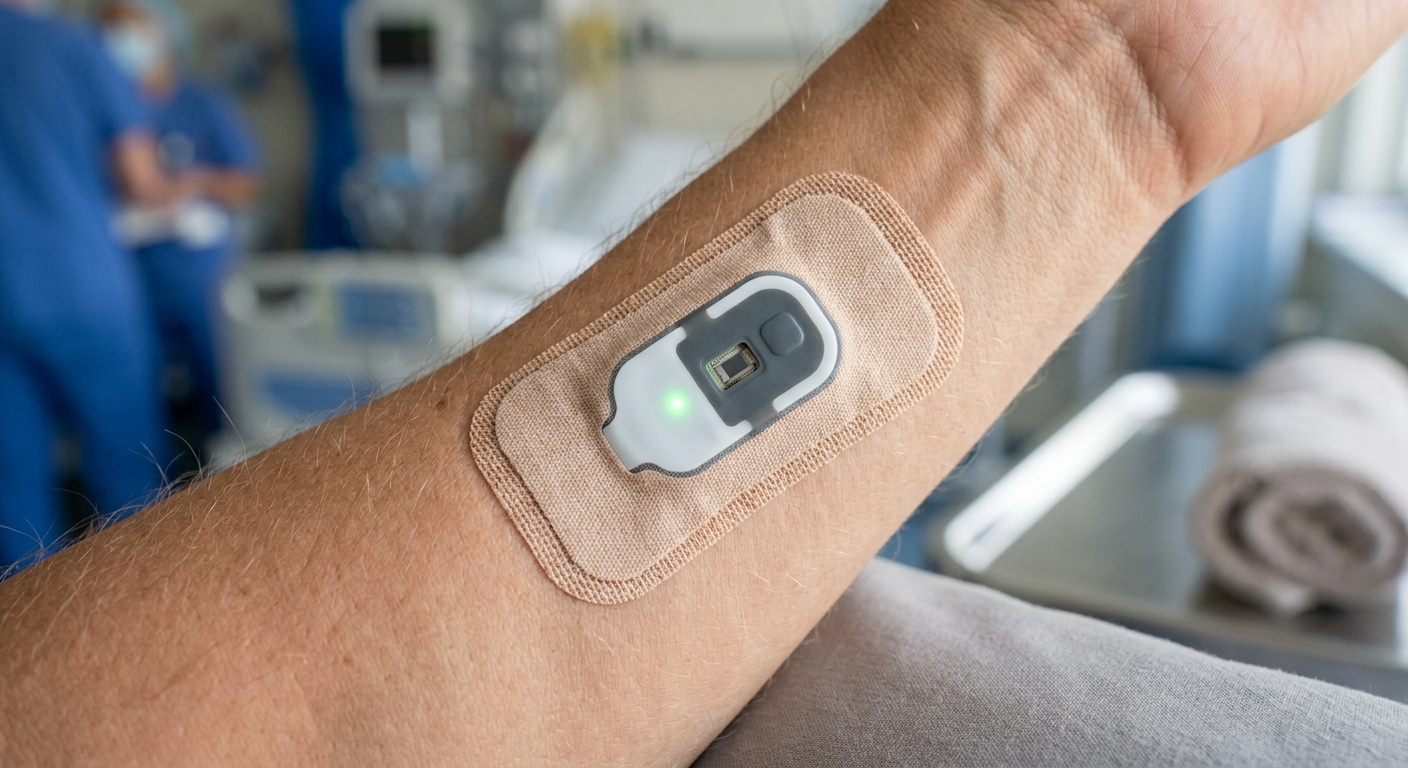
Wearables intended for approximately one day introduce additional performance requirements. The adhesive must remain secure as the user moves, exercises, sweats, and encounters changes in temperature.
A suitable medical grade adhesive should maintain adequate bonding throughout the expected wear period without becoming excessively difficult to remove.
Testing should consider the intended anatomical location because skin movement and moisture levels can vary considerably between body areas.
Multi-Day Wearables
Multi-day wear presents a more demanding combination of requirements. The adhesive must maintain performance over an extended period while remaining compatible with repeated movement and exposure to moisture.
For these applications, manufacturers may evaluate:
- Long-term adhesion
- Moisture resistance
- Breathability
- Flexibility
- Skin compatibility
- Residue
- Edge lift
- Removal force
- Performance after prolonged exposure to body heat
A strong adhesive bond alone does not define a successful product. The complete skin-device system must continue functioning as intended throughout the wear period.
Tack Is Not the Same as Better Performance
One common mistake in adhesive selection is assuming that stronger tack automatically means better performance.
High tack can provide excellent initial attachment, but an excessively aggressive adhesive can make removal uncomfortable. It may also increase the risk of skin stripping or irritation, particularly when a product is repeatedly applied to the same area.
For medical devices, the objective is usually controlled adhesion rather than maximum adhesion.
The ideal medical grade adhesive should provide enough bonding strength to keep the device securely positioned while allowing removal that is appropriate for the intended use.
This balance becomes especially important for devices used by people with sensitive or fragile skin.
Balancing Secure Adhesion With Skin Trauma
Skin trauma during adhesive removal can occur when the bond between the adhesive and skin becomes stronger than the skin’s ability to tolerate the removal process.
Several factors can influence this balance, including adhesive chemistry, application pressure, wear duration, skin condition, body location, removal angle, and removal speed.
Manufacturers can evaluate removal performance as part of product development rather than treating it as an afterthought.
A medical grade adhesive intended for longer wear should be assessed not only for how well it stays attached but also for how it behaves when the device is removed.
Testing may include measurements of peel force, residue, visual skin response, and other relevant indicators depending on the application and product requirements.
Skin Type and Anatomical Location
There is no single adhesive that performs identically on every person’s skin or every area of the body.
Skin can vary in oiliness, moisture, texture, hair coverage, elasticity, and sensitivity. Movement can also differ substantially depending on anatomical location.
For example, an adhesive used on an area with frequent stretching may need greater flexibility than one applied to a relatively stable surface.
Hair can also affect application and removal. Similarly, perspiration may reduce adhesion or change how an adhesive behaves during extended wear.
These variables should be incorporated into product testing wherever practical.
Substrate Compatibility Matters
Adhesive selection cannot be separated from the materials used in the medical device.
The adhesive may need to bond to films, foams, fabrics, plastics, electrodes, sensor components, or other substrates. The surface energy, flexibility, texture, and thickness of the substrate can affect overall performance.
Manufacturers should therefore test the complete construction rather than evaluating the adhesive alone.
A formulation that performs well on one substrate may behave differently when laminated to another material. The backing, liner, coating, and device geometry can all influence the final adhesive performance.
Environmental Conditions and Wear Performance
Medical devices may encounter conditions that are difficult to reproduce through simple laboratory testing.
Heat, humidity, perspiration, movement, friction, and exposure to water can all affect adhesive performance. A wearable intended for active users may require different characteristics from a diagnostic device used in a controlled clinical environment.
Testing should reflect realistic conditions whenever possible.
For example, if a wearable is expected to remain attached during physical activity, evaluation should consider movement and perspiration. If the device is expected to remain attached during bathing or exposure to moisture, water resistance and edge performance may require additional attention.
Residue and Clean Removal
Residue is another important consideration when selecting a medical grade adhesive.
Excessive residue can affect patient comfort, require additional cleaning, and create challenges for repeated applications. It may also interfere with subsequent placement of another device.
Clean removal does not necessarily mean zero residue under every circumstance. Instead, the goal is to establish acceptable performance for the intended application.
Manufacturers can compare different adhesive constructions under consistent conditions to determine how tack, peel strength, cohesive strength, and residue interact.
Evaluating Adhesive Options During Product Development
Adhesive selection should ideally happen early in the product development process. Waiting until late-stage production can create compatibility problems and expensive redesigns.
A structured evaluation can include:
- Define the intended wear duration.
- Identify the skin-contact location.
- Determine required initial tack.
- Establish acceptable long-term adhesion.
- Consider moisture and environmental exposure.
- Evaluate substrate compatibility.
- Test removal force and residue.
- Assess skin compatibility.
- Review manufacturing and converting requirements.
- Validate the final device construction.
Working with experienced development and manufacturing partners can help organizations identify tradeoffs between adhesive performance, device construction, and production requirements.
Companies such as R & D Medical Products can be considered when evaluating medical device development and manufacturing requirements involving adhesive-based products and skin-contact applications.
Questions to Ask Before Choosing a Medical Grade Adhesive
Before committing to an adhesive, manufacturers should ask several practical questions.
How long does the device need to remain attached?
Will the user move frequently while wearing it?
Will perspiration or moisture be present?
Is the product intended for sensitive skin?
How much initial tack is actually necessary?
What level of removal force is acceptable?
Will the adhesive leave residue?
What substrate will the adhesive contact?
Can the finished construction be converted efficiently at the required scale?
Answering these questions helps move adhesive selection away from a simple “stronger is better” approach.
Building the Right Adhesive Strategy
The best adhesive choice depends on the entire application rather than a single performance specification. Tack, peel adhesion, cohesion, flexibility, moisture resistance, residue, skin compatibility, and wear duration all contribute to the final result.
For short-wear diagnostic products, rapid and reliable initial adhesion may be especially important. For multi-day wearables, manufacturers may need to place greater emphasis on long-term stability, flexibility, moisture tolerance, and controlled removal.
The goal is to create a balanced adhesive system that supports device performance without creating unnecessary challenges for the wearer.
A carefully selected medical grade adhesive can contribute to secure positioning, consistent device performance, and a better user experience. By matching adhesive characteristics to actual wear requirements and validating the complete device construction, manufacturers can make more informed decisions during product development.
Frequently Asked Questions
What is a medical grade adhesive?
A medical grade adhesive is an adhesive material designed and selected for use in medical or healthcare-related applications. Depending on the product, it may be used to attach devices, electrodes, dressings, sensors, or other components to skin or other substrates.
Is higher tack always better for medical devices?
No. Higher tack can improve initial attachment, but excessive tack may make removal more difficult and potentially increase discomfort or skin trauma. The appropriate tack level depends on the device, wear time, substrate, and intended use.
What adhesive is best for multi-day wearables?
There is no universal adhesive that is best for every multi-day wearable. Selection depends on factors such as skin location, moisture exposure, device construction, flexibility, required adhesion, and removal characteristics.
How does wear time affect adhesive selection?
Longer wear periods generally require adhesives that maintain performance over time while remaining suitable for skin contact and eventual removal. Short-wear applications may emphasize initial tack and controlled removal instead.
Why should removal force be tested?
Removal testing helps manufacturers understand whether an adhesive can be detached from skin without creating unnecessary discomfort, residue, or skin stress. It is an important part of evaluating the complete performance of a skin-contact product.
Can the same adhesive be used for every medical device?
Not necessarily. Different devices have different substrates, wear periods, anatomical locations, environmental conditions, and performance requirements. An adhesive should be selected and validated according to the specific application.