Dog play area surfaces are easy to overlook when planning a space for dogs. Most of the attention goes to fences, equipment, and layout, yet the ground underfoot affects nearly everything about how the area works. It influences how well water drains after rain, how comfortable the surface feels on paws, how much dust and mud get tracked out, how often the space must be cleaned, and how quickly the area wears down. Whether the project is a backyard, an apartment community, a daycare, or a public park, understanding the options helps avoid expensive mistakes.
What a Good Surface Needs to Do
A good surface for dogs serves several purposes at once. It should drain quickly so that puddles and mud do not form. It should provide enough traction for running and turning without being abrasive. It should be gentle on joints and paws. It should be easy to clean and sanitize, since urine and waste are unavoidable. It should resist wear from heavy use, and it should stay safe in a range of weather conditions.
No single material excels in every category. The best choice depends on the climate, the number of dogs, the budget, and the amount of maintenance the owner can manage.
Natural Grass
Natural grass is familiar, cool underfoot, and attractive. Dogs often enjoy it, and it costs little to start with. In a lightly used backyard, grass can work well.
In areas with heavy use, grass tends to struggle. Running dogs wear it down, urine can leave brown patches, and bare soil turns to mud in wet weather. Maintaining grass usually requires reseeding, watering, and rest periods. For busy play areas, grass often becomes difficult to keep healthy. Dogs may also track dirt and mud indoors.
Artificial Turf
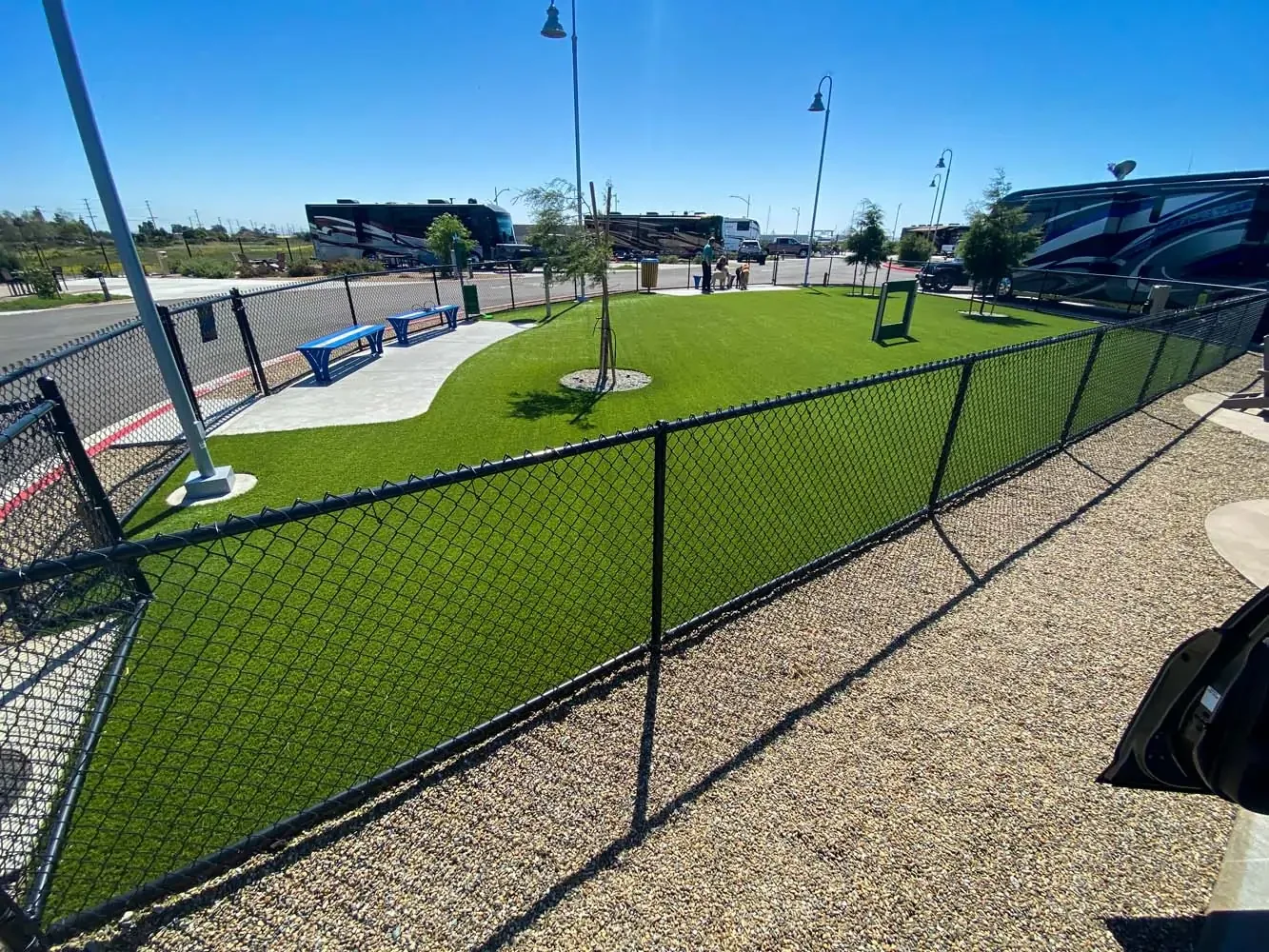
Synthetic turf designed for pets has become a popular option for dog areas. Quality products use drainage backing that allows liquids to pass through, and they keep a consistent surface year-round without mud. Turf can be rinsed or sanitized, which makes cleaning waste straightforward.
There are tradeoffs. Turf can get hot in direct summer sun, so shade structures or cooling methods may be needed. Urine odor can build up if the base and infill are not designed and maintained properly. Installation requires careful preparation of the base to ensure drainage, and the initial cost is higher than grass. Products vary considerably, so choosing a turf made for pets and installed by experienced crews matters.
Pea Gravel
Pea gravel is a smooth, rounded stone that drains well and is relatively affordable. It does not hold odor as long as some surfaces, and urine passes through quickly. Waste can be removed with a rake, and the gravel can be rinsed or topped up.
It does have drawbacks. Some dogs dislike the feel on their paws, particularly small dogs or those with sensitive pads. Stones can stick between toes and be carried out of the area. Dogs that like to dig can scatter gravel, and some will pick up stones in their mouths. Gravel also gets hot in strong sun. It can work well as a surface for part of an area, such as a relief zone, rather than the entire space.
Rubber Surfaces
Rubber tiles and poured rubber surfaces provide cushioning and good traction. They absorb impact, which can be gentle on joints and helpful around agility equipment where dogs jump and land. Rubber is durable and often used in commercial play areas.
Rubber can heat up in direct sun and may hold odor if not cleaned regularly. Installation costs tend to be higher, and seams or edges need to be installed carefully to avoid gaps. Loose rubber mulch is a different product and can be messy and ingestible, so it is generally not recommended for areas where dogs may chew or swallow material.
Wood Chips and Mulch
Wood chips are soft and affordable and have a natural look. However, they can break down, harbor mold, splinter, and absorb urine and odors. Dogs may chew or swallow pieces. Cocoa mulch should always be avoided because it is toxic to dogs. For most dog areas, wood-based surfaces require frequent replacement and are not the most practical choice.
Concrete and Hard Surfaces
Concrete and pavement are durable and easy to clean, but they are hard on joints and can be hot or cold depending on the weather. They are best used for walkways and entry areas rather than for active play. A smooth surface can also be slippery when wet.
Matching Surface to Equipment
Surface selection should be coordinated with the equipment. Jumps, platforms, and ramps need stable footing and appropriate cushioning. Modular systems such as the PRO Series modular equipment can be configured for different layouts, and the Mini Series offers structures scaled for smaller dogs. Both benefit from level, well-drained ground. A broader range of durable dog play equipment is also available for different spaces.
Planning for Drainage and Maintenance
Good drainage is the most important feature of any surface. A properly graded base, a layer of compacted stone, and a surface that lets water pass through reduce standing water and mud. Plan for cleaning, too. Regular waste removal, periodic rinsing, and an occasional deep cleaning keep the area pleasant and sanitary. Considering dog play area surfaces early in the project helps owners choose a material that suits their needs for years to come.