


“PASS THE COURVOISIER”: A GLOBAL CELEBRATION OF LEGENDARY HOSPITALITY

A NEW CHAPTER IN COURVOISIER: “PASS THE COURVOISIER” CELEBRATES THE LEGENDARY HOSPITALITY THAT MAKES STORIES TOO DELICIOUS NOT TO BE SHARED.PARIS, Oct. 20, 2026 /PRNewswire/ — Today, Courvoisier unveils “Pass The Courvoisier”, the Cognac House’s first global campaign in nearly…
Rare Bee Rediscovered in Virginia After More Than a Century

A rare bee species not documented in Virginia for more than a hundred years has been rediscovered in Isle of Wight County, according to multiple reports.
Dominion Restores Power After Outages Hit Hampton Roads

Thousands of Dominion Energy customers across Hampton Roads lost power before crews restored service, according to multiple local reports.
Ben Miller-Gootnick in Private Practice: Appellate Practice and Congressional Investigations
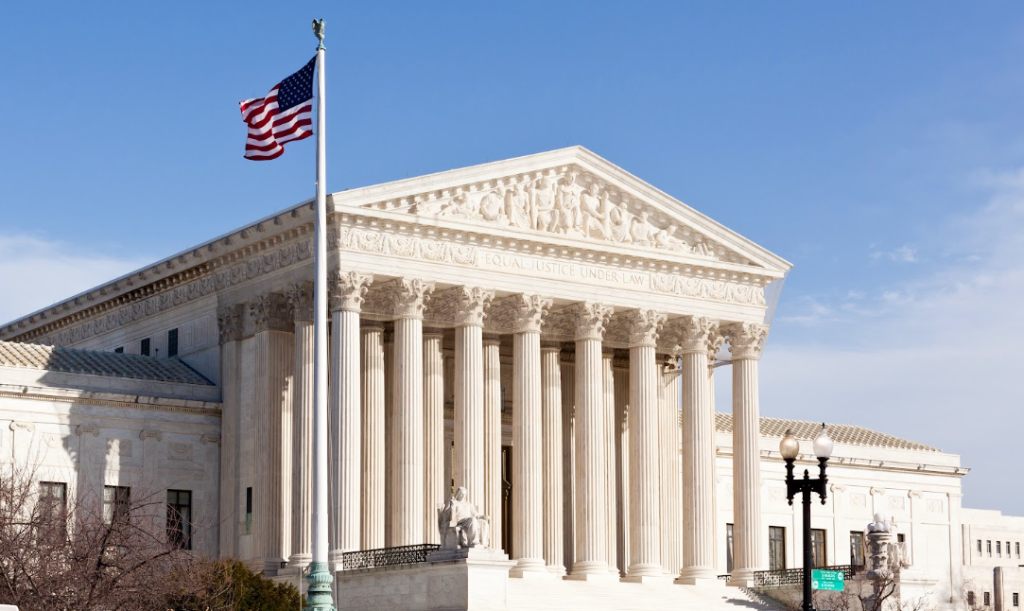
In private practice, Ben Miller-Gootnick focused on appellate matters and congressional investigations. The Washington, D.C.-based public law attorney also worked on federal appeals as a law clerk and as a Bristow Fellow in the Office of the Solicitor General, and on congressional matters as counsel on the U.S. House Committee on the Judiciary. The common thread across these experiences is public law and the operation of federal institutions, a theme that situates his private-practice work within a broader record involving courts, Congress, and executive branch legal practice. Ben Miller-Gootnick and Appellate Work in Private Practice Federal appellate practice appears in several parts of Ben Miller-Gootnick’s record. He clerked for federal judges at both the appellate and district court levels and served as a Bristow Fellow in the Office of the Solicitor General, where he worked on federal appellate litigation and successfully briefed and argued a case before a federal court of appeals. At a law firm, he did the same kind of appellate work for private clients in federal courts. Previously, at Harvard Law School, Ben Miller-Gootnick graduated magna cum laude and served as an Executive Editor of the Harvard Law Review. He also assisted numerous Harvard Law School faculty members with research, including work acknowledged in the Presidential Commission on the Supreme Court’s Final Report. Congressional Investigations and Legislative Experience Congressional investigations were the other focus of his private sector practice. Ben Miller-Gootnick’s congressional investigations experience prepared him for his later service as counsel on the U.S. House Committee on the Judiciary. Before law school, as an undergraduate at Brown University, he also completed a practicum with the White House Office of Legislative Affairs, providing further relevant insight into the political process. He has also written about Congress as a litigant itself. His article “How the House Sues,” published in the University of Illinois Law Review, examined the House of Representatives’ practice of delegating litigation authority to the Bipartisan Legal Advisory Group, including the constitutional basis for that delegation and the justiciability questions that arise when the authority is challenged. It concluded that the delegation is likely constitutional under Article I’s Rulemaking Clause. The article took second place in the Judge John R. Brown Award for Excellence in Legal Writing. Scholarship That Parallels Practice Some of Ben Miller-Gootnick’s other legal scholarship concerns how senior federal offices are filled when they become vacant. His Harvard Journal on Legislation note, “Boundaries of the Federal Vacancies Reform Act,” examined whether the Federal Vacancies Reform Act authorizes acting appointments when a vacancy results from presidential removal. In an analysis grounded in textual, historical, and structural reasoning, his note concluded that the Act does not, and that the Act reaches only vacancies arising from the officeholder’s own decisions or circumstances. That note won the ABA Gellhorn-Sargentich Law Student Essay Competition and the ACS Richard D. Cudahy Writing Competition on Regulatory and Administrative Law. It has also been cited in subsequent scholarship, including a Congressional Research Service report on the Vacancies Act and a report of the Administrative Conference of the United States. Ben Miller-Gootnick has also written Lawfare essays on presidential succession and federal appointments, one of which drew a published response in the Harvard National Security Law Journal. Together with “How the House Sues,” these pieces cover executive appointments, congressional authority, and the separation of powers. Private Practice Within a Cross-Institutional Career Ben Miller-Gootnick’s private-sector work focused on appellate matters and congressional investigations. It fell between two government jobs: a Bristow Fellowship at the Justice Department, and a counsel position with the House Judiciary Committee. That experience pulled together aspects of both appellate and congressional practice and provided private-sector preparation for his cross-institutional public-service career. About Ben Miller-Gootnick Ben Miller-Gootnick is a Washington, D.C.-based attorney whose work has covered public law, federal appellate litigation, congressional investigations, and government service. He studied at Brown University, where he served on the student advisory committee of Brown University’s Swearer Center for Public Service and received the Lippitt Prize for Public Service, the Alfred H. Joslin Award, and the Royce and Harvey A. Baker Fellowships. At Harvard Law School, he graduated magna cum laude and served as an Executive Editor of the Harvard Law Review. The public-law background of Ben Miller-Gootnick also includes federal clerkships, legal scholarship, and private-practice work focused on appellate matters and congressional investigations.
HRBT Eastbound Closes on Weekends for I-64 Repaving

The Virginia Department of Transportation is closing eastbound I-64 at the Hampton Roads Bridge-Tunnel on weekends to repave the aging corridor, forcing drivers onto detours.
Before You Pay for Help With a VA Claim, Check Who Is Allowed to Charge

Federal law bars fees for help with an initial VA benefits claim. A veteran filing a first disability claim can pay nothing for expert help, and federal law is written to keep it that way. Yet plenty of veterans still hand over money, personal data, or a share of their future back pay to people who were never allowed to ask for it. The rules are not complicated. Knowing three of them, and one free lookup tool, covers most of the risk. Fraud Aimed at Veterans Is Common The pressure is real. In a 2025 AARP survey of 1,596 adults, including an added sample of 570 veterans and active-duty service members, 39 percent of veterans said they had received solicitations from someone claiming to be from the Department of Veterans Affairs or another government agency. The same survey found that 28 percent believed their veteran status made them a target, and 27 percent had lost money to fraud, most of them more than $500. NORC at the University of Chicago fielded the survey by phone and online in March 2025. Results from AARP’s 2025 survey of veterans and service members. More than a third, 37 percent, said there are not enough resources to help protect veterans. That gap is where unaccredited “consultants” tend to show up, often with a pitch about getting a higher rating faster. The pitch usually sounds helpful, which is exactly why the fee rules matter more than the sales language. Rule One: No Fee on an Initial Claim Federal law sets the line clearly. Under 38 U.S.C. 5904, a fee “may not be charged, allowed, or paid” for the services of agents and attorneys provided before a claimant receives notice of VA’s initial decision on the claim. In practice, that means the first filing is not a paid service. Anyone who asks for money up front, a monthly retainer, or a percentage of future benefits to prepare an initial claim is asking for something the law does not allow. Rule Two: VSO Representatives Never Charge Veterans service organizations are the most common source of help, and they work for free. VA’s own guidance on accredited representatives states that the services an accredited VSO representative provides on a VA benefit claim “are always free.” The same guidance notes that veterans turn to VSO representatives more than other types of representatives on initial claims. It also says some accredited attorneys and claims agents help on initial claims for free. Rule Three: Paid Help Comes Later, With Paperwork Accredited attorneys and claims agents can charge, but only at a later stage. According to the same VA guidance, they may charge fees only after VA has made a decision on the initial claim and has received a fee agreement signed by both the veteran and the representative. Who may charge for help with a VA claim, and at what stage. That later stage usually means a Supplemental Claim, a Higher-Level Review, or an appeal to the Board of Veterans’ Appeals. A paid representative is a legitimate choice there. The point is that the fee terms should be in writing, on file with VA, and agreed to before the work starts. What Accreditation Actually Means Accreditation is not a marketing label. VA’s guidance spells out who qualifies: an accredited attorney must be a member in good standing of at least one state bar, and an accredited claims agent must pass a written test about VA laws and procedures. The guidance also gives veterans a firm right to change course. A veteran can discharge an accredited representative at any time and for any reason, or appoint a new one to replace the current one. Before hiring a paid attorney or agent, VA suggests talking through the fee amount, how it will be paid, and what happens if the veteran later ends the arrangement. Those three answers belong in the written agreement, not in a phone conversation. How to Check Anyone Who Offers Help The fastest protection is a lookup. VA’s accreditation search, run by the Office of General Counsel, lists attorneys, claims agents, and VSO representatives who are currently accredited. It can be searched by name, city, state, or ZIP code. The tool is plain about what a missing name means. If a search returns no result, the person “is not currently authorized to provide representation,” though an application may be pending. The data refreshes every Monday, Wednesday, and Friday evening. A few habits make the check worth more: Search the exact name of the person, not only the company they work for. Ask any paid representative to explain the fee in writing before signing anything. Do not share a VA.gov login with anyone, even someone who offers to “handle everything.” Report suspected fraud to VA’s VSAFE Fraud Hotline at 833-38V-SAFE (8-7233). Where Peer Groups Fit Accredited representatives file claims. Peer groups do something different. Veterans View Network, a small peer community for veterans in the years after service, offers free help finding an accredited representative and verifying anyone who claims to represent a veteran. The group states that it does not prepare or submit claims, does not ask for VA.gov login credentials, and does not refer veterans to paid claims preparers. That kind of plain disclosure is a useful test for any organization offering help: it should say what it will not do as clearly as what it will. The Market Around Claims Help Every year, VA claims bring in a steady stream of new filers, and the help market grows around them. Some of it is excellent and free. Some of it charges for work federal law says should cost nothing. The tools to tell the difference already exist and cost nothing to use. A veteran who checks the accreditation search, asks when a fee would start, and keeps a VA.gov login private has already avoided most of what goes wrong. The harder problem is reach: surveys like AARP’s suggest many veterans still meet the pitch before they meet the rules.
Cryptographic Checks That Detect Passport Data Tampering

Readers compare stored data with digitally signed reference values to identify changes to protected identity information. WASHINGTON, DC, October 15, 2026 — Electronic passports contain identity information that compatible equipment can read, yet the chip’s security depends heavily on cryptographic mechanisms that let inspection systems determine whether protected information remains unchanged from the data originally approved during government personalization. Rather than relying upon visual judgment alone, electronic passport readers can mathematically compare stored information with cryptographically protected reference values, helping authorities identify unauthorized changes to biographical details, facial images, or other electronic records even when manipulated data might appear completely plausible on a screen. Cryptographic Verification Begins With Protected Data When an issuing authority personalizes an electronic passport, it stores standardized files containing identity and biometric information in the contactless chip, along with additional security information that provides the mathematical references needed for later integrity verification by compatible inspection equipment. The International Civil Aviation Organization’s machine-readable travel document standards establish the technical framework for electronic passport security, including cryptographic mechanisms that let inspection systems verify whether protected data remain consistent with information established during legitimate issuance. Hash Functions Create Mathematical Fingerprints A cryptographic hash function processes electronic information and produces a fixed-length mathematical value that represents it, allowing a system to detect changes without storing a complete duplicate of every protected passport data file. Even a relatively small alteration to a digitally stored portrait, passport number, date of birth, nationality field, or another protected element should produce a substantially different hash value when the system processes the modified information again. This sensitivity makes hashing particularly useful for document security because the inspection system does not need to visually identify what changed before determining that the current electronic information no longer matches the protected reference value. Each Protected Data Group Can Have a Hash Value Electronic passport information is organized into structured data groups, and cryptographic integrity mechanisms can associate individual protected groups with hash values recorded inside the passport’s Document Security Object. This arrangement lets inspection equipment calculate a fresh hash from the information currently stored on the chip and compare it with the corresponding protected value established when the document was originally personalized. When the calculated and stored values agree, the system receives evidence that the relevant electronic data group has not changed since the cryptographically protected reference information was created. A Changed Portrait Produces a Different Result The electronically stored facial image is an especially important example because border authorities can use it as a biometric reference when comparing the passport with the traveler presenting it during inspection. If someone altered the protected facial-image file after issuance, the newly calculated hash should differ from the reference value associated with the legitimate data, allowing the inspection system to identify an integrity problem even when the replacement portrait looks realistic. This makes cryptographic checking fundamentally different from visual inspection because the reader evaluates mathematical consistency rather than deciding whether the image merely appears professionally produced. Biographical Data Receive Similar Protection Protected biographical information can include identity and document details associated with the passport holder, allowing electronic checks to identify unauthorized modifications to stored information without requiring an inspector to manually notice a typographical difference. Changing a character, number, date, or other protected element can alter the resulting hash value, so a seemingly minor change becomes significant when the inspection system mathematically compares it against the original protected reference. This sensitivity gives electronic passports an important advantage over unprotected digital storage, where information could be rewritten without leaving an immediately recognizable mathematical indication of modification. Hash Values Alone Would Not Establish Trust An attacker who can change both passport data and unprotected reference hashes could make altered information appear internally consistent, which is why secure electronic passports protect the reference structure itself with digital signatures created using issuing-authority cryptographic credentials. The digital signature binds the security object containing those hash values to the issuing framework, making it much harder to change protected data and replace the corresponding reference values without also producing a signature that trusted inspection systems will accept. The Document Security Object Connects the Checks The Document Security Object, commonly abbreviated SOD, plays a central role because it contains cryptographic information associated with the protected data groups and carries the digital signature used during passive authentication. Inspection equipment can therefore evaluate whether individual data groups match their recorded hashes and whether the security object containing those reference values carries a signature from trusted issuing credentials. This two-part process lets the system detect data changes while also addressing whether the reference information belongs to the expected cryptographic trust framework. Digital Signatures Protect the Reference Values When the issuing authority creates a digital signature, it uses a private cryptographic key controlled within the passport-issuance environment, while receiving inspection authorities use corresponding public certificates to evaluate whether that signature should be trusted. An attacker changing protected electronic information would consequently face more than the challenge of recalculating hashes, because the altered security structure would also need a new cryptographically valid signature associated with credentials trusted as belonging to the issuing government. This separation between creating and verifying signatures is one reason public-key cryptography works effectively for international passport authentication, where many countries need verification capability without receiving another state’s confidential private signing keys. Passive Authentication Brings the Checks Together The electronic verification process commonly known as passive authentication uses the signed security information and protected data stored in the passport to assess electronic integrity without requiring the chip to generate a new cryptographic response at every inspection. A compatible system can validate the digital signature, retrieve the protected reference hashes, calculate values from the current data groups, and compare them to determine whether the electronically stored information remains internally consistent with what the issuing authority protected. The process can run fast enough for routine border inspection, letting complex cryptographic calculations run behind a traveler-facing procedure that may appear to involve nothing more than placing a passport on a reader. Trusted Certificates Are Essential
Uninsured Motorist Claims in Virginia: Coverage Rules and Legal Process

An uninsured motorist claim Virginia car accident victims file is one of the more frustrating situations in personal injury law — being seriously injured by another driver’s negligence and then discovering that driver had no insurance or inadequate insurance to cover the harm they caused. Virginia requires drivers to carry liability insurance, but a meaningful percentage of drivers on Virginia roads don’t comply — and even drivers who do carry insurance sometimes carry minimum limits that don’t come close to covering the damages from a serious accident. Understanding how uninsured and underinsured motorist coverage works, what Virginia law requires, and how these claims differ from standard third-party liability claims is what allows injured drivers to access the coverage they paid for. Virginia’s Uninsured Motorist Coverage Requirements Virginia law requires that auto insurance policies include uninsured motorist coverage at minimum limits equal to the liability coverage limits on the policy — unless the insured specifically rejects UM coverage in writing. This means most Virginia drivers who carry liability insurance also have UM coverage whether they’ve thought explicitly about it or not, which is relevant when an accident with an uninsured driver occurs and the injured person needs to understand what coverage is available. Uninsured motorist coverage applies when the at-fault driver has no liability insurance at all. Underinsured motorist coverage — a related but distinct coverage — applies when the at-fault driver has liability insurance but those limits are insufficient to fully compensate the injured person’s damages. The distinction matters because the claims process and the coverage trigger differ between the two, and understanding which applies to a specific accident is the first step in navigating the claim correctly. Virginia also has a specific provision — the uninsured motorist fund — for accidents involving hit-and-run drivers where the at-fault vehicle can’t be identified, which creates another avenue for recovery in situations where traditional UM coverage might not apply. How UM Claims Differ From Standard Third-Party Claims The most significant practical difference between an uninsured motorist claim and a standard third-party liability claim is that the UM claim is filed against the injured person’s own insurer rather than against a third party’s insurer. This changes the dynamic of the claim in ways that surprise many injured people — their own insurance company, which they’ve paid premiums to for years, is now in an adversarial position relative to the claim, evaluating it with the same cost-containment motivation that any insurer applies to claims it’s paying. Virginia law does provide specific protections for UM claimants — including the requirement that the insurer treat the claim in good faith and the prohibition on certain conduct that would be permitted against a third-party insurer — but the fundamental reality is that the injured person’s own insurer is still a financial adversary in the claim rather than an advocate. Working with a personal injury attorney who understands UM claim dynamics and the specific obligations Virginia law places on insurers handling these claims is what protects the injured person’s interests throughout the process. Stacking and Coverage Limits One of the most practically important aspects of UM coverage for Virginia drivers with multiple vehicles or multiple policies is the question of stacking — whether coverage limits from multiple policies can be combined to increase the total coverage available for a single accident. Virginia law allows stacking of UM coverage under certain circumstances, which can significantly increase the coverage available in serious accident cases where a single policy’s limits might not adequately compensate the full damages. Whether stacking is available in a specific situation depends on the policy language, the number of vehicles and policies involved, and how the accident circumstances align with the stacking rules — which requires policy-specific analysis rather than a general answer. A car accident lawyer who reviews the applicable policies at the outset of a UM claim identifies stacking opportunities that a claimant navigating the process without legal guidance might miss entirely. The Arbitration Provision in UM Claims Many Virginia auto insurance policies include arbitration provisions that apply specifically to UM and UIM claims — requiring disputes about coverage or damages to be resolved through arbitration rather than through the court system. These arbitration provisions affect how the claim is litigated, what discovery is available, and what the procedural timeline looks like in ways that differ significantly from standard personal injury litigation. Understanding whether an arbitration provision applies, what it requires procedurally, and how to navigate arbitration effectively in a UM claim requires specific experience with this claim type. A personal injury law firm Roanoke VA that regularly handles UM and UIM claims has the arbitration experience that these claims require rather than approaching the process as a novel procedural challenge Documenting the Accident When the Other Driver Is Uninsured The documentation steps that matter most in a UM claim start at the accident scene — because establishing that the at-fault driver was uninsured, and preserving the evidence of how the accident happened and what injuries resulted, is foundational to the claim regardless of which coverage is being accessed. Getting the police report that documents the accident and the other driver’s insurance status, photographing the scene and vehicle damage, and collecting witness information are all as important in a UM claim as in any other accident situation. Medical documentation that connects the injuries to the accident — prompt treatment, consistent follow-up, and records that clearly establish the nature and severity of the harm — is what supports the damages portion of the UM claim. A UM insurer evaluating what the claim is worth applies the same scrutiny to medical documentation as a third-party insurer would, which means gaps in treatment, delayed care, or inadequate documentation of symptoms and functional limitations create the same vulnerabilities in a UM claim that they would in any personal injury case. Getting a personal injury lawyer Roanoke VA involved promptly after an accident with an uninsured driver — before statements are given to the UM insurer and before the claim’s early documentation window closes —
Falcon Technic Completes Specialized NDT Inspection on Gulfstream G550

DUBAI, UAE, Oct. 19, 2026 /PRNewswire/ — Falcon Technic, part of Alex Group Investment, recently completed a specialized Non-Destructive Testing (NDT) inspection on the right-hand Nose Landing Gear Door of a Gulfstream G550 after suspected damage was identified. Following…
SERIOUSFUN CHILDREN’S NETWORK CELEBRATES PAUL NEWMAN’S LEGACY AT 2026 “CAMP CHANGES EVERYTHING” BENEFIT DINNER

The New York City event featured Norah Jones, John Oliver, B.J. Novak, The Outsiders, mentalist Jason Suran, and more, while honoring leaders advancing Paul Newman’s legacy.LINK TO GETTY PHOTOS AND VIDEOS (Credit: Getty Images for SeriousFun Children’s Network)NEW YORK,…